Skip to content
I SEE THE MOON
Moon activities for preschoolers.
— By Julie Hodos on September 2, 2024; Updated on October 9, 2025.

This post may contain affiliate links. Please refer to our disclosure policy.
If you’ve ever caught your little one staring up at the night sky, pointing excitedly at that big, glowing orb, you know the magic the moon holds. For centuries, the moon has captivated children across the globe. From ancient myths where it’s seen as a guardian of the night to modern bedtime stories that lull kids to sleep, the moon has been a constant source of fascination.
Remember those evenings when you’d lie on a blanket in the backyard, tracing shapes in the stars, with the moon shining like a friendly face overhead? It’s that same timeless allure that draws preschoolers in today. In a world filled with screens and fast-paced distractions, introducing moon activities for preschoolers can be a wonderful way to slow down, connect with God’s creation, and ignite a lifelong love for science and exploration.
Table of Contents

Preschoolers, with their boundless curiosity and vivid imaginations, are at the perfect age to dive into moon-themed fun. Whether it’s crafting, experimenting, or just observing, these activities not only entertain but also teach valuable concepts in a hands-on way. Here, I share why teaching about the moon matters, list some fantastic books and rhymes, dive into 15 practical moon activities for preschoolers, and even venture further into outer space with related ideas. Let’s embark on this lunar journey together – who knows, your little astronaut might just be inspired to reach for the stars!
Why We Should Teach Our Preschoolers About the Moon
Introducing preschoolers to the moon isn’t just about filling time with cute crafts; it’s about laying the foundation for scientific thinking, creativity, and a deeper appreciation for the world around us. At this age, kids are like sponges, absorbing information through play and sensory experiences. The moon provides an accessible entry point into astronomy – it’s visible most nights, doesn’t require fancy equipment, and ties into everyday wonders like day and night cycles.
First off, learning about the moon helps develop observation skills. Encouraging kids to notice how the moon changes shape over time teaches them to pay attention to patterns in nature. This can lead to discussions about cycles, like seasons or even their own daily routines, fostering a sense of predictability and security in an unpredictable world. Scientifically, it introduces basic concepts of space, gravity, and Earth’s place in the universe without overwhelming them. For instance, explaining that the moon orbits Earth can spark questions about movement and distance, building early STEM skills.
Emotionally and imaginatively, the moon fuels storytelling and pretend play. Many cultures have moon folklore – think of the man in the moon or lunar festivals like Mid-Autumn Festival – which can introduce diversity and global awareness. It also promotes outdoor time, which is crucial for physical health and reducing screen dependency. Studies show that nature-based activities improve focus, reduce stress, and enhance problem-solving in young children. Plus, it’s a bonding opportunity for families. Imagine the joy of a moonlit picnic or a simple stargazing session – these moments create lasting memories.
In practical terms, moon education aligns with preschool curricula that emphasize exploration and inquiry. It encourages questions like “Why does the moon change?” or “What’s on the moon?” which can lead to deeper learning. By teaching about the moon, we’re not just informing; we’re inspiring wonder, curiosity, and a respect for science that could shape their future interests.

Books About the Moon for Preschoolers
Nothing beats curling up with a good book to introduce a new topic, and the moon has inspired countless children’s stories. These books blend facts, fantasy, and beautiful illustrations to make learning engaging. I’ve selected a mix of classics and modern favorites that are perfect for preschoolers, with simple language and captivating visuals. Reading them aloud can spark discussions, and many tie into moon activities we’ll cover later.
Goodnight Moon by Margaret Wise Brown. This timeless bedtime classic features a bunny saying goodnight to everything in the room, including the moon outside the window. It’s rhythmic and soothing, ideal for winding down while subtly highlighting the moon’s presence in our nightly routine.
For a touch of whimsy, Papa, Please Get the Moon for Me by Eric Carle is a must. It tells the story of a girl who asks her dad to fetch the moon, using fold-out pages to show its phases. The illustrations are vibrant, and it gently introduces moon cycles in a narrative form.
Kitten’s First Full Moon by Kevin Henkes follows a curious kitten mistaking the full moon for a bowl of milk. The black-and-white drawings are charming, and it teaches about perspective and perseverance through the kitten’s adventures.
Harold and the Purple Crayon by Crockett Johnson is a creative classic where Harold uses his purple crayon to draw his own world, including a glowing moon to light his nighttime adventure. The simple, imaginative story encourages kids to see the moon as a symbol of creativity and exploration, perfect for sparking discussions about storytelling and drawing.
If you’re leaning toward non-fiction, The Moon Book by Gail Gibbons breaks down facts like phases, eclipses, and moon landings in an accessible way. With clear diagrams, it’s great for curious minds who want to know “why” and “how.”
Moon! Earth’s Best Friend by Stacy McAnulty personifies the moon as Earth’s loyal companion, explaining their relationship with humor and facts. Part of the “Our Universe” series, it’s educational yet fun, with cartoonish art that appeals to little ones.
I Took the Moon for a Walk by Carolyn Curtis follows a boy and the moon on a nighttime stroll, exploring shadows and nocturnal animals. The lyrical text and soft illustrations make it poetic and immersive.

Nursery Rhymes and Poems About the Moon
Rhymes and poems add a musical element to moon learning, helping with language development and memory. They’re short, repeatable, and perfect for reciting whenever you see the moon or at bedtime.
Classic Hey Diddle Diddle features the cow jumping over the moon – silly and memorable, it sparks imagination and can lead to dramatic play.
I See the Moon is a gentle lullaby: “I see the moon, the moon sees me, God bless the moon and God bless me.” It’s calming and introduces reciprocity.
The Man in the Moon poem describes a friendly face in the moon, encouraging kids to look for patterns in the sky.
For something poetic, Robert Louis Stevenson’s The Moon from A Child’s Garden of Verses paints a vivid picture: “The moon has a face like the clock in the hall…”
Silver by Walter de la Mare is another excellent choice for kids as it explores the nightly world being illuminated by the silvery cast of the moon.
Incorporate the books and poem into read aloud time and recite the nursery rhymes whenever you and your child see the moon.
12 Moon Activities for Preschoolers
These moon activities are simple and uses everyday materials that will inspire wonder and imagination in your child.

Moon Phases with Oreo Cookies
Gather a pack of Oreo cookies (or another type of cookie), plastic knives or spoons for scraping, a plate, and a printable moon phases chart (you can find a free printable by following the activity link). I have done this activity with tollhouse chocolate chip cookies and the boys simply nibble away the part of the moon that is casted in shadow. This activity is such a fun and yummy way to learn about the moon phases.
Learning Opportunity: This activity teaches children about lunar cycles, and sequencing; while also engaging their senses with an edible science experience.
Moon Phases Puzzle
I love this puzzle because it takes no prep on my part and we easily name the phase as each piece is placed.
Learning Opportunity: This activity enhances problem-solving skills, pattern recognition, and spatial awareness, while reinforcing the concept of cyclical change in nature.
DIY Moon Rocks
Mix flour, salt, water, and coloring in a large bowl to create a pliable dough; add a pinch of silver glitter for a sparkly, lunar effect. Have the kids knead the dough until smooth, then break off small chunks to shape into irregular moon rocks. Encourage them to use spoons, forks, or their fingers to press craters and textures into the surface, mimicking the moon’s rugged terrain.
Place the rocks on a baking sheet and bake until hard, or let them air-dry for 24 hours. Once dry, use the rocks for pretend play (like a moon base) or display them as keepsakes. Talk about how real moon rocks were collected during Apollo missions to add a historical angle.
Learning Opportunity: This activity provides sensory play with textures, introduces basic geology concepts like craters formed by impacts, and strengthens fine motor skills through kneading and shaping.
Foil Printed Moon
Collect aluminum foil, washable paint (gray, white, or yellow), black construction paper, and shallow trays. Tear off a piece of foil, crumple it into a loose ball, then flatten it slightly to create a textured surface. Pour paint into trays, and have the kids dip the crumpled foil into the paint, then press it onto the paper to imprint a circular moon shape. The crumpled texture naturally forms crater-like patterns. They can layer multiple prints for depth or experiment with pressure to vary the effect. Once dry, add details like stars with markers. This tactile craft is simple yet produces striking results.
Learning Opportunity: This activity explores texture and printmaking techniques, teaches about the moon’s bumpy surface caused by asteroid impacts, and encourages experimentation with art materials.
Moon Crater Experiment
Set up a shallow tray filled with a thin layer of flour, and gather marbles or small balls of varying sizes. Have the kids drop the marbles from different heights (low, medium, high) into the flour to create craters, observing how the size and speed of the “meteor” affect the crater’s shape and depth. Sprinkle a thin layer of cocoa powder over the flour beforehand to make the craters more visible, if desired. Discuss why the moon has craters (no atmosphere to burn up meteors) and compare to Earth. For added fun, measure the craters with a ruler or count them. This is a great to do outdoors to minimize mess.
Learning Opportunity: This activity introduces basic physics concepts like gravity and force, teaches cause and effect, and familiarizes children with the scientific method through prediction and observation.
Playdough Moon Phases
Provide black and white playdough (store-bought or homemade) and a flat surface or mat with a printed moon phases chart. Have the kids roll out the black playdough as a base, then use the white playdough to form shapes representing each moon phase (such as, a thin sliver for crescent, a half-circle for quarter). Arrange the shapes in order on the free printable mat (available at the activity link), following the cycle from new to full moon. For extra engagement, let them squish and reshape the phases multiple times or add glitter to the white dough for a starry effect. This tactile activity reinforces visual learning.
Learning Opportunity: This moon activity provides tactile learning of lunar cycles, enhances understanding of color contrast and sequencing, and encourages creativity through shaping.
DIY Telescope Craft
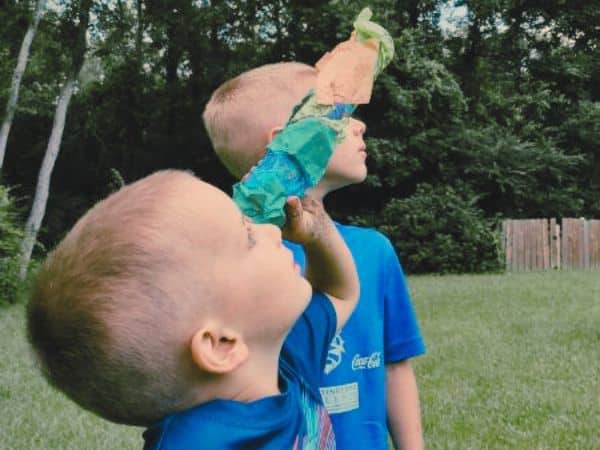
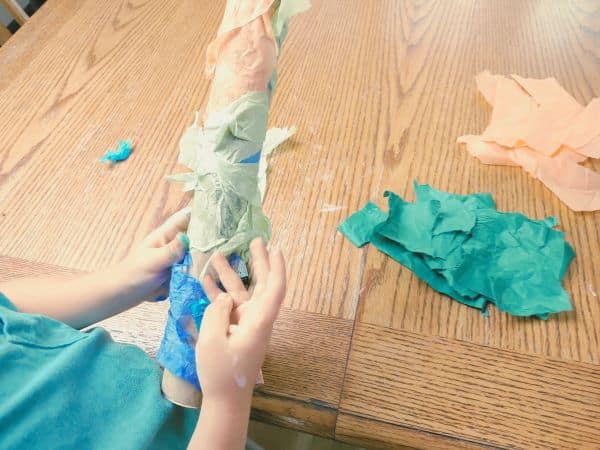
Grab an empty paper towel roll, tissue paper, paintbrushes, and Elmer’s glue for a pretend lens. Decorate the outside of the roll by brushing on glue and placing torn pieces of tissue paper on it. Once finished, take the telescope outside on a clear evening to “observe” the moon, or use them indoors to look at moon pictures or posters. Encourage kids to describe what they see to spark storytelling. This craft is durable and reusable, perfect for ongoing imaginative play.
Learning Opportunity: This activity fosters creativity and fine motor development while introducing the concept of observation tools, sparking curiosity about real telescopes and space exploration.
Moon Viewer Craft
Gather cardboard, scissors, black and white paper, tape, and a flashlight. Cut a rectangular frame from cardboard (about 8×10 inches) and create a circular window in the center. On a separate piece of cardboard, draw or paste the moon phases in a circle, then attach it behind the frame so it can rotate like a wheel. Cut out phase shapes in the frame’s window to reveal one phase at a time when held up to a light source. Kids can spin the wheel to view each phase, mimicking how the moon changes. This craft is a bit more advanced but rewarding.
Learning Opportunity: This activity teaches visual perspective and the science of light and shadow, while reinforcing the sequence of moon phases.
Astronaut Pretend Play
Use household items like colanders for helmets, aluminum foil for suits, and a large cardboard box as a rocket ship. Have the kids dress up as astronauts, complete with makeshift gear, and “launch” to the moon from their box rocket. Encourage them to act out landing on the moon, planting a flag, or collecting rocks, using props like paper or toys. Set up a mission control area with chairs and pretend radios for added role-play. This open-ended activity sparks storytelling and group play.
Learning Opportunity: This activity develops sharing, while introducing the history of space travel and imaginative exploration.
Tidal Locking Demo
Use two balls (one for Earth, one for the moon) and a marker to draw a face on the moon ball. Have one child hold the Earth ball while another walks the moon ball around it, keeping the face always pointing toward Earth. Explain that this is how the moon’s same side always faces us due to tidal locking. For younger kids, simplify by having them spin slowly while holding hands. This quick demo works indoors or out and can be repeated to reinforce the concept.
Learning Opportunity: This moon activity introduces basic astronomy concepts and movement patterns, helping children understand the moon’s orbit and tidal locking.
Orbit Activity
In an open space, assign one child as Earth and another as the moon. The moon child walks in a circle around the Earth child, keeping a steady pace to mimic the moon’s orbit. Add music to make it fun, or have multiple moons for a group activity. Discuss how long it takes the moon to orbit (about a month) and connect it to the phases they’ve learned. This gross motor activity is great for burning energy while learning.
Learning Opportunity: This activity promotes gross motor skills and helps children understand the concept of orbits in space.
Moon Shadow Puppets
Cut moon shapes (full, crescent, etc.) from black construction paper and tape them to popsicle sticks or straws. Set up a flashlight and a blank wall or sheet as a screen. In a darkened room, have the kids hold their puppets in front of the flashlight to cast shadows, creating stories about the moon’s adventures. Encourage them to move the puppets closer or farther to see how shadows change size. Add star or astronaut puppets for more fun. This is a great bedtime activity.
Learning Opportunity: This moon activity encourages storytelling and teaches the science of light and shadow through interactive play.
These moon activities are flexible – mix and match based on your child’s interests. Most use household items, keeping costs low, and can be adapted for different skill levels.

Exploring More Outer Space Activities
Once your preschooler is hooked on learning about the moon, expand to the broader cosmos! This section covers constellations, stargazing, and related fun to keep the momentum going.
Learning About Constellations
Jump to this activity to learn all about constellations using a free printable and nature. Your child will build different constellations using items found outdoors. Discuss myths behind constellations, like Ursa Major or Orion. Not that knowledgeable on constellations? Me neither! Star Stories by Anita Ganeri is wonderful for sharing the myths behind these night sky images.
Learning Opportunity: This activity enhances pattern recognition and introduces mythology, while encouraging creativity through designing constellations.
Stargazing Adventures
On a clear night, spread out blankets in your backyard or a park and use a simple star chart (printable or drawn) to identify constellations. Point out bright stars or planets, and encourage kids to describe what they see. For best results, choose a spot away from city lights or turn off the yard light. Make it cozy with snacks and stories about the night sky. I love making star shaped sugar cookies with my boys before heading out to stargaze.
Learning Opportunity: This activity promotes observation skills, patience, and night sky navigation, fostering a connection to nature.
Other Outer Space Ideas
Build a solar system mobile using painted foam balls and string or create a vinegar and baking soda rocket for a fizzy launch experiment. If accessible, visit a local planetarium for an immersive experience. These activities build on moon knowledge, introducing planets, stars, and space exploration concepts.
Learning Opportunity: These activities expand understanding of the solar system, encourage scientific experimentation, and spark creativity through crafting.

Tips for Successful Moon Activities
- Safety First: Always use non-toxic materials and supervise closely, especially during outdoor activities or when using scissors.
- Adapt for Ages: Simplify tasks (such as, pre-cut shapes or simpler explanations) for younger preschoolers or add complexity for older ones.
- Extend Learning: Keep a moon journal to sketch observations or connect moon activities to weather and seasons for broader context.
- Resources: The app SkyView has a free version that is excellent for beginner moon watchers and stargazers.
Night Sky Wonder
Moon activities for preschoolers are a gateway to endless discovery. From books that inspire dreams to hands-on crafts that teach science, these ideas make learning joyful and memorable. Try a few this week – your little one’s eyes will light up like the full moon! Share your experiences with these moon activities in the comments below and what your child loved most.
Recent Posts on the Homeschool Blog