 Skip to content
HOP INTO PLAY
Frog activities for preschoolers.
— By Julie Hodos on May 17, 2024; Updated on January 6, 2026.
This post may contain affiliate links. Please refer to our disclosure policy.
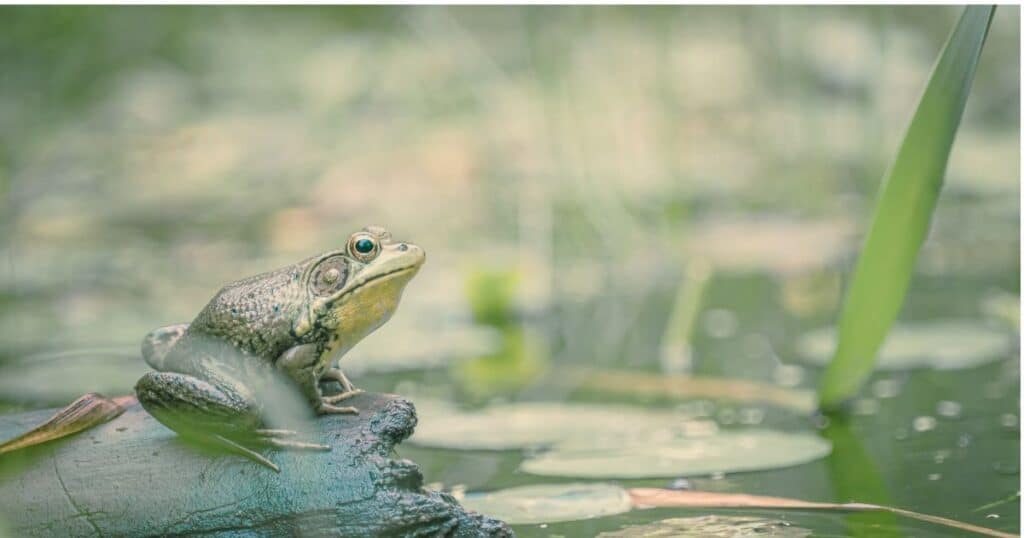
If your little ones are suddenly obsessed with frogs (jumping on the couch, ribbit-ing at breakfast, or begging for frog rain boots), you’ve landed in exactly the right place. Frogs are magical for preschoolers—they hop, they swim, they change from tadpoles into frogs, and they make the cutest sounds. Plus, they’re the perfect theme for sneaking in science, math, literacy, art, sensory play, and gross-motor fun without kids even noticing they’re learning.
Table of Contents

Below is the ultimate collection of frog activities for preschoolers that will inspire imaginations, creativity, and an appreciation for God’s creation. Everything is low-prep, budget-friendly, and kid approved! Grab your coffee (or hop to it).
Why Frogs Are Preschool Gold
Before we leap in, here’s why frogs make such an amazing theme:
- A frog’s life cycle is spectacular to learn about and witness: from egg, to tadpole, to adult, their transformation is nothing short of amazing
- They encourage gross-motor play (jumping!)
- There are tons of great children’s books that you don’t want to miss
- Easy tie-ins to pond habitat, seasons, colors, numbers, and letters
- Kids find these slimy green creatures fascinating, and once we explore more about them they’ll be even more hooked
Ready? Let’s hop to it!
Best Frog Books for Preschoolers
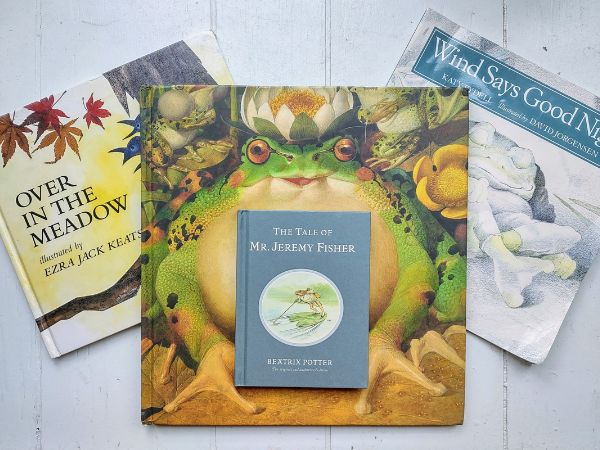
These books are loved by my boys and teach so much about frogs whether through whimsical story telling or non-fiction.
- Frog and Toad Are Friends by Arnold Lobel Gentle, hilarious stories about two best-friend amphibians that feel like warm hugs. This Caldecott Honor classic is the gold standard for teaching friendship and emotions.
- The Wide-Mouthed Frog by Keith Faulkner (pop-up edition) A cocky frog goes around asking everyone what they eat and gets the surprise of his life when he meets a crocodile. The giant pop-up mouth at the end never fails to make kids scream-laugh.
- Frog Song by Brenda Z. Guiberson, illustrated by Gennady Spirin This lyrical nonfiction picture book takes young readers around the world to meet eleven fascinating frogs, each with its own unique song—from chirps and bellows to trills and clicks. Stunning, detailed illustrations bring glistening eggs, lush habitats, and vibrant frogs to life while playful onomatopoeia makes the frogs’ chorus leap off the page.
- The Tale of Mr. Jeremy Fisher by Beatrix Potter A polite frog in a macintosh coat sets out in his lily-leaf boat to catch minnows for a dinner party, only to face hilarious pond perils—including a prickly stickleback, a hungry rat, and a giant trout that swallows him whole! Beatrix Potter’s exquisite watercolor illustrations capture the slippery, watery world with gentle humor and just enough excitement.
15 Mind-Blowing Frog Facts to Wow
Do you think that a frog’s life cycle is nothing short of amazing? Well hold onto your hat because I have some pretty cool facts to share about these amphibians.
- A frog can jump more than 20 times its own body length—that’s like you jumping over a whole school bus!
- Frogs don’t drink water with their mouths; they soak it in through their skin like a sponge.
- Some frogs can change color to hide from predators—like real-life invisibility cloaks.
- The tiniest frog in the world (the Paedophryne amauensis) is smaller than a housefly.
- The biggest frog (Goliath frog) can grow longer than your forearm and weigh as much as a newborn baby.
- Frogs have been on Earth for over 265 million years—longer than dinosaurs!
- Wood frogs can freeze completely solid in winter (heart stops beating!) and then thaw out in spring and hop away like nothing happened.
- Frogs use their eyeballs to swallow—they push their eyes down into their head to shove food down their throat.
- Poison dart frogs are so toxic that indigenous people use their skin poison to tip hunting arrows—one frog has enough poison to kill 10 grown men.
- Male frogs sing (croak) to attract girlfriends, and every frog species has its own special love song.
- Some frogs glow bright green under UV light—like tiny living glow sticks.
- A group of frogs is called an “army,” and a group of tadpoles is called a “school.”
- Frogs shed their skin about once a week and usually eat it afterward for extra nutrients.
- The glass frog has see-through skin on its belly so you can watch its heart beating and food digesting.
- In Japan, scientists discovered a frog that can change sex if there are too many boys or girls in the pond—nature’s way of keeping perfect balance!
Share these facts during morning basket and watch your child’s eyes grow with wonder. These books and facts pair perfectly with all the frog activities and make your frog week completely unforgettable!

25 Absolutely Best Frog Activities for Preschoolers
Here are the top frog activities that always get the biggest smiles, the loudest giggles, and the most “again, again!” requests. Each one is simple to set up, genuinely fun, and packed with real learning.
Fake Frog Dissection
Children carefully “dissect” a large green gelatin-like frog using plastic tweezers to pull apart the wiggly body and discover colorful “organs” hidden inside and the frog’s skeleton structure. Preschoolers are completely fascinated by the squishy reveal and love naming each part as they find it. Learning opportunity: Introduces basic anatomy and body part vocabulary in a playful, non-scary way while building fine motor control, and focus through hands-on exploration.
Paper Plate Frog Mask
Children transform a plain green paper plate into a hilarious frog mask by adding huge googly eyes and a long, curly pink tongue that unrolls when they stick it out. The moment the masks go on, the room becomes a pond full of dramatic little frogs hopping and catching imaginary flies together. Watching shy kids suddenly roar “Ribbit!” is pure magic. Learning opportunity: Strengthens fine motor skills through cutting and gluing while boosting confidence and expressive language in dramatic play.

Frog Yoga Flow
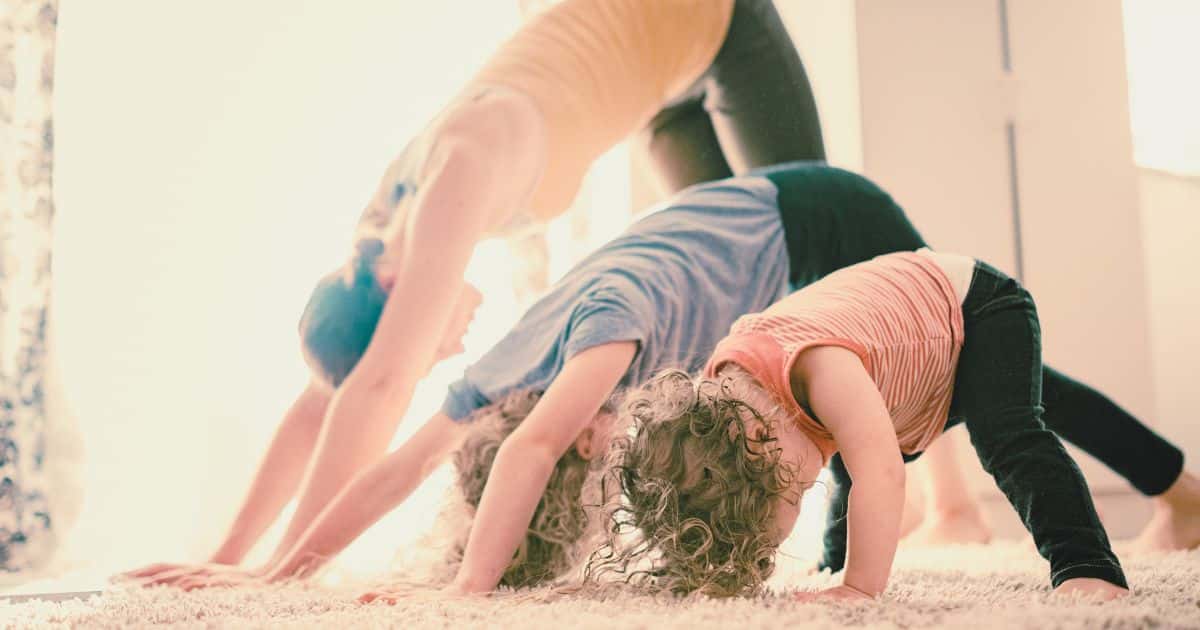
Guide children through simple poses—frog pose (wide squat), log pose (lie on belly), lily pad balance (one foot), and happy frog jumps—while telling a little pond story. They leave calm and proud of their strong bodies. Learning opportunity: Builds strength, balance, flexibility, and the ability to follow multi-step directions with mindfulness.
Handprint Lily Pad Keepsake
Paint a child’s hand bright green, press it onto paper to create a perfect lily pad, then add a tiny fingerprint frog perched on top with a sweet drawn smile. Grandparents melt when they receive this personal piece of art that literally grew from your child’s own hand. It’s a tear-jerker keepsake every single time. Learning opportunity: Builds body awareness and early print-making concepts while creating a treasured record of “how little they once were.”
Origami Jumping Frogs
With a few simple folds on green paper, even four-year-olds can create frogs that actually leap when you press and release the back. The room instantly turns into the Frog Olympics as kids race their creations and measure whose went the farthest. Pure joy in paper form. Learning opportunity: Following sequential directions and precise folding builds focus, spatial reasoning, and small-muscle strength.
Green Oobleck Swamp
Mix cornstarch, water, and green food coloring into gooey oobleck that acts like a liquid and a solid—frogs “hop” across it when you tap fast and sink when you move slowly. Preschoolers experiment for hours, completely entranced by the weird properties. Learning opportunity: Hands-on exploration of non-Newtonian fluids and states of matter sparks natural scientific curiosity.
Leapfrog Sounds Around the World
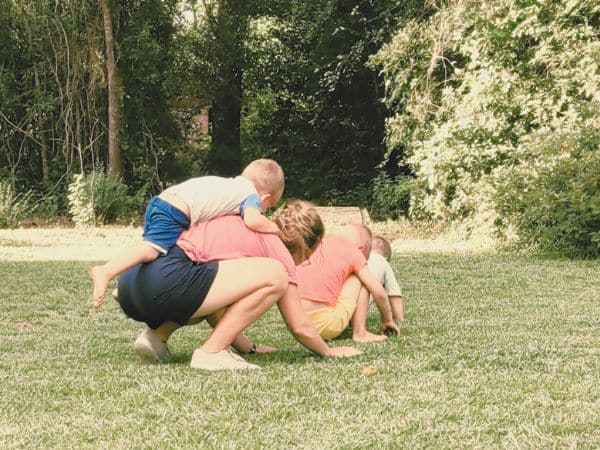
Children line up for a classic game of leapfrog, but each time a player leaps over another, they call out a different real frog sound from around the world—like the deep “jug-o-rum” of a bullfrog, the chirpy “ribbit” of a Pacific tree frog, or the barking “wonk-wonk” of a green frog. The backyard or living room fills with laughter and an international chorus of frog calls as everyone hops, leaps, and croaks together. It turns a timeless game into a noisy celebration of frog diversity. Learning opportunity: Builds gross motor skills and coordination while introducing global frog species, onomatopoeia, and phonetic awareness through playful sound imitation.
Ice Egg Frog Excavation
Freeze tiny plastic frogs inside ice cubes overnight, then give children warm water droppers and spoons to rescue their trapped frogs. The excitement when a frog finally appears is priceless. Learning opportunity: Explores temperature, states of matter (solid to liquid), and cause-and-effect in a sensory-rich way, as well as introduces the concept that some frog species freeze during winter and thaw to continue living their life in spring.
Frog Corner Bookmarks
Have a burgeoning reader? Or maybe you’re reading aloud chapter books together? Fold a green square into a corner pocket, add googly eyes and a tiny tongue, and suddenly kids have the cutest bookmark that makes them excited to read every night. They feel so grown-up using their own creation. Learning opportunity: Encourages book care and reading enthusiasm while practicing precise folding and fine-motor control.
Raising a Frog in an Indoor Habitat
Families set up a simple, safe indoor aquarium with clean de-chlorinated water, a few smooth rocks for basking, gentle aeration, and live or plastic plants to create a cozy temporary home for one or two small aquatic frogs that begin as tadpoles. Your child can observe the daily changes and habitats, recording what their frog does each day in a simple drawing journal—watching it swim, rest, or blow bubbles becomes a quiet, wondrous routine. The responsibility and close-up glimpses into real frog life spark endless questions and deep care for living things. Learning opportunity: Fosters empathy, responsibility, and scientific observation skills while providing authentic, hands-on experience with animal needs and behavior.

Frog Jump Measuring
Mark a starting line and let each child take three big frog jumps while a friend uses a tape measure to record the distance. Recording results with frog stamps turns it into instant math. Learning opportunity: Introduces non-standard and standard measurement while encouraging friendly competition and data collection.
Frog Hunting at a Local Pond or Creek
Families pack magnifying glasses, bucket, a small net and quiet feet for a gentle outdoor adventure to a nearby pond or creek, where children tiptoe along the edge peering into the water and under leaves to spot real frogs, tadpoles, or frog eggs without disturbing them. The thrill of whispering “I see one!” when a frog plops into the water or a tadpole wiggles by turns an ordinary walk into an exciting treasure hunt filled with wide-eyed wonder. If allowed, catch a frog or two to closely examine before releasing back into the wild. Learning opportunity: Cultivates careful observation skills, respect for wildlife and habitats, and a genuine sense of connection to nature through real-world exploration.
Sticky Tongue Fly Catch
Tape paper flies to the wall and give kids a party blower as a long frog tongue—they unroll it to “catch” and stick to the fly while reading the sight word or number written on it. The laughter is nonstop. Learning opportunity: Combines gross motor movement with early literacy or numeracy practice in an unforgettable way.

Frog Tracks with a Sponge
Children dip a simple rectangle sponge cut into a basic frog foot shape into green washable paint and press it onto long strips of paper to create a trail of hopping frog footprints. They love experimenting with big leaps (wide spacing), tiny hops (close together), or even overlapping prints to show frogs playing chase, often adding googly eyes or drawn flies at the end of their trails. Learning opportunity: Develops spatial awareness, understanding of patterns and sequencing, and fine motor control while encouraging close observation of the shape of frog feet through printmaking.
Roll & Hop Math Game
Roll a giant foam die and hop that many times across the room—first one to the “pond” (a blue blanket) wins. Simple, active, and endlessly repeatable. Depending on the child’s level of math, turn this into addition practice. Learning opportunity: Reinforces number recognition, counting, and gross motor coordination.
Jell-O Pond with Gummy Frogs
Make lime Jell-O, drop in gummy frogs before it sets, and let children dig out the wiggly frogs with spoons. Eating “frog pond” has never been so deliciously gross and wonderful. Learning opportunity: Provides hilarious sensory input and fine-motor practice while talking about how things feel inside gelatin.

Magic Frog Eggs (Chia Seed Pudding Snack Time)
Fill a clear jar with water and a spoonful of chia seeds that swell overnight into tiny, wobbly “frog eggs.” Children shake gently and watch the eggs wiggle and grow just like real ones, completely mesmerized by the transformation. Then, turn into a tasty snack by adding a sweetener and berries. Learning opportunity: Introduces absorption, prediction, and patience as they observe real-life changes over hours and days.
Lily Pad Hop (Floor Game)
Scatter green paper or felt lily pads across the floor and let kids leap from pad to pad while you call out instructions like “Hop to a pad with how many frogs 3 plus 2 makes!” or “the third from last lily pad.” Be sure to secure these to the floor with tape to make the landing safer. Learning opportunity: Develops gross motor skills, balance, listening comprehension, and early math concepts like counting and position words.
Frog Puppet Paper Plate
Using paper plates colored green and red, add eyes, and instantly have a frog puppet that opens and closes it’s mouth when your child moves their hand. They talk and sing through their frog all afternoon and create stories about their frog friend. Learning opportunity: Encourages bilateral coordination and creative storytelling while making a puppet that literally moves with them.
Frog Tongue Fly Swatter Game
Hang black construction-paper flies from the ceiling or a low tree branch with string, then arm each child with a pool-noodle “tongue” or a soft fly swatter and let them leap to bop the flies while making the silliest ribbit sounds imaginable. Learning opportunity: Builds gross motor coordination, spatial awareness, and tracking skills while encouraging joyful physical exertion.

Frog Life Cycle
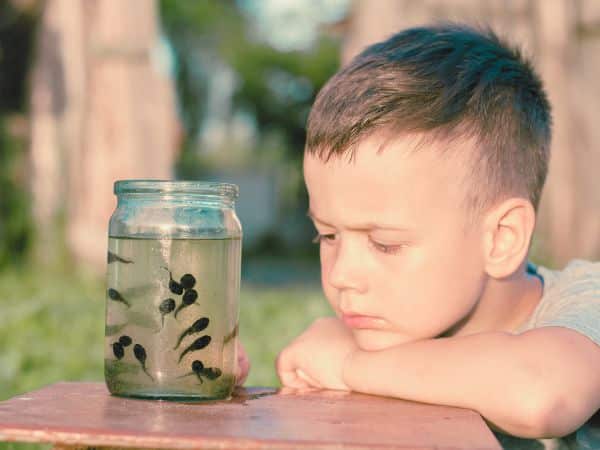
Using toys and a free printable your kiddo will arrange a simple printable life-cycle sequence (eggs, tadpole, tadpole with legs, froglet, adult frog) on the floor or table, then bring the stages to life by placing matching toy figures—tiny clear beads for eggs, a small tadpole toy, one with emerging legs, a froglet, and finally a big hopping frog—at each picture. Watching the sequence happen with real objects in their hands makes the metamorphosis feel truly magical. Learning opportunity: Strengthens understanding of sequencing, scientific vocabulary, and life-cycle concepts through hands-on, multi-sensory storytelling and dramatic play.
Hop Into Learning
There you have it—the most comprehensive, joy-filled collection of frog activities for preschoolers you’ll find anywhere. These aren’t just frog activities; they’re the moments your little ones will remember forever: the wonder of watching a tadpole grow, the pride of making a frog that actually jumps, the pure fascination at discovering the internal workings of a frog.
Which one are you trying first? I’d truly love to hear how your little frogs love them! Leave a comment below and happy playing for hours!
Recent Posts on the Blog




Wow this is a really fun week for your kids! All three of my kids enjoy frogs and toads. They like to hold the toads at night when they are migrating across our lawn. I never thought to weave it in with a curriculum. The print outs work great.