Skip to content
THE SIMPLE PLEASURES IN LIFE
Create a hygge design for cozy, restful living.
— By Julie Hodos on October 28, 2025

This post may contain affiliate links. Please refer to our disclosure policy.
How do you want your home to feel? Chaotic, stressful, or busy? No? I didn’t think so. If you’re dreaming of a home filled with comfort, warmth, and rest, then hygge is what you’ve been searching for. I’m thrilled you’re here to explore this with me! Hygge (pronounced “hoo-gah”) is what I strive for in my home and homeschool, and I’m excited to share these tips and tricks to transform your space, atmosphere, and learning into a cozy haven.
Below, you’ll find an extensive list of ideas to make your home feel like a warm, inviting hug. But let’s be real: hygge isn’t just about decorations, mood lighting, or fun activities. It’s a mindset too—one we need to embrace first so our families can soak up the benefits. It’s like planting seeds in rich soil: get the foundation right, and everything blooms beautifully.
Table of Contents

What Is Hygge Design?
At its heart, hygge is about creating an atmosphere brimming with coziness, well-being, and comfort. The word comes from Denmark, where folks have nailed the art of living well, even in a hectic world. My family has borrowed a few tricks from the Danish playbook, learning to slow down and savor life’s quieter, simpler pleasures right at home with the people we love most. Think of it as crafting little pockets of joy amid the daily grind. Hygge isn’t about perfection or breaking the bank—it’s about intentional choices that make you exhale with contentment the moment you step through the door.
The Internal Starting Point: It Begins with You
A hygge design starts inside you. I learned this the hard way. Over a year ago, my energy was out of sync with the atmosphere I wanted in my home. I was running on empty, juggling homeschooling, housework, and everything else, and it showed—our space felt tense, even if it looked decent on the surface. So, over many months, I worked on transforming not just my home but myself.
I had to consciously choose calm in stressful moments—like when the kids were melting down over fractions or dinner was charring on the stove. Instead of snapping or rushing, I’d take a deep breath and shift gears. Maybe we’d pause for a quick cuddle, a silly game, or to step away to reset.
Prioritizing my own well-being was a game-changer. I committed to regular exercise, even if it was just a 20-minute walk while listening to a favorite podcast. I carved out time for creative outlets like knitting or sketching, things that filled me up without adding to my to-do list. You’ve got to find what fills your cup—maybe it’s reading in the bath, tending a garden, or chatting with a friend. It might feel selfish at first, but trust me, it’s not. A home radiating peace and well-being starts with Momma (or whoever’s the main caregiver in your house).
You’ve probably heard it before: “Everyone feeds off Mom’s energy” and “you can’t pour from an empty cup.” It’s so true! Your home will reflect how you feel. If you’re frazzled, that energy creeps into every corner. But if you lean into life’s simple pleasures—like savoring your morning coffee or watching a sunset—and prioritize your well-being, you’ll feel better, and your home will too. It’s a ripple effect: your calm becomes their calm.

Why Hygge in Your Home and Homeschool?
Why bother with a hygge design? Oh, where do I start? Words like quiet, cozy, simple, well-being, comfort, and pleasures spark happiness just hearing them. A space that embodies these qualities feels like it’s saying, “You belong here.” If I can create that for my kids, I know they’ll feel safe, welcome, and restful at home. I want them to love being here, to know they’re always welcome, no matter their age or what life throws their way. It’s about building an unbreakable bond.
Plus, these hygge elements are key for an optimal learning environment in our homeschool. Kids learn best when they’re relaxed and focused, not stressed or distracted. A cozy space reduces anxiety, ignites creativity, and turns lessons into fun adventures instead of chores. When our homeschool room feels warm and inviting, my boys are eager to dive into books or projects. The environment whispers, “This is a safe place to explore and grow.” If you’re ready to bring these qualities into your home and homeschool, you’re in for a treat—because this list is packed with ideas you’ll love.
Read Next: Budget Friendly Hygge Homeschool Room

Hygge-Inspired Books for Moms
To truly embrace the hygge mindset, it’s helpful to draw inspiration from books that guide you toward creating a warm, intentional home and nurturing your own well-being as a mom. These reads offer practical tips, heartfelt encouragement, and a vision for infusing your home with coziness and connection. Here are some favorites that have inspired me and can help you cultivate that hygge glow in your homeschool and family life:
- The Life-Giving Home by Sally Clarkson and Sarah Clarkson
This gem is all about creating a home that nurtures your family’s heart and soul. Sally and Sarah share how to build rhythms and traditions—like family dinners or seasonal celebrations—that foster love and belonging. It’s packed with practical ideas for making your space a sanctuary, perfect for aligning with hygge’s focus on warmth and togetherness. I love their emphasis on small, intentional acts that make a big impact, like lighting candles during read-alouds or setting a cozy table for meals.- Why It’s Hygge: Encourages creating a home environment that feels safe and inviting, with tips that resonate with the Danish art of coziness.
- Pro Tip: Read a chapter a week and try one suggested tradition, like a weekly game night, to ease into their ideas without feeling overwhelmed.
- The Little Book of Hygge by Meik Wiking
Written by the CEO of the Happiness Research Institute in Copenhagen, this book dives into the Danish concept of hygge with charm and practicality. Meik breaks down why things like soft lighting, warm drinks, and quality time with loved ones boost well-being. It’s a quick read that’s both inspiring and actionable, with ideas you can adapt for your homeschool, like creating a cozy storytelling corner.- Why It’s Hygge: Offers a deep dive into the principles of hygge, helping moms understand how to weave comfort and joy into daily life.
- Pro Tip: Keep a notebook handy to jot down one or two ideas per chapter.

- M is for Mama by Abbie Halberstadt
This book is a heartfelt guide for moms seeking to embrace their role with joy, even in the chaos. Abbie offers biblical encouragement and practical advice for cultivating a home filled with love and purpose. Her focus on gratitude and intentionality aligns beautifully with hygge’s emphasis on finding joy in the simple moments, like a quiet morning with your kids.- Why It’s Hygge: Promotes a mindset of contentment and connection, key to creating a warm, restful home environment.
- Pro Tip: Pair reading with a daily gratitude journal to reflect on small moments that bring joy, enhancing your hygge mindset.
- The Mission of Motherhood by Sally Clarkson
Sally Clarkson’s classic encourages moms to see their role as a sacred calling, filled with opportunities to nurture and connect. It’s a perfect companion for moms wanting to infuse their homeschool with warmth and meaning.- Why It’s Hygge: Focuses on building a nurturing, joyful home through intentional family moments, echoing hygge’s core values.
- Pro Tip: Try her suggestion of a family “memory night” where everyone shares favorite moments, tying it to your homeschool’s storytelling activities.
These books are like having a wise friend by your side, offering ideas and encouragement to make your home a place of rest and joy. They’ve helped me shift my perspective and prioritize the little things that make a big difference, and I hope they do the same for you.
20+ Ways to Create a Hygge Design in Your Homeschool
Here’s the fun part: over 20 practical ways to weave hygge into your home and homeschool, split into decorations, setting, and activities. You don’t have to do them all at once—pick a few that spark joy and build from there. Progress, not perfection, is the goal.

Decorations: Setting the Visual Tone
Begin a Nature Collection
This is so easy and wallet-friendly—your kids are probably already handing you treasures from outside. Shells, leaves, acorns, rocks, flowers, feathers, even the occasional dead bug (yep, that’s life in our house). Create a special spot for these finds, like a wooden tray or a dedicated shelf in your homeschool room. Ours rotates with the seasons and sparks endless chats: “Remember when we found that feather?” It brings the outdoors in, fostering wonder and connection. Maybe you’ll stumble on something rare like a turtle shell or an abandoned bird’s nest on a hike—display it safely for that earthy, grounded hygge feel.
Make Paper Chains or Other Decorations
Another budget-friendly win that kids can help with. When we made paper chains for Christmas, we ran out of red and green, so we used every color left—pinks, blues, you name it. They were so cute draped across the doorway, I kept them up post-holidays. We’ve also used a flower-shaped punch for spring garlands; construction paper is versatile and forgiving. Want to go fancier? Try seasonal crafts like beaded snowflakes, stained glass sun catchers, painted wood ornaments, or clay figures. Browse online or hit a craft store for kits—they’re great for fine motor skills and add personal flair to your space.

Stack Books Anywhere and Everywhere
In our house, we reach for books over screens, and it’s no accident. I’ve scattered books everywhere—coffee tables, bedside stands, even the kitchen for quick reads while stirring soup. Books aren’t just for shelves; they’re meant to be loved! Stack a few on end tables with a cozy lamp or tuck them under a window for mini book nooks. It sparks spontaneous reading and adds that intellectual, warm hygge touch.
Hang Fairy Lights or Create Ambiance Lighting
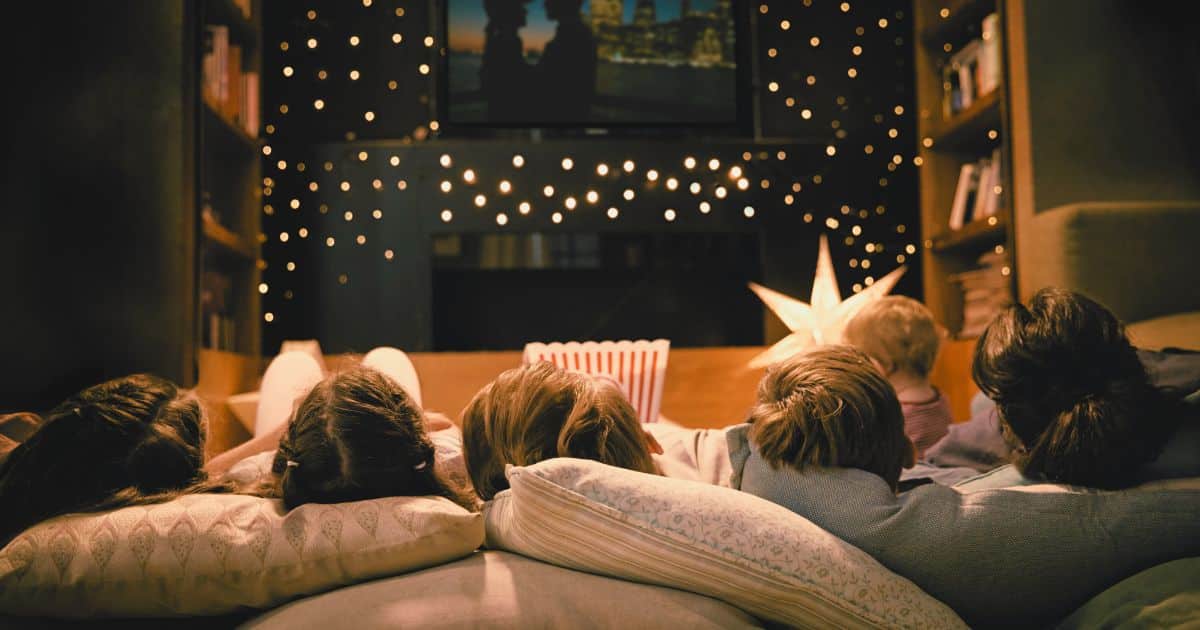
Soft lighting from a dark corner or side table transforms any space into a magical retreat. Drape fairy lights in a reading nook, above a fireplace, or along bookshelves for a twinkling glow. I usually save them for holidays, but year-round with warm white bulbs or subtle colors is stunning. It chases away gloomy days and makes homeschooling feel enchanting.

Setting: Crafting a Cozy Environment
Drape Blankets and Pile Pillows Everywhere
We swap thick blankets for lightweight ones seasonally to keep things fresh. Pillows? Tricky, since my kids think they’re for floor forts or wrestling. My rule: hearth pillows are sacred, but couch ones are fair game. I can handle picking up a few, but eight? Nope! Blankets and pillows add soft texture for that cozy hug feeling. Mix patterns—knitted throws, fuzzy pillows—for layers that say “snuggle up.”
Create a Cozy Reading Corner or Nook
Transform a bedroom corner, unused closet, or window seat into a reading haven. Keep it simple with a rug by the children’s bookcase or go all out with fairy lights and a bean bag. We started with a rug and kids’ books; it’s their reset spot. Make it intentional—a place that says, “Lose yourself in a story.” Tailor it to your time, budget, and energy.

Sit on a Blanket Under a Shade Tree with Lemonade
Make lemonade together (lemons, sugar, water—done), then spread a blanket under a tree. Listen to birds, read, or just sip and relax. Keep an outdoor blanket handy to make this a habit; it invites rest in nature, extending hygge beyond your walls.
Light Candles in the Homeschool Room or Kitchen
When the moment’s right, light a candle. Keep them and a lighter handy for ease. A candle can elevate a history lesson or calm a frustrated kid before math. Try vanilla or lavender scents (unscented if sinuses are an issue), but always prioritize safety. That gentle glow adds a soothing, hygge-approved ambiance.

Swap Books for Seasonal Reads
Our kids’ bookcase has display shelves where front covers face out, enticing little readers with vibrant pictures. Swapping for seasons—fall’s warm hues, Christmas stacks, spring blooms—kicks off new seasons beautifully. It ties into lessons on weather or cycles and keeps decor fresh. Hygge flows with seasons, so let your books do the same.
Play Folk or Classical Music
During painting, coloring, or quiet work, play background tunes—classical like Bach for focus or folk like songs by Peter, Paul, and Mary for nostalgia. I love Sinatra or Doris Day for that cozy, old-timey feel. Keep it low to enhance, not distract, and watch it set a peaceful tone.

Activities: Building Memories and Connections
Bake or Cook Together
Take lessons to the kitchen for full hygge vibes. Cool months call for soups, bread, or stews; warm ones for sandwiches or fruit salads. For treats, try muffins, smoothies, or cookies with flavors like cinnamon, peppermint, or dill. Experiment and let those aromas fill your home with comfort. No favorite recipe? Start simple and find your groove.
Learning Opportunity: Teach measurements (math) by doubling or halving recipes, or discuss chemical reactions (science) like how baking soda makes muffins rise.
Pro Tip: Pre-measure ingredients for younger kids to keep things mess-free and stress-low, letting them focus on mixing and tasting.
Plan Teatime and Poetry
Sipping tea while reading poetry aloud is pure magic. My boys love “teatime and poetry” with herbal teas and treats (store-bought’s fine!). Occasionally, I’ve themed it as “teatime and manners” for etiquette lessons. The warmth of tea and rhythm of words is perfect hygge.
Learning Opportunity: Explore language arts by discussing poems, or practice public speaking by reciting poems aloud.
Pro Tip: Choose short, fun poems for younger kids (like Shel Silverstein) to keep them engaged, and pair with kid-friendly teas and a drizzle of honey.

Experience Nature
Don’t just walk—immerse yourselves. Breathe deeply, observe quietly, meander through a park or lake’s edge. Turn it into a senses lesson: what do you see, hear, smell? It’s mindfulness woven into homeschooling, savoring simple pleasures.
Learning Opportunity: Study ecosystems (science) by observing plants and animals, or practice descriptive writing (language arts) about the experience.
Pro Tip: Bring a small notebook for kids to sketch or jot observations, making it a mini field journal for future lessons.
Plant a Garden or Pot a Plant
One potted herb or flower brings calm and beauty. Tend it together—watering, pruning—and watch life grow. It teaches responsibility and adds a green hygge touch, indoors or out.
Learning Opportunity: Learn plant biology (science) like photosynthesis or life cycles, or track growth over time (math) by measuring plant height.
Pro Tip: Start with low-maintenance plants like succulents or herbs to ensure success and avoid frustration.

Fill a Bird Feeder and Birdwatch
Feeding birds safely sparks peace and wonder. Hang a feeder, stock seeds, and use binoculars to spot visitors. For tots, craft binoculars from toilet paper rolls to ignite interest. It’s easy and connects you to wildlife.
Learning Opportunity: Identify bird species (science) using a field guide, or research migration patterns for geography lessons.
Pro Tip: Place the feeder near a window for easy viewing, and keep a bird ID chart handy to make spotting educational and fun.
Arrange Flowers in Vases
Hygge’s year-round, not just for cold seasons. Grab bouquets, let kids mix stems, and arrange for beauty’s sake. No purpose but joy—a perfect hygge moment.
Learning Opportunity: Study flower anatomy (science) or explore color theory (art) by discussing petal hues and arrangements.
Pro Tip: Use reusable vases and budget-friendly grocery store flowers to keep costs low and creativity high.
Write a Letter
Snail mail is therapeutic! Pen pals or notes to grandma slow you down. Kids love the process, especially replies. It’s a quiet, connective hygge win.
Learning Opportunity: Practice handwriting and grammar (language arts), or learn about postal systems (social studies).
Pro Tip: Provide fun stationery or stickers to make letter-writing exciting.
Paint Together
Try watercolors, paint-by-numbers, or magic painting books for littles. Start small, see what they love, and bond over creativity.
Learning Opportunity: Explore art history (social studies) by mimicking famous styles, or discuss color mixing (science).
Pro Tip: Cover surfaces with old newspaper and use washable paints to make cleanup a breeze for stress-free creativity.

Create a Craft Together
Beyond decor, do crafts for fun—fuse beads, cross-stitch, knitting. Join in, chat, connect. Revive childhood favorites for peaceful, shared moments.
Learning Opportunity: Teach patterns (math) with bead designs, or research cultural origins of crafts like knitting (social studies).
Pro Tip: Choose age-appropriate kits to avoid frustration, and work alongside kids to model patience and creativity.
Set Up a Puzzle Table
Perfect for winters or hot summers. If kids won’t scatter pieces, set up a puzzle for leisurely assembly. It’s mindful, collaborative fun.
Learning Opportunity: Develop spatial reasoning (math) or teamwork skills (social-emotional learning) through group puzzling.
Pro Tip: Pick puzzles with kid-friendly themes and store pieces in zip-lock bags to keep them organized.

Play Nostalgic Games
Think hopscotch, jacks, pick-up sticks. Simple, screen-free fun adds creative energy to afternoons.
Learning Opportunity: Practice counting (math) with hopscotch or learn about historical games (social studies) from different eras.
Pro Tip: Draw hopscotch with chalk outside for easy cleanup, or use painter’s tape indoors for reusable fun.
Play Card Games
Skip complex board games; cards are versatile. Hoyle’s Card Games book teaches fun options for any player count, perfect for family nights.
Learning Opportunity: Build strategy and probability skills (math) or social skills through turn-taking and rule-following.
Pro Tip: Keep a deck in a central spot for spontaneous games, and laminate rule cards for durability.
Make Time for Rest and Conversation
Quiet the noise, find contentment. Read together, rock and sing, hold hands in nature. Connect through talks—ask about their loves, fears. Cherish this fleeting time.
Learning Opportunity: Enhance listening and speaking skills (language arts) through storytelling or discussing emotions (social-emotional learning).
Pro Tip: Set a regular chat time with no distractions, like during a walk or bedtime, to make connection a habit.

Start Your Hygge Journey Today
A hygge design for your homeschool can start right now. It begins with you, and I know that’s often the hardest part. But I encourage you to not only transform your home but also check in on your own outlook and well-being. Does your energy match the hygge vibe? Do you find joy in the simple things? How’s your well-being? If you’re content and joyful, your home will reflect it.
After that inner work, dive into transforming your space. Create decorations with your kids, design cozy spots with books, pillows, and blankets. Light candles, play music when it fits. Plan activities like nature outings, crafting, baking, or tea times. Draw inspiration from the books above to keep your hygge journey grounded and intentional. Above all, rest and connect through conversation. To read more about hygge check out this article from Scandinavia Standard: What is Hygge?
Take a cue from the Danes—create hygge in your homeschool and home. It optimizes learning and fosters belonging and comfort your kids will seek forever. They’ll always know where to find it: right at home with you.
Recent Posts on the Homeschool Blog