Skip to content
This post may contain affiliate links. Please refer to our disclosure policy.
Today I’m sharing one of the single best open-ended activities that has saved my sanity through years of homeschooling three very different kids: playing with food.
I’m not talking about a cute little snack craft that’s over in fifteen minutes. I’m talking deep, immersive, child-led, multi-hour play that teaches science, math, art, sensory integration, fine motor skills, chemistry, physics, history, language arts, and emotional regulation — all while your kids are so absorbed they forget the tablets even exist.
Table of Contents

Why Playing with Food is Basically the Perfect Homeschool Activity
When children play with food, they are doing real, embodied learning. They’re exploring states of matter, chemical reactions, fractions, measurement, buoyancy, texture, scent, color theory, structural engineering, imaginative storytelling, and social skills if siblings or friends are involved.
They are also developing the pincer grasp, bilateral coordination, sensory processing, executive function (planning a marshmallow tower requires serious forethought!), and self-regulation (because eventually the tower falls and they have to cope).
Most importantly, they are falling in love with learning. There is no “failure” when you’re playing with food — only data. The volcano fizzed too fast? Let’s tweak the ratios. The bridge collapsed? Reinforce the base with more pretzel supports. Every “mistake” is just another experiment.
And yes… it’s incredibly messy. But the mess is the point. The mess is where the deepest learning lives.
Safety & Practical Boundaries
- No or careful observation of choking hazards for 3-4 year old’s: halve grapes, no whole popcorn kernels, no nuts.
- Use fresh ingredients for anything that will go in mouths; older fruit is fine for pure sensory play.
- Set clear limits: “Food play stays on the tray/table/mat. If it goes on the floor on purpose, playtime ends.” (They learn fast.)
- Keep a “food play only” set of tools so you’re not always having to wash your measuring cups or baking sheets before making dinner later.
Now, let’s get to the good stuff.

35+ Food Play Activities That Guarantee Hours of Engagement
Some of the following food play activities are better suited for smaller kiddos but almost all scale beautifully from toddler to tween. Each includes materials, set-up, and a learning opportunity of what actually happens when kids dive in.
Pinecone Bird Feeder
Natural peanut butter, birdseed, twine, pinecones.
Have your child smear peanut butter all over a pinecone and then roll in birdseed. Once done, tie twine on it and suspend from a tree branch for feathery visitors to observe and learn about.
Classic Oobleck (Cornstarch + Water)
2 cups cornstarch, 1 cup water, optional food coloring, big bin.
Kids pour, drip, squeeze, and punch the fascinating non-Newtonian fluid that is hard when you hit it and liquid when you let it go. They will invent games, bury toys, make oobleck “cakes,” and conduct spontaneous physics experiments for hours.
Frozen Pea (or Corn) Sensory Bin
One bag frozen peas straight from the freezer into a bin, add scoops and cups.
The extreme cold is thrilling at first; then the peas thaw and become perfect rolling, pouring, sorting objects that make satisfying sounds in metal bowls. Children inevitably create elaborate “soup kitchens” or “penguin ice worlds” and play until the peas are warm — then they eat the yummy little beads as a snack.
Yogurt Painting on the Highchair Tray or Cookie Sheet
Plain or vanilla yogurt divided into muffin tins with food coloring drops, paintbrushes optional.
Toddlers and preschoolers paint sweeping rainbows, then discover they can lick the “paint” and add new layers, creating a delicious cycle of art → taste → more art.
Peanut Butter Playdough (or sunflower butter)
1 cup peanut butter, 1½ cups powdered sugar, ¼ cup honey or corn syrup.
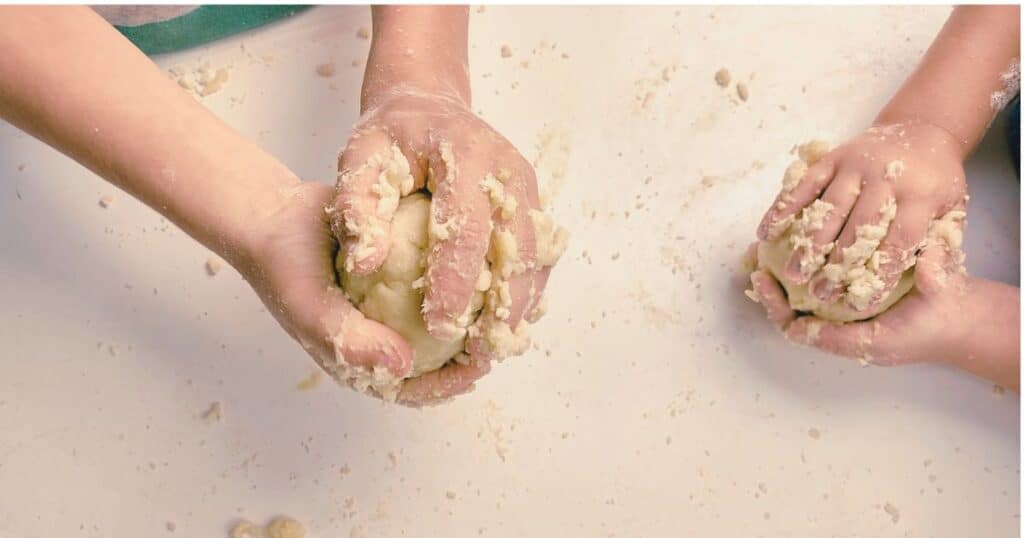
This dough smells heavenly and tastes like cookie dough; kids knead, roll, cut, and sculpt for hours, inevitably nibbling as they go. It keeps in the fridge for weeks, so the same batch becomes a recurring “bakery” or “pottery studio” that evolves over days.
Chocolate Cloud Dough (Tastes Like Tootsie Rolls)
2 cups powdered sugar, ½ cup cocoa, ¼ cup milk, 3 tbsp soft butter.
The scent alone is intoxicating; children build chocolate “castles,” “roads” for toy cars, or “mountains” with hidden “treasure” (mini chips) inside. They will play far longer than with regular playdough because every pinch offers a tiny taste reward.
Pumpkin Spice Cloud Dough (Fall Scented Moon Sand)
8 cups flour + 1 cup oil + lots of pumpkin pie spice (or cinnamon).
It molds like wet sand but crumbles delicately; kids sculpt elaborate “pumpkin patch” scenes complete with toothpick fences and toy animals that can last an entire afternoon of continuous play and storytelling.
Kool-Aid Playdough — Insanely Bright & Fragrant
Standard no-cook recipe + 2 packets Kool-Aid per batch.
The vivid colors and intense scents (grape! cherry! lemon!) inspire dramatic play scenarios — “I’m running a candy factory!” — and children will work side-by-side for hours creating multicolored “rainbow cakes” with intricate patterns.

Dyed Pasta Necklaces
Same dyeing method as rice but with rotini, bowties, penne — the shapes add new pouring sounds and building options.
Kids sort by shape/color, thread onto pipe cleaners for jewelry, or glue later for art projects; the textural variety keeps it fresh even after multiple uses.
Marshmallow & Toothpick Construction
Mini and large marshmallows (or choose grapes for a healthier option), toothpicks (or spaghetti noodles).
This is pure engineering heaven: children plan, test load-bearing designs, problem-solve collapses, and compete for tallest/strongest/most creative structure. Challenge your kiddo to build a marshmallow city with a working drawbridge.
Gumdrop & Toothpick Geodesic Domes
Same idea as above but with gumdrops — slightly stickier, slightly more delicious.
Older kids naturally gravitate toward Buckminster Fuller-style domes and polyhedrons, counting faces and vertices without realizing they’re doing geometry.
Apple Chunk & Pretzel Stick Sculptures
Apple cubes, pretzel sticks, raisins for decoration.
The crisp snap of pretzels combined with juicy apple makes every bite rewarding; kids create robots, animals, or abstract “modern art” and photograph their work before devouring it.
Colored Rice Sensory Bin — The Ultimate Long-Play Classic
White rice dyed with vinegar + gel food coloring, dried overnight, dumped in a huge bin with scoops, funnels, silicone molds, PVC pipe pieces.
This is the one that produces literal 3–4 hour play sessions: children pour, measure, bury treasures, create “dinosaur worlds,” “bakery shops,” or “construction sites” with endless narrative complexity. Add small toys or letters for literacy practice; the possibilities never end.
Magic Milk Color Explosions
Whole milk in a shallow dish, drops of food coloring, touch with dish-soap-dipped toothpick.
The swirling psychedelic patterns are mesmerizing; children will repeat it twenty times, narrating “fireworks” or “galaxies” and discovering surface tension without a lecture.
Homemade Butter in a Jar
Heavy cream + marble in a baby food jar or small mason jar — shake like crazy.
The process takes 10–20 minutes of shaking (great for wiggly kids), then suddenly — butter! Spread on crackers and feel like pioneers.

Baking Soda & Vinegar Volcanoes — Classic for a Reason
Build volcano around a small cup using playdough or foil, add baking soda + dish soap + coloring, pour in vinegar repeatedly.
Children become obsessed with perfecting the biggest, longest-lasting eruption, naturally experimenting with ratios and recording results like real scientists.
Rainbow Fruit Skewers (Patterning & Fine Motor)
Strawberries, cantaloupe, pineapple, green grapes, blueberries, purple grapes on blunt skewers.
Children create intricate patterns while practicing sequencing and bilateral coordination; the pride when they display their “rainbow masterpiece” is priceless.
Edible Dirt Cups with Gummy Worms
Chocolate pudding cups, crushed Oreos, gummy worms — layer and “plant” a garden.
Kids invent stories about underground creatures, add “carrot” slices or “flowers” made from fruit, and dig with spoons for ages.
No-Bake Energy Bite “Monsters”
Oats, honey, sunflower butter, mini chips, coconut — roll into balls, add candy eyes.
Each child designs their own monster family with unique personalities, then writes stories about them before eating the evidence.
Tortilla or Rice Cake Face Portraits
Spread with cream cheese or hummus, decorate with veggie features, olive eyes, pepper mustaches, shredded carrot hair.
Children study their own faces in a mirror to make accurate self-portraits, then gleefully eat their own noses.
Pretend Restaurant — The All-Day Dramatic Play
Play kitchen or card table, empty containers, play money, order pads.
Kids write menus, take orders, cook elaborate “dishes” from playdough, calculate bills, make change, and serve customers (you, dolls, stuffed animals) for hours upon hours.
Ice Block Treasure Hunt
Freeze small toys in a block of water overnight in a bucket; set outside or in bathtub with warm water droppers and toy hammers.
The slow excavation process is riveting; children strategize the fastest melting methods and celebrate each rescued treasure.

Dancing Grapes
Grapes (or blueberries), sparkling water.
Your child will drop grapes in a clear glass of sparkling water and witness the carbon dioxide bubbles cling to the surface of the grape. After a little bit the grape will rise to the surface allowing the bubbles to pop, and then down it falls to the bottom only to repeat the process. Explore buoyancy with this fun, hands on activity.
Watermelon Volcano
Hollow a small watermelon half, add baking soda, dish soap, vinegar — massive foamy eruption.
The sheer scale makes it epic; kids carve extra “craters” and keep experimenting long after the first explosion.
Pop Rocks + Different Sodas Taste-Test Lab
Small cups of various clear sodas, packets of Pop Rocks.
Children graph which combination makes the longest-lasting mouth explosion, practicing measurement, data collection, and hilarious sensory writing.
Edible Slime — Cornstarch + Sweetened Condensed Milk
Mix until slime consistency; add food coloring or cocoa.
Stretchy, glossy, and delicious; kids invent “slime monster” games and inevitably taste-test every new color batch.
Gingerbread Cloud Dough (Christmas Version)
Flour + oil + ginger + cinnamon + cloves + molasses for color.
The entire house smells like a bakery; children build “gingerbread villages” with toothpick windows and pretzel fences that evolve over days.
Peppermint Oobleck
Regular oobleck + peppermint extract and red/green coloring.
The cooling sensation on hands is addictive; perfect for winter sensory play that feels magical.
Naturally Dyed Egg “Geodes”
Hollow eggs dyed with onion skins, beets, turmeric, cabbage; crack open carefully to see crystals if you add alum (optional science extension).
Kids treat them like treasure and create elaborate “dragon egg” stories.
Cheerio Necklaces
Use dry Cheerios, colored version is optional but best for practicing patterns.
Younger kids practice fine motor threading; older kids compete for longest “necklace” or work on math skills.
Frozen Yogurt Dots on Cookie Sheets
Yogurt piped into dots using zip bag, freeze — then peel and eat/play.
Kids create patterns or “mini ice worlds” before devouring.

Celery Science — Colored Water Capillary Action
Celery stalks in colored water overnight; watch leaves change color.
Turns into multi-day observation journal with drawings and predictions.
Popcorn Kernels + Magnet Wands
Dry popcorn kernels + hidden metal objects + magnet wands for “mining.”
The satisfying pour sound and magnetic surprise keep it going forever.
Lemon Juice Invisible Ink Messages
Write with lemon juice on paper, heat gently to reveal.
Leads to secret spy clubs and coded messages passed all afternoon.
Edible Aquariums
Blue Jell-O “water,” Swedish fish, Nerds “gravel,” Cool Whip “waves.”
Kids construct layered underwater scenes and narrate ocean stories.
Potato Stamp Art
Potatoes cut into shapes, paint or ketchup “paint.”
Create wrapping paper or greeting cards that smell faintly of fries.
Smoothie Lab — Measure, Blend, Taste, Adjust
Give measuring cups, yogurt, frozen fruit, spinach, honey; let them invent recipes.
Math, science, and nutrition in one delicious package.
Bread-in-a-Bag Yeast Experiment
All ingredients in zip bag, knead, watch rise, shape mini loaves.
The magic of yeast never gets old; they check on it every ten minutes for hours.

Homemade Rock Candy Science (Takes Days)
Sugar syrup + sticks — grow crystals over a week.
Daily observation journal + tasting on day 7 = ultimate delayed-gratification lesson.
Clean-Up Systems That Actually Work
Listen, I’m not going to sugar-coat this: food play gets gloriously, spectacularly messy. Rice in the baseboards, oobleck in someone’s hair, chocolate playdough ground into the rug like the dog or child left a smelly surprise. But after plenty of sessions of encouraging my kiddos to play with their food, I have cracked the code. The secret is not preventing the mess (impossible). The secret is having systems so fast, easy, and foolproof that clean-up takes 5–10 minutes max and never becomes a battle.
Here’s my complete, battle-tested arsenal. Implement even half of these and you’ll go from dreading the end of playtime to thinking, “That was nothing.”
- The Sacred Vinyl Tablecloth (a.k.a. The $1 Miracle) Buy a dozen cheap vinyl/flannel-backed tablecloths from Dollar Tree, Walmart, or Amazon (the uglier the pattern, the better). Use one every single time. When play is done, carry the whole thing outside like a giant burrito, shake over the grass or trash can, wipe if needed, fold, done. Rice, flour, crumbs, glitter, paint—gone in 60 seconds. I rotate them so one is always clean, and I just toss them in the washer on gentle when they’re too gross to be simply folded and put away. Cost per use: basically zero.
- The Outdoor Transfer Rule If the weather is above 40°F and not pouring rain, 80% of food play happens outside on the deck, patio, or even a tarp on the grass. Gravity + wind + hose = nature does 90% of the work. Dyed rice in the cracks of the deck boards? Hose it. Oobleck on the picnic table? Hose it. Muddy feet? Hose them too. Winter hack: use the bathtub or garage with a tarp.
- The Pre-Bath Golden Hour Schedule messy food play for the 60–90 minutes right before bath time. End play, strip kids down to undies (or go full nude for toddlers), march straight to the tub. All rice/oobleck/yogurt/pudding goes down the drain with them. I keep a big plastic bin in the bathroom to toss clothes straight into for pre-treat/soak. Zero transfer of mess to the rest of the house.
- The Dedicated “Mess Station” Zone The vinyl tablecloth doesn’t just have to go on the table, we use it under our work station too. When we’re done, I roll it up like a jelly roll with all debris inside, take it outside, unroll and shake. Takes 2 minutes and contains everything.
- Broom & Swiffer Wet Mop (The Dynamic Duo) The broom and dustpan are always at the ready and so is a Swiffer wet mop. Rice, oats, popcorn kernels, dried pasta—swept up in seconds. Pair it with a mop that has a replaceable wet cloth and my kiddos fight over who gets to sweep and who gets to mop.
- Damp Hand Towel I keep a damp hand towel at the ready for quick clean up of hands, faces, table edges, chair legs—wipe, swipe, done. No sticky residue left behind.
- The “One-Touch Rule” for Tools All food-play tools (bowls, spoons, funnels, trays, silicone molds) live in one labeled bin that never mixes with regular kitchen stuff. When play ends, everything gets dumped into the sink for a quick hot-soapy soak or straight into the dishwasher’s top rack. No sorting required. Takes 3 minutes and prevents “Where’s the good measuring cup?” panic later.
- Post-Play “Clean-Up Song” Ritual (5 Minutes Flat) Blast the same 3-song playlist every time (think “Handclap”, “Shake It Off,” and “Happy”). Everyone knows: when the playlist starts, play stops. Kids bring dishes to sink, I shake the tablecloth outside, someone sweeps up the big debris, and a final wipe-down during the last song. It’s predictable, gamified, and over before anyone can whine.
- Stain Emergency Kit (Always Ready) If you’re concerned about stains then have a set of kids’ aprons or keep a spray bottle of 50/50 water + Dawn dish soap, a bottle of hydrogen peroxide, and a stack of old towels. Chocolate on shirt? Dawn spray. Yogurt on carpet? Peroxide. Oobleck on wall? Dawn again. Act fast and nothing is permanent.
- Mindset Shift: “Mess = Evidence of a Good Day” Last one isn’t gear—it’s philosophy. I take a quick photo of the disaster zone before cleaning and text it to my husband with “We were busy today.” Reframing it as proof of epic fun instead of failure makes the 8-minute clean-up feel like victory, not punishment. And this simple photo can be added to their homeschool learning portfolio.
Implement these systems and I promise: the clean-up will never again be the reason you say “Not today” to food play. You’ll say yes more often, the kids will play longer and deeper, and your house will still look (mostly) normal by dinner.

The Long-Term Magic
After years of structured food play, you might find that your child’s picky eating habits aren’t as bad anymore or that another understands the concept of fractions and states of matter. While another is more confident helping in the kitchen. Food stops being the enemy or the reward and instead it becomes the medium for creativity, discovery, and joy.
So please, beautiful homeschool mama — let them play with their food. Let it get messy. Let it take all morning. The learning that happens in those sticky, colorful hours is priceless. Leave a comment below sharing your experiences with playing with food. Do you have any systems in place that make it easier for clean up or containing the mess? I’d love to hear! Now go and have some food play fun for hours with your kiddo.
Recent Posts on the Blog