Skip to content
MOTHER NATURE’S FURY
Natural disasters for kids.
— By Julie Hodos on January 20, 2025; Updated on February 9, 2026.
This post may contain affiliate links. Please refer to our disclosure policy.
If you’ve ever frozen mid-sentence during a weather report because you didn’t know how to explain a hurricane without triggering a week-long fear of rain, this post is for you.
Table of Contents

Kids are wired to be curious about the biggest, loudest, most dramatic things on the planet. Volcanoes that spit fire? Tornadoes that spin whole houses into the air? Earthquakes that make the ground shake? To them it sounds like the coolest superhero movie ever—until someone accidentally mentions the word “danger” and suddenly every rumble of thunder means the world is ending.
The good news? You can teach natural disasters in a way that leaves them saying “WOW, Earth is so cool!” instead of pulling the blanket over their head.
Here’s the magic recipe:
- A sprinkle of simple, wonder-filled facts
- A huge helping of silly, full-body movement (hello, Natural Disasters Charades!)
- Hands-on activities, great books, and knowledgeable videos to keep the excitement going
- Gentle, honest answers ready for when they ask the deeper questions
Today I’m giving you the entire playbook—plus a FREE printable with 24 ready-to-go charades cards—so you can turn what could be a scary topic into a week of giggles, learning, and zero nightmares. Ready? Let’s make Mother Nature the most fascinating teacher ever!

Why Even Talk About Natural Disasters With Little Kids?
Some parents worry this topic is “too much” for young children. I totally understand the instinct to shield them. But here’s the reality: kids are going to encounter these concepts anyway—on the news, at school, from YouTube shorts, or from that one cousin who watches storm-chaser videos on repeat.
When we bring it up first, on our terms, in our calm and playful voice, we get to shape the story. We teach respect and awe instead of fear. We show them that nature is powerful, yes—but people are clever, prepared, and caring.
Plus, these conversations lay the groundwork for real science later. Understanding that the Earth has moving plates makes plate tectonics click in middle school. Seeing how warm air and cold air collide makes weather patterns less mysterious. And honestly? Kids who grasp these concepts early tend to feel more confident when real storms roll in.
Read Next: Weather Activity for Preschoolers

Step 1: Pre-Load Super Simple, Non-Scary Facts
Natural Disasters Defined
Before any game or activity, give them just enough information so everything else makes sense. Think of it as the “movie trailer” for Planet Earth. Keep it short (2-3 minutes), light, and full of wonder.
Here’s an easy script to use:
“God made our Earth to be alive and always moving! Sometimes it gets extra bouncy or windy or warm, and that’s when we see big natural events. They’re not bad or good; they’re just Earth being super strong and dramatic.
- Volcanoes are like Earth’s chimneys. When they get too full of hot, melty rock, they explode or ooze something out. This can be lava or volcanic ash.
- Earthquakes happen when Earth’s giant puzzle pieces (called plates and these are below the surface) stretch and wiggle—This makes the ground move.
- Tornadoes are when the air decides to spin super-duper fast, like the wildest merry-go-round ever.
- Hurricanes are enormous spinning storms that start over warm ocean water—like the sky and ocean having a giant swirling dance party with lots of wind and rain.
- Tsunamis are huge waves made when something (usually an underwater earthquake) gives the ocean a giant push.
- Wildfires can happen when it’s very dry and a tiny spark makes the plants go “whoosh” like a campfire that got too big.
- Avalanches are when a whole mountain of snow slides down super fast because gravity is pulling on it—like when you go sliding down a slide.
- Hail is when raindrops freeze into ice balls, and then fall—ping-ping-ping!”

How Scientists Track and Predict Nature’s Big Moves
Kids love superheroes, and guess what? Meteorologists, seismologists, and volcanologists are real-life ones! Here’s what they actually do—explained so your 5-year-old will think they have the coolest jobs ever.
- Seismologists (earthquake scientists) have thousands of super-sensitive wiggle detectors buried all over the planet. When the ground starts to jiggle even a tiny bit, their computers shout, “Something’s moving!” They can often warn people seconds to minutes before the big shakes hit.
- Volcanologists use cameras, heat sensors, and even “earthquake detectors” just for volcanoes. They watch for little rumbles, bulging mountains, and extra-hot gas. When a volcano starts acting grumpy, they tell everyone, “Time to take a vacation away from the mountain!”
- Meteorologists (weather superheroes) launch weather balloons daily, send up airplanes that fly right through storms, and have satellites that take pictures of Earth from space every few minutes. Giant computers crunch all that info to guess where a hurricane or tornado might go next.
- Hurricane hunters literally fly airplanes into the middle of hurricanes to drop little sensor packs that phone home with temperature, pressure, and wind speed. That’s how we know if a storm is getting stronger or weaker.
- Tsunami warning buoys float in the deep ocean. If a big earthquake happens under the sea, the buoys feel the water pressure change and send an instant text message: “Giant wave coming—head to high ground!”
- Fire scientists use satellites that can spot heat from space, plus drones and lookout towers. They even set small “good fires” on purpose to clear out dry brush so mega-fires have less fuel.
Tell your kids: “Scientists are like the Earth’s babysitters—they watch, listen, and let us know when Nature is about to do something really big so we can stay safe.”

“Can We Ever Stop Them?”
After the science chat, at least one child will ask, “Why don’t we just stop the tornadoes/earthquakes/volcanoes?”
Here’s the gentle, empowering answer I use:
“We can’t stop Earth from being its big, powerful self—that’s what makes our planet so amazing and keeps it healthy in the long run. But guess what? People are getting REALLY good at staying safe anyway!
- We build flexible buildings that sway instead of break during earthquakes.
- We have early-warning phone alerts that give us minutes (or even hours) to get to safe spots.
- We make fire breaks so wildfires slow down.
- We have shelters that are specifically designed for braving natural disasters.
- And the very best part? Kids like YOU grow up and become the scientists who invent even cooler ways to keep people safe!”

Step 2: Natural Disasters Charades
Once they have the basic idea it’s time to help the different types of natural disasters be memorable. It’s time for the star of the show: charades! This game is pure gold because:
- It’s active (perfect for wiggly bodies)
- It’s hilarious (kids invent the silliest moves)
- It locks the facts into long-term memory through movement
How to Play
- 2 players: Classic—one acts, one guesses.
- 3-5 players: Free-for-all—first to guess correctly keeps the card as a point.
- 6+ players: Split into teams. Only teammates can guess. Use a 30-45 second timer. Team with the most cards wins!
Supplies: Just the natural disasters printable cards (free below) and an open space.

Age-Appropriate Acting Prompts (3–10 Years)
Little ones (ages 3-5) usually need you to model the first few times. Act together, exaggerate, and laugh a lot!
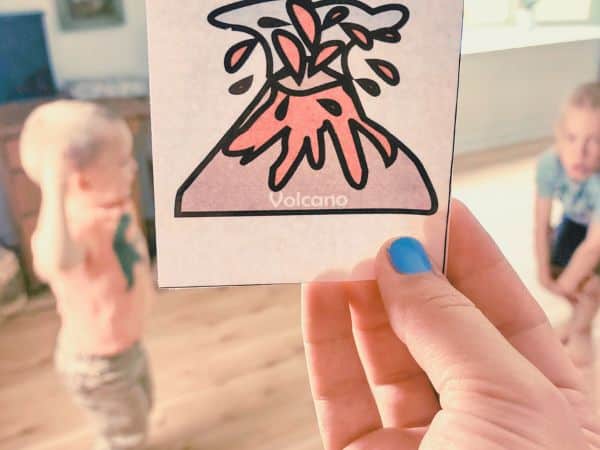
Volcano Erupting – Crouch low, arms hugging your belly. Slowly rise, shaking, then explode upward with arms wide.
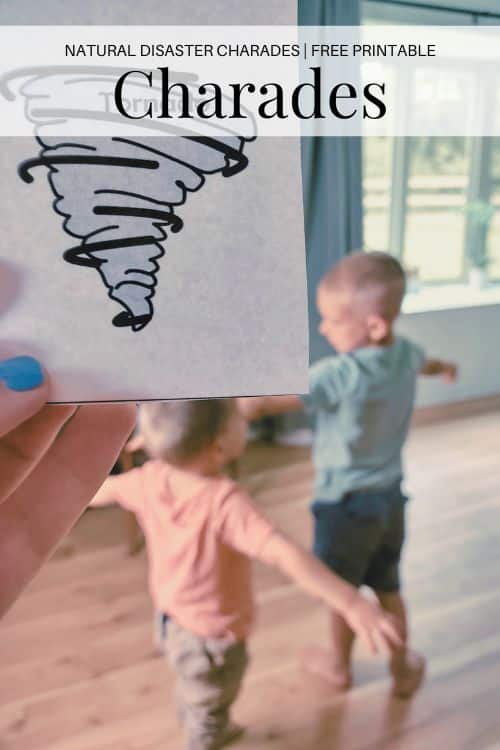
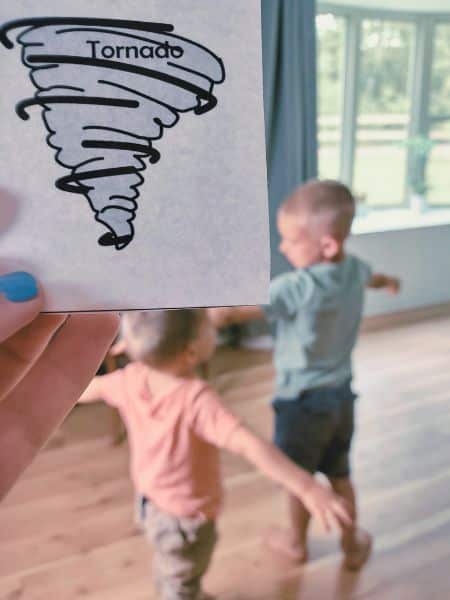
Tornado – Arms out like airplane wings and spin in circles.
Earthquake – Whole-body wiggles! Bounce, shake, try to walk but keep falling over (safely).
Hurricane – Start with rain fingers (wiggle fingers low), then raise arms high for heavy rain, then wave your arms back and forth above your head to demonstrate the wind that comes with this natural disaster. My 7-year-old adds “eye of the storm” by suddenly freezing in the middle.
Tsunami – Start far away crouched small, hands making a point above head (wave building). Slowly stand taller, then charge forward and crash arms down with a giant “SPLASH!”
Wildfire – Keep arms up high, swaying side-to-side like flames dancing.
Avalanche -Arms are overhead making big snowball motions, then swoop them down fast while sliding to the floor.
Hail Storm – Start with fists high and pound down alternately like throwing ice balls on an invisible car roof.
Older kids (6+) invent their own moves within seconds and crack themselves up. We usually play 3–4 rounds (15-20 minutes) and the kids beg for “just one more card!”
Step 3: Grab Your FREE Printable Charades Cards!
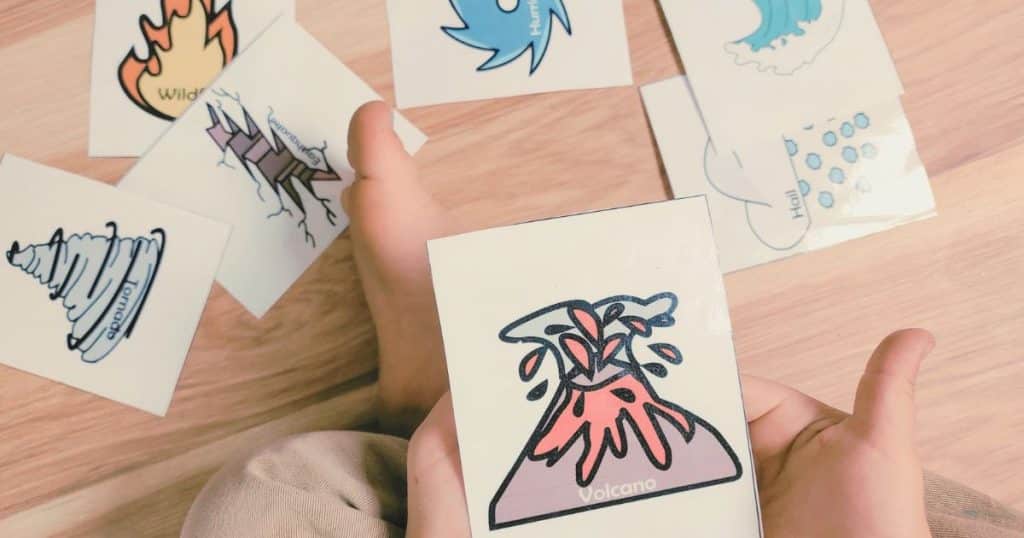
I’ve already designed them for you—8 cards total (make 3 copies depending on your number of players or teams) with a simple icon and the name. Perfect for pre-readers and early readers.
Printing tips for longevity:
- Bright cardstock = durable and quick
- Printer paper + laminate = practically indestructible
Step 4: Extend the Fun with Books, Videos, and Calm Resources
After charades, keep the momentum with resources that are 100% kid-friendly.
Best Books (Ages 3–10)
- Look Inside Wild Weather (Usborne Lift-the-Flap) by Emily Bone – Bright, interactive, and full of interesting facts for kids; perfect for ages 3-7.
- National Geographic Kids First Big Book of Weather by Karen de Seve– Stunning photos, simple text.
- The Magic School Bus Chapter Book: Voyage to the Volcano – Fiction + real facts.
- Everything Volcanoes and Earthquakes (National Geographic Kids) – Bite-sized facts, gorgeous images.
In addition, the A True Book series from Scholastic is a go-to for ages 4-10 with real photos but nothing graphic. The series includes the following:
- All About Volcanoes.
- All About Tornadoes.
- All About Hurricanes.
- All About Wildfires
- All About Heat Waves and Droughts,
- All About Earthquakes.
Calm YouTube Videos (Screened & Approved)
- Natural Disasters for Kids by Smile and Learn – Cartoon style, cheerful narrator.
- Natural Disasters Compilation by Peekaboo Kidz – Great overview with simple animations.
- Top 10 Natural Disasters for Kids by Learn Bright. – Perfect for discovering all 10 natural disasters.
- SciShow Kids “Why Do Buildings Fall in Earthquakes?” – Fun, factual, zero fear.
- Operation Ouch “Volcanoes” clip – The twins make it silly and fascinating.
Pro tip: Watch the day after charades. The kids shout out answers because they already “own” the information!

More Hands-On Activities (Pick One or Do Them All!)
Classic Baking Soda Volcano – Mold playdough around a small cup or bottle. Add 2 tbsp baking soda + a squirt of dish soap. Pour in vinegar + red food coloring. Erupt over and over!
Smashing Geodes – Volcanoes create beauty, not just destruction. Give your child a hammer, safety glasses, and a geode and let them smash to discover the crystals inside.
Tornado in a Bottle – Two plastic bottles + water + duct tape + glitter. Flip and swirl—mesmerizing vortex every time.
Earthquake-Proof Tower Challenge – Marshmallows + spaghetti (or toothpicks). Build the tallest tower that survives the “earthquake pan shake.” Engineering + giggles.
Wave Bottle Tsunami – Clear bottle, ⅔ water + blue food coloring, top with baby oil. Tilt to make waves. Add toy boats for drama.
Avalanche Bin -White rice, oats, or cotton balls in a bin. Pour from high and watch the “snow” slide.
Hurricane Spin Art – Salad spinner + paper + washable paint. Drizzle paint, spin like crazy—beautiful swirling patterns!
Read Next: Preschool Volcano Activities
When They Ask the Tougher Questions
Kids are smart—they pick up on more than we think. So eventually, during charades giggles or while watching a calm volcano video, one of them will pipe up with the big one: “But can these things hurt people?” or “Do people die in tornadoes?” or even the heart-tugger, “What if it happens to us?”
These are normal and brave questions. They’re testing if the world is safe and if you’ll tell them the truth. The key? Be honest without overwhelming them, validate their feelings, and always pivot to safety, smarts, and helpers. Here’s how we handle these moments in our house, broken down by age group.

For Ages 3–6 (Keep It Short, Sweet, and Super Reassuring)
Little ones need concrete comfort more than details. Focus on “we’re safe right now” and “grown-ups have plans.” Avoid scary words like “death” or graphic descriptions—stick to helpers and preparation.
A go-to response: “Sometimes yes, these big Earth events can hurt people or damage houses, and that’s really sad. But that’s exactly why we have so many brave helpers! Weather scientists watch the sky and warn us early so we can go to a safe place. Firefighters zoom in with big trucks to stop fires. Engineers build houses that can wiggle during earthquakes without falling down. And Mommy/Daddy always know what to do to keep YOU extra safe. We even practice our family plan sometimes, remember? So if something big happens, we’ll all stick together.”
Follow up by:
- Pulling out a family emergency kit (flashlights, snacks, favorite stuffed animal) and saying, “See? We’re ready!”
- Showing on a map: “This happened far away, and we’re right here where it’s calm.”
- Reading a positive book that educates. Knowledge can help reassure an unsettled mind.

For Ages 7–10 (Add a Bit More Truth + Empowerment)
Older kids can handle facts but still need hope. They might have seen news clips or heard classmates talk. Answer directly, then shift to what people do to stay safe and help others.
Expanded script: “Yes, sometimes natural disasters can hurt people or break things—that’s why they feel so big and scary when we hear about them. Earth is powerful! But here’s the really cool part: people have gotten super smart about staying safe. Scientists use satellites, buoys in the ocean, and special machines to spot trouble way ahead of time. They send alerts to phones so families can evacuate or go to a strong shelter. Firefighters train for years to fight big fires.
“After a hurricane or earthquake, thousands of kind people—neighbors, volunteers, even kids like you—help clean up, give food, and rebuild stronger homes. It’s sad when bad things happen, but it also shows how caring and brave humans can be. And in our family, we have our own safety plan: we know where to go, what to grab, and we practice so we feel ready. You’re part of that team! What’s one thing you think we should add to our plan?”
Do the same follow up as ages 3-6.

General Tips That Work at Any Age
- Start by listening and validating. Before you answer, say: “That’s a really good question. It sounds like you’re feeling a little worried—want to tell me more?” Kids often just need to know their fear is okay.
- Be honest but dose-controlled. Give only as much info as they’re asking for. If they press for more (“How many people?”), gently say, “It depends on the disaster, but the important thing is that helpers work really hard to keep as many people safe as possible. We can look up more when you’re older if you want.”
- Limit scary media. If a news story pops up, watch together (or preview) and narrate positively: “See how those firefighters are helping? That’s what heroes do.” Then switch to something fun.
- End on action and hope. Always circle back to what we can do: prepare, help others, grow up to be scientists or rescuers. Phrases like “Nature is strong, but people are clever and kind” become family mantras.
- Turn it positive. After answering, suggest: “Let’s practice our ‘duck and cover’ for earthquakes!” or “Want to make thank-you cards for firefighters?” Action beats anxiety every time.
Bottom line: These tougher questions are actually a gift. They let you show your child that the world can be unpredictable… but love, preparation, and community make it feel a whole lot safer. You’ve got this—and your kids are lucky to have a grown-up who talks about the hard stuff with so much care.
If one of these moments happens in your house after trying the charades or activities, pop back in the comments and share how it went. We’re all learning together!
Turn “Scary” Into Pure Wonder
Teaching natural disasters doesn’t have to mean nightmares. When we lead with awe, add movement and laughter, and follow up with gentle resources, kids walk away with respect for nature’s power, awe for God’s creation, and confidence in people’s ability to prepare and care.
So clear the living-room floor, print those free cards, and get ready for the silliest, loudest, most educational 20 minutes your family has had all week.
I can’t wait to hear how it goes in your house! Drop a comment and tell us:
- Your kids’ funniest charades move
- Which disaster they now want to “be” every day
- Or any new acting ideas we should add to the cards!
Happy erupting, spinning, shaking, and learning!
Natural Disasters for Kids
AT A GLANCE ACTIVITY INSTRUCTIONS
Materials
- Natural disasters printable printed on cardstock.
Instructions
Actions:
- Use the following actions as a guide.
- Volcanic eruption -coming from a squat position jump up with your arms fanning out.
- Tornado – spin in a circle really fast with your arms out.
- Earthquake – shake about like you’re trying to catch your balance.
- Hurricane – this one can be a few different motions because you get winds and rain but I would stick with the flooding aspect. Starting with your hands low to the ground bring them up with the fingers dancing until they’re above your head and then swing your arms about.
- Wildfire – Sway your arms back and forth above your head imitating flames.
- Tsunami – Begin in a crouching position with your arms above your head. Come running out of the position and throw your arms down to symbolize the crashing of the wave.
- Avalanche – Circle your arms around each other starting above your head and having them come down to the floor.
- Hail – Have your hands clenched as fists and raise them above your head, throw them down repeatedly, be sure to alternate. This almost looks like you’re beating a drum.
Play charades:
- 2 players – one person picks a card without the other person seeing it. Then they act out the natural disaster represented on the card. The other person must guess the natural disaster correctly.
- 3 players – each person is on their own team. One person acts out the natural disaster and whoever guesses first gets to keep that card and the point.
- 3< players – divide into teams and only the people on the same team can guess what their team member is acting out. There is a set time limit, we use a small hourglass that came from a board game. However, you can use a timer on your phone if you do not have an hourglass. Usually 30-45 seconds is enough.
Recent Posts on the Blog