Skip to content
FRESHWATER VS. SALTWATER
All about animals who live in water.
— By Julie Hodos on February 5, 2025; Updated on February 4, 2026.
This post may contain affiliate links. Please refer to our disclosure policy.
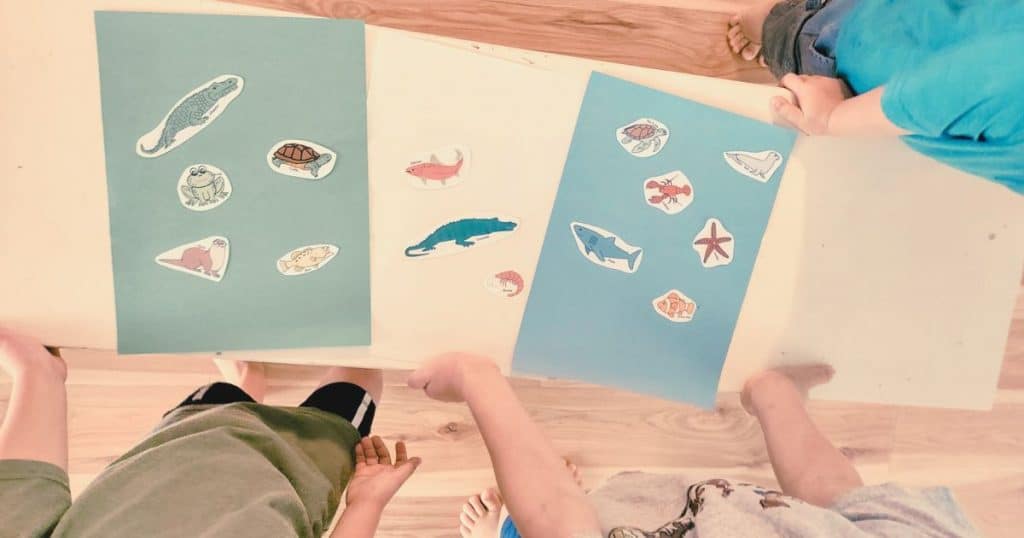
If you’re looking for a hands-on way to spark your child’s curiosity about the natural world, you’ve come to the right place. Today, we’re diving into one of my favorite activities: sorting animals who live in water. This isn’t just a simple sorting game—it’s a gentle introduction to taxonomy, which is basically the science of classifying living things based on their characteristics. By breaking it down into manageable parts, we help little ones grasp big ideas without overwhelming them, and the best part is how adaptable it is for different ages and interests.
Table of Contents

Why start with water-dwelling creatures? Well, water covers over 70% of our planet, and it’s home to some of the most fascinating animals out there. By exploring their habitat preferences—whether they thrive in salty oceans, fresh ponds, or even both—we help kids understand that not all water is the same. Oceans and seas are vast, salty bodies teeming with life, while ponds and lakes are calmer, freshwater spots. Some animals are picky about their homes, while others are adaptable adventurers. This activity builds observation skills, encourages critical thinking, and fosters a love for science without feeling like “schoolwork.” Plus, it ties into broader themes like environmental awareness, showing how habitats support diverse life and why protecting them matters.
I’ve used this with my own kids, ages 4 and 6, and it’s always a hit. It’s perfect for preschoolers through early elementary, and you can tweak it for different skill levels. For younger ones, focus on pictures and simple categories; for older kids, add research or writing prompts. It’s low-prep, using stuff you probably have at home, like paper, scissors, and kitchen items. If you’re short on time, do it in sessions—books one day, facts the next. Stick around—I’ll walk you through everything step by step, from books to games, with a free printable to boot. Let’s make learning splash-tastic!
Printable for Animals Who Live in Water Activity
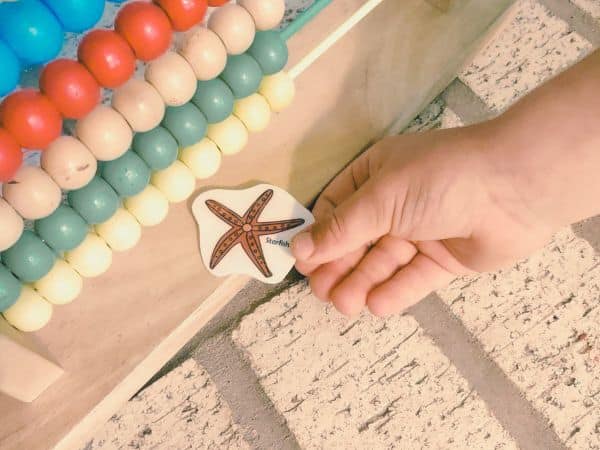
Before we jump in, let’s talk about the star of the show: our free printable! It’s designed to make this activity a breeze. You’ll get colorful cards featuring various water animals, ready to cut out and sort. Think sharks, beavers, jellyfish, and more—each with a fun illustration to keep little ones engaged. You can find the download link at the bottom of this post, but don’t skip ahead! The instructions are key, especially if your family isn’t near the ocean or a lake. We’ll start with building background knowledge so the sorting feels meaningful.
Bonus tip: Laminate the cards for reuse and turn them into durable game pieces. This printable isn’t just for one activity—repurpose it for storytelling or matching games. Store them in a zip-top bag labeled “Water Animals” for easy access next time. And if you have multiple kids, print extras to avoid sharing squabbles.

Read Books About Animals Who Live in Water
Nothing beats a good book to set the stage. Reading together builds vocabulary, sparks imagination, and makes abstract concepts like habitats feel real. I always start activities like this with storytime—it’s cozy and gets everyone excited. Here are my top picks for water animal books, presented in a handy list. They’re beautifully illustrated, fact-packed, and perfect for ages 3-9.
- Over and Under the Pond by Kate Messner: In this beautifully illustrated tale, Messner invites children to explore the layered ecosystem of a freshwater pond, from birds skimming the surface to fish and turtles lurking below. The poetic narrative flows gently, highlighting the interconnected lives of animals like frogs on lily pads and beavers building dams, while subtle facts weave in to educate without overwhelming. We love how it captures the quiet magic of nature, inspiring outdoor observations and discussions about how every creature plays a role in its habitat.
- Over and Under the Waves by Kate Messner: Shifting to the dynamic world of saltwater, this book delves into ocean life with vivid depictions of crashing waves, seals basking on rocks, and kelp forests teeming with fish. Messner’s lyrical prose paints a picture of the sea’s rhythms, from surface surfers to deep-sea dwellers, fostering a sense of wonder about marine biodiversity. It’s perfect for comparing with its pond counterpart, helping kids appreciate the contrasts between habitats while sparking empathy for ocean conservation.
Other favorites? If your library has them, grab nonfiction like National Geographic’s kids’ books on oceans or rivers. Reading tip: Pause often to ask questions like, “Where do you think this animal lives? Why?” It turns passive reading into active learning. These books aren’t just entertaining—they lay the groundwork for our activity, helping kids visualize saltwater vs. freshwater worlds.
In my home, we have a “book wall” for themes like this or you can use a “book basket.” Whatever your choice, let your child pick from the assortment of water animal themed books. And don’t forget to connect back to real life—after reading about ponds, head to a local park to spot similar sights.

The Different Habitats of Animals Who Live in Water
Okay, let’s hook ’em in! Even if your child has some idea about bodies of water, this step is a great way to start. It’s the “wow” moment that pulls them into the lesson without lectures. We live in Mississippi, close to the Gulf, so my boys are beach pros. They’ve splashed in salty waves and fished in northern lakes at Grandma and Grandpa’s. But not every kid has that exposure, so we start simple. This part is crucial because it bridges everyday experiences to scientific concepts, making taxonomy feel accessible rather than abstract.
The key? Make it sensory and surprising. Skip the monologue about salinity levels—that’s a snooze for little ones. Instead, use a quick demo to show the difference between saltwater and freshwater. It’s practical, uses kitchen staples, and leads naturally into animal discussions.
Glasses of Water Demo
Here’s how to do it: Grab two clear glasses and fill them with room-temperature water. In one, stir in about a teaspoon of table salt until it fully dissolves—no visible grains left. (Pro tip: Use warm water if needed for faster dissolving.) Place them side by side on the table.

Call your child over and say something like, “I have two glasses of water from different places. Want to taste them?” Let them sip the plain one first—nice and refreshing. Then the salty one. Watch their face scrunch up! Mine always ask, “Did you get this from the ocean?”
Now, pivot to discussion: “See how one tastes fresh and the other salty? That’s like ponds and lakes (fresh) versus oceans and seas (salty). Animals live in these waters, but some prefer one over the other because of the salt.” Tie it back to books you’ve read—mention a sea turtle from Over and Under the Waves vs. a beaver from Over and Under the Pond. Why does this work? It’s hands-on, engaging senses (taste, sight), and creates curiosity.
Extend it: Talk about why salt matters. Plants and animals in saltwater have adaptations, like thick skins or special kidneys. Freshwater critters deal with less salt, so they’re built differently. Keep it light—use examples like, “Imagine if you had to drink salty water all day—yuck! Sharks love it, though.” Relate to home: “Our tap water is fresh, like a lake. Ocean water? Too salty for us!”
This hook takes 5-10 minutes but sets up success for the rest. If you skip it, kids might zone out during facts. For repeat plays, vary it—use egg floating test (eggs float in salt water) for a science twist.
Read Next: 5 Senses Activities for Kids

Facts About Animals Who Live in Water
Now that they’re hooked, let’s splash into facts! Facts are fun when they’re relatable—use household items to demonstrate, ask questions, and connect to kids’ lives. This builds wonder and retention. We’ll cover saltwater, freshwater, and adaptable animals. Share one or two at a time, then pause for reactions. To expand learning, encourage kids to act out facts, like pretending to be a shark sniffing blood.
Aim for engagement: “Can you imagine eyes as big as your dinner plate?” Grab a plate to show! Or, “Could you chew a tree like a beaver? Let’s compare our teeth.” These moments make abstract info tangible. If facts spark questions, jot them down for later research—turns it into inquiry-based learning.
Saltwater Animal Facts
Saltwater habitats like oceans are vast and mysterious, full of giants and drifters. Here’s a deeper dive, with extra tidbits for discussion:
- Great White Sharks Are Apex Predators: These ocean bosses roam coastal waters worldwide. They smell blood from up to 3 miles away—sharper than a dog’s nose! With rows of 300 serrated teeth, they chomp through seals like butter. Fun fact: “If you lost a tooth, sharks grow new ones weekly. No tooth fairy needed!” Discuss why they’re important— they keep oceans in balance by eating weak animals. Myth-bust: They’re not man-eaters; most attacks are mistakes.
- Giant Squid Are Deep-Sea Mysteries: Hiding in dark depths, they reach 43 feet long—longer than a school bus. Their eyes? Dinner-plate sized for spotting prey in blackness. Relate it: “Hold a plate to your face— that’s how big! They battle sperm whales, leaving sucker scars.” Fun fact: Their beaks are super strong, like parrot beaks but bigger.
- Sea Turtles Travel Thousands of Miles: Leatherbacks migrate 10,000 miles yearly, using Earth’s magnetic field like a GPS. They nest on the same beaches they hatched from. Fun fact: Females lay hundreds of eggs, but few survive nature’s challenges.
- Blue Whales Are Record Holders: Bigger than dinosaurs at 100 feet, they eat 8,000 pounds of krill daily—imagine 40,000 burgers! Their heart weighs 400 pounds, like a small car. Demo: Have your child lay down next to a car and compare the size difference. Fun facts: Their calls are louder than jets and their tongue weighs as much as an elephant—mind-blowing!
- Jellyfish Are Ancient Drifters: Over 500 million years old, moon jellies float with currents and are made up of 95% water. Stinging tentacles zap fish. Relatable: Fun fact: Some glow in the dark—bioluminescence magic!

Freshwater Animal Facts
Freshwater spots like rivers and lakes are cozier, with builders and biters. Add comparisons to saltwater for contrast.
- Freshwater Crocodiles Are Shy Predators: Australian river dwellers, up to 10 feet, eat fish quietly. Unlike bold salties, they’re timid. Question: “Would you rather meet a shy croc or a bold one? Why?” They bask on banks to sunbathe
- Piranhas Have a Fierce Reputation: Amazon swimmers with sharp teeth, but mostly veggie-eaters. Movies exaggerate— they’re like feisty goldfish. Fun fact: They school together in groups and so they strip a carcass fast, but rarely attack humans.
- Beavers Are Ecosystem Engineers: They dam rivers, creating ponds for wildlife. Teeth never stop growing, felling trees fast. Demo: Give your child a carrot and ask them to gnaw around it like a beaver does with a tree. Fun fact: Their lodges are cozy homes with underwater entrances—smart engineering.
- Giant Freshwater Stingrays Are Elusive: They’re up to 1,300 pounds and live in Asian rivers, with stinging tails. They’re hidden giants because they’re rarely seen. Fun fact: They bury in mud to ambush prey.
- Crayfish Are Tiny Lobsters: These stream scavengers are found worldwide, eating anything. Activity: “Hunt for them in creeks—safely, of course!” Fun fact: They molt shells as they grow, like snakes.
Freshwater and Saltwater Animal Facts
Some animals are versatile, switching habitats. Be sure to highlight the adaptations.
- Bull Sharks Are Salinity Superstars: Swim from oceans to rivers like the Mississippi. Their kidneys adjust salt and are found far inland—surprise! “Like a shark in your backyard river.” They’ve traveled 2,000 miles up rivers.
- Salmon’s Epic Journey: Born in freshwater, grow in saltwater, and return to spawn. The feed ecosystems. Fun fact: Obstacles like dams challenge them.
- River Otters Are Playful Swimmers: These adorable creatures live in North America. They’re playful, furry acrobats and hold hands while sleeping to not drift apart.
- Eels’ Mysterious Migration: Salt-born, fresh-lived, and back to the sea. Fun fact: They’ll slither over land.
- Striped Bass Are Ecosystem Helpers: These estuary dwellers balance food chains. Fun fact: They school in huge groups.
When possible use props for memorability! If kids want more use educational online videos for visual reinforcement.

Animals Who Live in Water Sorting Activity
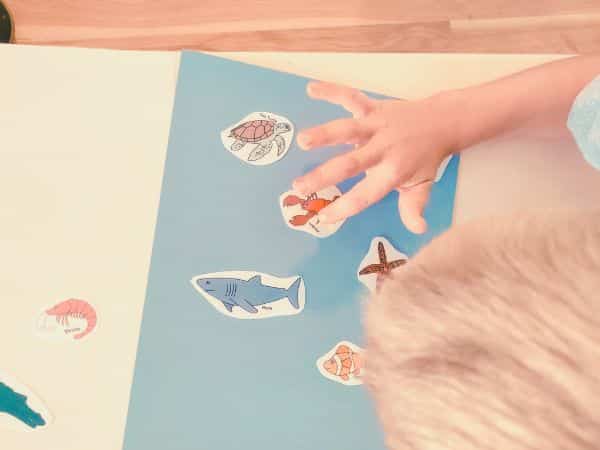
Once we’re ready it’s time for the sorting activity. Begin by placing three different colors of paper in front of your child. A blue paper denotes saltwater animals. The green paper is for freshwater animals. And a white paper is placed in the middle to be for animals that go between the two or have specific species that prefer different habitats. This visual setup helps with categorization, a key taxonomy skill.
To start, spread out the printable cards. Pick one, like a shark, and ask: “Does this live in the salty ocean or a fresh lake?” Place it on blue. Repeat, encouraging independence. If wrong, gently guide: “Great try! Sharks need salt to stay healthy.”
Game Time!
You can also turn this into a game of hide-and-seek. Your child will leave the room until you’ve placed all the cut out animals throughout a room. I prefer to laminate and place rolled tape on the back so that it can stick on surfaces at different heights. Hide in creative spots and based on the age of your child.
Once placed, your child can go around and find the various animals. When they find one they bring it over to the colored paper and decide which habitat the animal most likely dwells in. The first couple times we play I am helping them. But each time we clear the papers and I hide the animals again, my kiddo gets more right and needs less help. Add timers for excitement or points for speed/accuracy.
A note on animals who live in water.
- As you saw in the facts some animals, like the salmon, go back and forth between salt and freshwater depending on the cycle they are in, in their life.
- Secondly, certain species of shrimp prefer salt and some prefer freshwater.
- There is a very small percentage of seals that live in freshwater. The majority of seals cannot tolerate fresh water for long because their skin needs the salt in the water.
- Lastly, crocodiles are found in either type of water, while alligator’s prefer freshwater.
These nuances teach flexibility in classification—real science isn’t always black-and-white.
Extending the Learning
To keep the momentum going, let’s extend this activity beyond sorting with creative crafts and real-world connections. This new section adds depth, turning a one-off game into a multi-day unit that reinforces concepts through hands-on making and exploration. It’s practical for homeschoolers or weekend fun, using simple supplies to build on what we’ve learned.
Crafts
Water Habitat Diorama: Use a shoebox, divide it into salt and fresh sections with blue construction paper waves on one side and green lily pads on the other. Kids glue printable animals (or draw their own) in appropriate spots, adding details like cotton ball clouds or pipe cleaner kelp. This visual project solidifies habitats—discuss why a beaver dam fits fresh but not salt. Tip: Add special elements, like sand for beaches or blue gelatin for water (in a plastic container).
Animal Fact Book:. After sorting, have kids make mini-books. Fold paper into quarters, draw an animal per page, write (or dictate) a fact, and label habitat. For non-writers, use stickers. This boosts literacy while reviewing facts. Share at family dinner for pride boost.
Field Trips
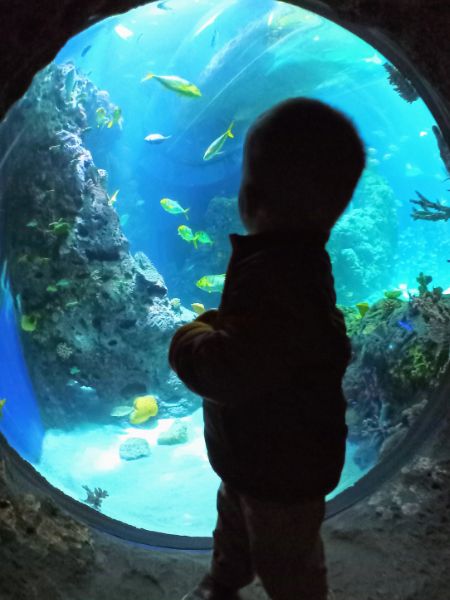
If possible, visit a local aquarium, zoo, or nature center. In Mississippi, we love the Gulf Coast Aquarium—see live sharks and otters up close. No nearby spots? Virtual tours online, like Monterey Bay Aquarium’s webcams. Journal afterward: What surprised you? Draws connections to books and demos.
Tailor these extension activities to your child’s interests—if your child loves art, emphasize crafts; nature buffs, trips.
Get the Printable for Free Below and Start Playing Today!
Animals Who Live in Water and More
From shrimp to bass to sharks to otters, your preschooler will have a better understanding of the various animals that belong to different water habitats. If you’re interested in more wild animal sorting activities such as this check out the following posts:
Animals Who Live In Water
AT A GLANCE ACTIVITY INSTRUCTIONS
Materials
- 3 colors of paper (green, blue, and white)
- Included printable
Instructions
- Begin by giving your kiddo an example of freshwater vs. saltwater by giving them two different glasses of water: saltwater and freshwater. Allow them to taste the two. They will probably pucker up with the salt water glass. Explain that some animals prefer salt water and can’t survive in fresh and vice versa.
- Discuss with them that lakes and ponds are fresh water. Oceans and seas are salt water. That’s how people distinguish between the two.
- Now, place the three papers in front of your child with the white paper between. The green will be the freshwater and blue is salt.
- Begin by prompting your child to sort them based on any previous knowledge, giving names if needed.
- After they’ve finished, individually tell your child which body of water an animal lives in and let them decide if their guess was accurate or not. ( i.e. If it lives in the ocean it goes under the salt water category. If it lives in a lake it’s a freshwater animal).
- A note about the printable animals and why they are being considered both or one or the other.
Recent Posts on the Blog