
This post may contain affiliate links. Please refer to our disclosure policy.
The holidays are a whirlwind of twinkling lights, cookie baking, and family gatherings that leave everyone buzzing with joy. But once January rolls in and the decorations come down, winter can feel like it’s stretching on forever. The days are short, the weather is chilly, and those post-holiday blues can sneak up on even the most upbeat families. That’s where a winter bucket list comes in handy—especially one tailored for families with young kids.
Table of Contents

We’re focusing on the months after the holidays, from January through March, when the excitement has faded but the snow is (usually) still around. Think cozy indoor crafts, snowy outdoor adventures, and simple games that keep little ones engaged without breaking the bank or requiring a ton of prep.
This isn’t just a random list of ideas; it’s a practical guide to injecting fun into those long winter days. We’ll cover 25 activities, games, and crafts that are kid-friendly (aimed at ages 3-10, but adaptable), family-oriented, and easy to squeeze into your routine. Whether you’re dealing with snowy weekends or rainy afternoons, these ideas will help you create lasting memories while keeping everyone active and happy. So grab a hot mug of cocoa, snuggle up, and let’s dive into why planning your winter matters—and then get to the good stuff: the bucket list itself!
Why Plan Out the Rest of Winter?
Let’s be real—winter after the holidays can feel like a slog. The festive cheer is gone, school routines are back in full swing, and cabin fever sets in quicker than you can say “snow day.” For families with young kids, this can mean more screen time battles, restlessness, and those inevitable “I’m bored” complaints. But here’s the silver lining: planning a winter bucket list is your secret weapon against the winter blues.
First off, it gives everyone something to look forward to. Kids thrive on anticipation, and marking activities on a calendar turns ordinary weeks into an adventure countdown. Research from child development experts shows that structured play helps reduce anxiety and boosts mood in little ones, especially during darker months when seasonal affective disorder (SAD) can affect even kids. By planning ahead, you’re not just filling time—you’re building resilience and joy in a way that feels natural and exciting.

Second, it’s all about family bonding. With young kids, winters can isolate you indoors, but intentional activities encourage teamwork, laughter, and those heartwarming moments you’ll cherish forever. Think of it as an extension of holiday magic, minus the stress of shopping, deadlines, or hosting. Plus, many of these ideas incorporate learning stealthily—fine motor skills from crafts, science from experiments, or social skills from games—making them practical for busy parents who want to make the most of their time without extra effort.
Finally, skipping the winter blues means prioritizing mental health for the whole family. A bucket list keeps things balanced: mix outdoor fresh air (which provides a much-needed vitamin D boost!) with cozy indoor days when the wind is howling. It’s flexible too—adapt for weather changes, energy levels, or tight budgets. No fancy equipment is needed; most activities use everyday household items that you probably already have on hand.
The goal is to emerge from winter feeling refreshed and connected, not exhausted and stir-crazy. Now, let’s jump into the activities themselves, I grouped them to hopefully make it easier to find what you’re looking for. I’ve included detailed tips, required materials, and explanations of why each one works so well for young families, so you can pick and choose based on what fits your day.
Read Next: Finding Boredom
Outdoor Adventures: Embracing the Snow and Chill
Nothing beats bundling up and heading outside to shake off those indoor blahs and get some fresh air into your lungs. These activities are perfect for snowy days, but you can easily tweak them for milder weather or even indoor alternatives if a storm hits. Aim for short bursts of about 20-30 minutes to keep little toes from getting too cold, and always check the forecast while layering up with hats, mittens, and waterproof boots.
We live on the gulf coast and last year we had a freak snowstorm, usually we don’t see any snow. Well we had a full day of snow, snow, and more snow! It was beautiful! Since, we don’t usually see flurries we are not prepared with snow gear so dressing the kids to go out in the snow included socks and regular shoes. At one point my eldest said, “Momma, there’s bugs in my shoes! My toes are stinging!” My boys have experienced lots of bites and stings but not recently the stinging, damp cold that snow brings. Word from the wise, dress them appropriately and keep the time short if the gear isn’t quite up to par.

1. Build a Classic Snowman
Kick off your winter bucket list with this timeless favorite that never fails to delight. Head outside and gather fresh packing snow, then roll it into balls to stack into a friendly snowman, adding a carrot for the nose, buttons for eyes, and an old scarf from your closet for that perfect touch. For young kids, start with a smaller version to avoid frustration
If the snow doesn’t cooperate or snow is scarce in your area, like us, recreate the fun indoors by making marshmallow snowmen or another age appropriate snowman craft. This activity works wonders because it encourages creativity through decorating and provides physical play that gets everyone moving, making it great for ages 3 and up while building gross motor skills.
2. Snowball “Fight”
Instead of an all-out chaotic war that might lead to tears, turn it into gentle target practice where kids aim snowballs at trees, fences, or bullseyes drawn right in the snow with a stick. All you need are gloves to protect little hands, and if there’s no snow, adapt by balling up socks for an indoor version. This twist builds hand-eye coordination, promotes gentle competition, and guarantees giggles galore without any real risk, helping kids learn about boundaries and sportsmanship in a playful way.
Once your children are older, and all on a pretty even playing field, then a snowball to the face will be handled well and will probably be reciprocated in fun. My boys are 7, 5, and 4 so someone is going to end up in tears, and another pouting for getting scolded if I let this be an all out snowball fight with Daddy helping to protect the youngest.
3. Sledding Shenanigans
Find a gentle hill in your local park or backyard and let the sliding fun begin on a snowy afternoon. Always supervise closely for safety, holding hands on the way up if needed. This post-holiday perk reuses those leftover boxes, and the activity is exhilarating while tiring out energetic kiddos quickly, giving parents a peaceful evening afterward—pure win-win for family energy management.
4. Make Snow Angels
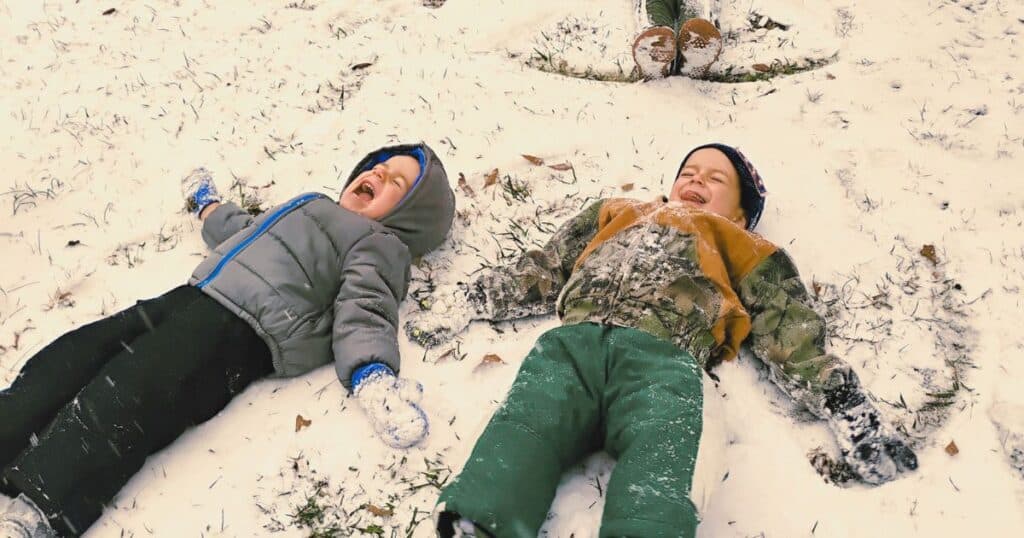
For a simple yet magical outdoor moment, lie down in a fresh patch of snow and flap your arms and legs to create beautiful angel shapes. Take photos to remember the joy. It’s ideal for toddlers who might not handle more active play yet, as it teaches body awareness and provides sensory fun through the cold, crunchy snow, all while requiring little cooperation from the snow itself and zero materials beyond warm clothes.
5. Winter Nature Hike
Bundle everyone up for a short, easy walk in a nearby park, your backyard, or even around the neighborhood to explore the winter landscape. Encourage kids to collect pinecones, spot animal tracks in the snow, or listen for birds chirping in the bare trees, then bring a small bag to carry home your treasures. Add an educational twist by discussing how animals survive the cold winter months, like hibernation or migration. This activity is perfect for curious minds because it gets families into nature, promotes observation skills, and offers a calm way to connect with the season.
6. Ice Skating
Head to a local indoor or outdoor rink for some slippery fun, or if there’s a safe frozen pond nearby, give it a try there. For beginners who are just starting out, simply sliding on boots in shallow snow can mimic the experience without skates. Rent equipment affordably at community centers, and hold hands to build confidence. This builds balance and coordination in a way that feels like a mini-adventure, turning a regular winter day into something special that kids will beg to repeat.
These outdoor ideas are fantastic for getting the blood pumping, combating winter lethargy, breathing lots of fresh air, and soaking up whatever sunlight peeks through the clouds. I love being out in the snow and winter chill but part of the fun is returning inside to the cozy warmth of hot cocoa and blankets.

Indoor Crafts: Cozy Creativity on Chilly Days
When the weather outside is frightful and staying in sounds delightful, crafts become your best friend for keeping hands busy and minds engaged. These projects are designed to be mess-contained, using recycled materials from around the house, and they spark imagination without needing artistic expertise. Set up a dedicated craft station with washable markers, paper, and a tablecloth to make cleanup a breeze and encourage repeat sessions.
7. Paper Snowflake Magic
Create intricate designs by folding white paper into triangles, snipping out patterns with scissors, and unfolding to reveal beautiful snowflakes. Hang them on windows or string them into garlands for a winter wonderland vibe right in your living room. You’ll need just paper and kid-safe scissors; for little ones, pre-fold the paper and guide their cuts to avoid frustration. This boosts fine motor skills through precise snipping and teaches pattern recognition as kids experiment with shapes, resulting in decorations that make your home feel festive all winter long.
8. Sock Snowman Craft
Transform old socks into adorable snowmen by stuffing them with rice, cotton balls, or fabric scraps, then tying off sections with rubber bands or string to form the head and body, and decorating with buttons, felt scraps for hats, and markers for faces. No sewing is required, making it accessible for all ages. As a practical tip, dig through your laundry pile for mismatched socks that no one will miss. The finished snowmen are not only cute but also huggable, leading to extended pretend play sessions afterward, which helps develop storytelling skills in young kids.

9. Pinecone Bird Feeders
Roll collected pinecones in peanut butter (or a seed butter alternative for allergies), then dip them in birdseed and hang them outside a window with string. Watch as feathered friends come to visit, turning your craft into a living bird-watching station. Gather pinecones on a prior nature hike to tie activities together. This teaches empathy for wildlife, introduces basic ecology like food chains, and provides ongoing entertainment as kids observe birds from indoors on cold days.
10. Winter Painting
Set out watercolors and invite kids to paint snowy scenes using shades of blue, white, and silver, perhaps adding glitter glue for a sparkling effect that mimics real snow. Provide paper, brushes, and cups of water—nothing fancy needed. Let children mix colors on their own to explore how blues blend into purples or grays, turning it into a mini art lesson. This activity is therapeutic and calming for the post-holiday wind-down, allowing creative expression through colors while creating keepsake artwork to display on the fridge.
11. Salt Dough Ornaments (Winter Edition)
Mix up a simple dough from flour, salt, and water, then let kids shape it into snowflakes, mittens, or icicles using cookie cutters or freehand, bake them to harden, and paint with acrylics once cool. Store the finished ornaments for next year’s tree or gift them to relatives. It’s budget-friendly since ingredients are pantry staples, and the sensory experience of kneading dough builds hand strength while the painting step adds a creative flourish.

12. Borax Ice Crystals
Transform your kitchen into a science lab by creating sparkling “ice crystals” with borax. The materials needed are borax (found in laundry aisles), boiling water, heat-safe jar, pipe cleaners, and a pencil. Discuss how crystals grow for a science lesson, or add food coloring for extra flair. This activity captivates kids with its magical transformation, teaching patience and basic chemistry while producing a keepsake to display. Perfect for ages 4+, with adult supervision for hot water handling.
These crafts turn rainy or blustery days into opportunities for productive fun, helping kids express themselves artistically while you enjoy a quiet moment nearby with your own hot beverage.

Games and Playtime
Games are essential for keeping energy levels high without ever leaving the warmth of your home, and they mix physical movement with quiet strategy to suit different moods. Involve the whole family to maximize bonding time, and rotate games to keep things fresh and exciting.
13. Indoor Scavenger Hunt:
There are already winter-themed items around the house, now you can send your kids on a hunt for them. Consider including on your list items like a mitten, a toy snowflake, or a blue crayon, and provide simple clues tailored to your child’s reading level, such as pictures for non-readers. This boosts problem-solving skills and adds a dash of excitement, turning your living room into a treasure trove that encourages exploration and critical thinking.
14. Charades with a Winter Twist
Act out winter animals like a penguin waddling or activities such as skiing down a hill, with no props needed—just your bodies and imaginations. The hilarity ensues as family members guess, making it perfect for all ages and improving non-verbal communication skills in a lighthearted environment.
15. Puzzle Marathon
Pull out jigsaw puzzles featuring winter scenes like snowy forests or ice castles, starting with 50-100 pieces for young kids to avoid overwhelm. Work as a team to assemble them, chatting along the way. This promotes patience, spatial awareness, and teamwork, making it a relaxing yet engaging way to spend an afternoon. One day my kids will be old enough that we can simply set up a puzzle in a cozy corner and it’s available to be worked on through out the winter months.
16. Board Game Bonanza
Dust off classics like Candy Land, Sequence, Clue, or Monopoly for simple fun or try newer ones like Cat, Goat, Cheese, Pizza. Games teach turn-taking, basic strategy, and good sportsmanship gently through play.
17. Build a Fort Kingdom
Drape blankets over chairs and couches, add pillows for walls, and create a cozy fort kingdom where stories come alive. Read books or play with flashlights inside once built. This sparks imaginative play at its best, allowing kids to design their own worlds and fostering creativity in a snug, secure space.
These games foster endless laughter and deep connection, transforming “I’m bored” moments into “Let’s play more!” pleas that strengthen family ties.

Educational and Themed Activities
Sneak in some learning with these fun twists that build skills while keeping entertainment at the forefront—perfect for parents who want playtime to double as growth opportunities.
18. Winter Read Alouds
Curl up with books like The Snowy Day by Ezra Jack Keats and Winter On the Farm adapted from Laura Ingalls Wilder’s Farmer Boy. Borrow from the library to keep it free and varied, enhancing language skills and empathy through shared narratives. Check out a thorough winter themed list at the post: Books for the Seasons.
19. Baking Simple Treats
Whip up no-bake snowballs by rolling dough in powdered sugar or create custom hot cocoa mixes with marshmallows and spices. Kids measure ingredients, practicing math concepts like fractions in a delicious, hands-on way that ends with tasty rewards.

20. Kid-Friendly Yoga
Follow along with poses that mimic winter elements, such as standing like bare trees in the wind or floating down like falling snowflakes, using free YouTube videos for guidance. This promotes mindfulness, flexibility, and body control, offering a calm break in busy days.
21. Science with Snow (or Ice)
Bring snow inside in a bucket, time how long it takes to melt, and experiment by adding salt and observing changes. It teaches states of matter and cause-effect relationships through simple, observable science that’s exciting for inquisitive kids.
22. Write Winter Letters
Help kids pen notes to grandparents thanking them for Christmas presents or describing their favorite winter fun so far, adding drawings or stickers for personalization. This practices writing and fine motor skills, while building connections with loved ones through thoughtful sharing.
23. Indoor Herb Garden
Plant easy herbs like basil or mint in small pots on a sunny windowsill, watering and watching them grow to tie into anticipation for spring. It introduces basic botany and responsibility, with the bonus of fresh scents and green foliage brightening your kitchen.
These activities add meaningful depth to your winter bucket list, making winter not just fun but enriching without ever feeling like formal schoolwork.

Nourishing Traditions
Round out your days with comforting rituals that nourish both body and soul, providing gentle wind-downs after active play.
24. Hot Cocoa Bar
Set up a station with a crockpot of hot cocoa, mugs, mix-ins like marshmallows, peppermint sticks, sprinkles, or whipped cream, letting kiddos and family make their own unique hot cocoa drink. It’s a cozy way to gather and share, building traditions around simple pleasures.
25. Movie Marathon Nights
Snuggle under blankets for winter-themed films like Frozen, complete with popcorn. This relaxes everyone and creates cherished downtime memories.
Skipping the Winter Blues with a Winter Bucket List
There you have it—over 20 ideas to fill your post-holiday winter with joy, adventure, and connection! Customize this winter bucket list based on your family’s unique vibe, and don’t stress about perfection; even partial check-offs create magic. The real magic happens in the togetherness, the shared laughs, and the small moments that stick. Print this list out, mark your calendar, check off as you go, and watch the winter blues melt away like snow in the sun. What’s the first activity on your winter bucket list? Share in the comments below—we’d love to hear your stories and adaptations!
Recent Posts on the Homeschool Blog