ROUTINES & SCHEDULES
Crafting a daily routine homeschool schedule.
— By Julie Hodos on August 19, 2025
This post may contain affiliate links. Please refer to our disclosure policy.
Homeschooling weaves education, family life, and personal growth into a unique daily rhythm. Unlike traditional schooling with rigid schedules, homeschooling offers the freedom to design a daily routine that reflects your family’s values, priorities, and season of life. This guide will help you create a daily routine homeschool schedule, covering everything from bedtime to wake-up, breaking the day into manageable chunks, and balancing tasks like lessons, extracurriculars, homemaking, family time, work, and personal time.
With practical strategies for estimating task durations, building flexibility, staggering non-daily tasks, and utilizing tools like a free printable planner and digital resources, this guide empowers you to create a routine that works for your family—while encouraging you to stay adaptable until you find what fits.
Table of Contents

Understanding the Full Scope of Your Day
Homeschooling parents know that education extends beyond lessons—it encompasses the entire day, from bedtime to wake-up. Every moment, from morning routines to evening wind-downs, shapes your children’s learning environment and your family’s well-being. A thoughtful daily routine accounts for this holistic reality, aligning with your family’s goals and current season of life.
Seasons of Life and Priorities
Your daily routine will vary based on your family’s circumstances. A family with young children may prioritize short, play-based lessons and naps, while one with teenagers might focus on independent study and extracurriculars. Working parents may need to carve out specific hours for professional responsibilities, while others might emphasize family bonding or personal growth. Start by reflecting on:
- Your family’s goals: Are you prioritizing academic rigor, character development, or a balance of both? Do you want to emphasize creativity, outdoor time, or community involvement?
- Your season of life: Are there young children, a new baby, or aging parents in the mix? Are you working part-time or full-time? Are you in a busy season with sports or co-op commitments?
- Your energy levels: When are you and your children most focused? Are mornings best for academics, or do afternoons work better?
Write down your top three priorities for the next few months. These will guide your daily routine and homeschool schedule and help you decide what tasks to include and when. As a side note, every three months is a good span of time to reevaluate your priorities, daily routine, and homeschool schedule.

Estimating Task Durations
A successful homeschool schedule relies on realistic time estimates for tasks. Underestimating how long activities take can lead to frustration, while overestimating can make the day feel rushed or unproductive. Here’s how to gauge task durations without getting bogged down in minute details:
- Track Current Routines: For one week, jot down how long tasks actually take. Include homeschool lessons (for example, math, reading), homemaking (cooking, cleaning), extracurriculars (sports, music lessons), family time (meals, games), work, and personal time (exercise, reading). Use a simple notebook or app to log approximate start and end times.
- Account for Transitions: Transitions between tasks—like moving from math to science or cleaning up after lunch—can take 5–15 minutes. Build these into your estimates.
- Consider Age and Attention Spans: Younger children may focus for 15–30 minutes per subject, while older kids can handle 45–60 minutes. Extracurriculars like piano practice might take 20–60 minutes, depending on the child’s age and skill level.
- Test and Adjust: After a week, review your time logs. If math consistently takes 45 minutes instead of 30, adjust your schedule. If cleaning the kitchen takes 20 minutes instead of 10, plan accordingly.
Example Time Estimates
- Homeschool Lessons: 2–4 hours daily (such as, 30 min math, 30 min reading, 45 min science/history, 45 min writing/projects).
- Homemaking: 1–2 hours (such as, 30 min meal prep, 30 min cleaning, 15 min laundry).
- Extracurriculars: 1–2 hours (such as, 1-hour sports practice, 30 min music).
- Family Time: 1–2 hours (for example, 1-hour family dinner, 30 min board games).
- Work (for working parents): 2–6 hours, depending on part-time or full-time status.
- Personal Time: 30–60 minutes (such as, exercise, reading, hobbies).

Building Flexibility into Your Daily Routine Homeschool Schedule
Flexibility is key to a sustainable homeschool routine. Life is unpredictable—sick days, unexpected visitors, or a child’s sudden interest in a new topic can disrupt plans. Here’s how to design a homeschool schedule that adapts:
- Use Time Blocks: Divide your day into morning, afternoon, and evening blocks (detailed below). Assign general categories (for example, academics, homemaking) to each block rather than rigid minute-by-minute schedules.
- Buffer Time: Include 15–30 minute buffers between major tasks or blocks to cushion delays, like a lesson running long or a toddler’s tantrum.
- Weekly Flex Days: Designate one day, such as Friday, as a MUD day (or make up day) for unfinished lessons, errands, or spontaneous activities like field trips.
- Prioritize Must-Dos: Identify 1–3 non-negotiable tasks daily (for example priority subjects which usually include math and reading, and of course we must eat so dinner prep). If the day derails, these get done, and others can shift.
- Review and Tweak Weekly: At the end of each week, assess what worked and what didn’t. Did morning lessons feel rushed? Did evening family time get squeezed out? Adjust for the next week.
Read Next: Subject Priority
Encouragement: Don’t chase perfection. A flexible homeschool schedule is a living document—reflect as you go and make changes. If a daily routine isn’t working after a few weeks, try a new approach. The goal is progress, not a flawless day.

Staggering Non-Daily Tasks
Not every task happens daily. Weekly or monthly tasks—like deep cleaning, grocery shopping, or co-op prep—can disrupt your daily routine if not planned thoughtfully. Here’s how to stagger them:
- List Non-Daily Tasks: Write down tasks that occur weekly (for example, grocery shopping, library visits), biweekly (think deep cleaning, mopping), or monthly (such as, field trips).
- Assign Days for Weekly Tasks: Spread these across the week to avoid overload. For example:
- Monday: Grocery shopping (1 hour).
- Wednesday: Deep cleaning (1 hour).
- Thursday: Library visit or co-op prep (1–2 hours).
- Batch Similar Tasks: Group related tasks to save time. For example, do all meal prep (chopping veggies, planning menus) on Sunday afternoon, or handle administrative tasks (emails, scheduling) on Monday morning.
- Use a Monthly Calendar: Plot monthly tasks like field trips or doctor’s appointments on a calendar. Spread them out to avoid clustering in one week. Or if you prefer to take a week break from lessons, then schedule them all in the same vacation week. How do you envision your daily routine homeschool schedule running?
- Delegate When Possible: If you have older kids, assign them tasks like folding laundry or prepping snacks. For working parents, consider outsourcing (such as, grocery delivery) to free up time.
Example Weekly Staggering
- Monday: Core lessons, grocery shopping, library.
- Tuesday: Extracurriculars, linen laundry, Priority B-subject lessons.
- Wednesday: Core lessons, deep cleaning.
- Thursday: Core lessons, light cleaning.
- Friday: MUD day for lessons, field trips.

Free Printable: Daily Routine Homeschool Schedule
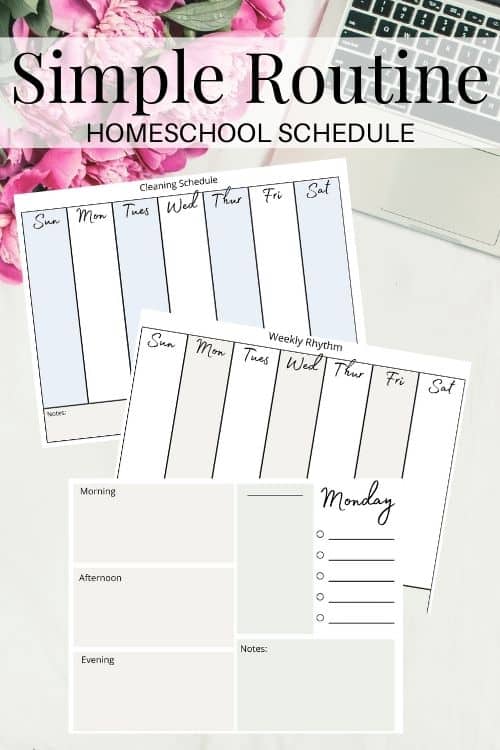
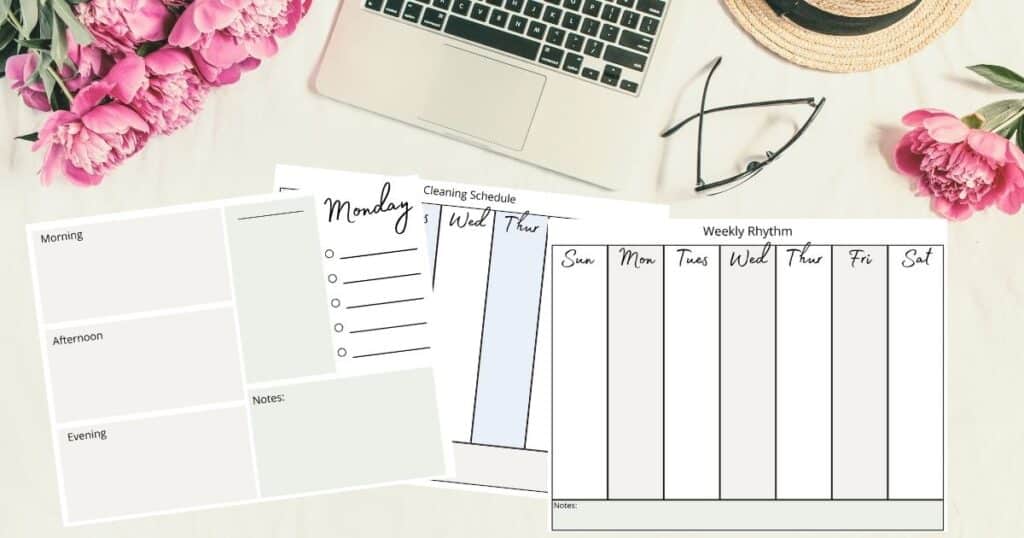
To help you organize your daily routine and manage your homeschooling life, a free printable homeschool planner can be a game-changer. This homeschool planner is designed specifically for homeschooling parents to map out their week, plan cleaning tasks, and streamline meal prep, keeping everything in one place. Here’s what the printable includes:
- Weekly Schedule Pages: A bird’s eye overview of a week’s to do’s or important plans. A page for each day of the week (Monday through Sunday) with time blocks for morning, afternoon, and evening. Each day has space to jot down homeschool lessons, extracurriculars, homemaking tasks, work, family time, and personal time. Pages for Saturday and Sunday allow for planning of weekend activities such as catch-up tasks or field trips and family outings.
- Example Use: Write “8:00–11:00 AM: Math, Reading, Science” on Monday’s morning block, “2:00 PM: Soccer” on Tuesday’s afternoon block, and “6:00 PM: Family Movie Night” on Saturday’s evening block.
- Cleaning Planner Page: A dedicated page to break down cleaning tasks by area of the house (such as, kitchen, bathrooms, living areas). Assign specific areas to different days or weeks to avoid overwhelm. For example, clean the kitchen on Mondays, bathrooms on Wednesdays, and vacuum living areas on Fridays.
- Example Use: List “Declutter kitchen counters” on Monday, “Scrub bathroom sinks” on Wednesday, and “Dust bedrooms” on Friday.
- Meal Planning Page: A page to plan weekly meals, including breakfast, lunch, dinner, and snacks. Included is a prep schedule for batch cooking or prepping ingredients.
- Example Use: Plan “Tacos” for Monday dinner, “Sandwiches” for Tuesday lunch, and note “Chop veggies for week” on Sunday’s prep schedule.
How to Use the Printable:
- Download and print the planner.
- Fill in your weekly schedule at the start of each week, using your priority list and time estimates.
- Use the cleaning and meal planning pages to distribute tasks evenly, reducing stress.
- Keep the planner in a central location (such as, a kitchen binder) for easy access and to involve kids in checking tasks.
- Revisit and adjust weekly to reflect changes in your routine or season of life.
This homeschool planner printable keeps you organized without requiring complex systems, making it easier to balance homeschooling with the rest of life’s demands. I also love that it is very adaptable for each family since everyone’s daily routine and homeschool schedule looks different.
Digital Resources for Organizing Your Homeschool Routine
For parents who prefer digital tools, several apps and platforms can help digitize your homeschool schedule, cleaning plans, and meal prep. These tools sync across devices, offer reminders, and streamline planning. Or you can design exactly what you need and want on an excel spreadsheet. Here are some top resources to consider:
- Trello: A visual task management tool for creating boards for your weekly schedule, cleaning tasks, and meal plans. Create a board for each week with lists for each day (Monday–Sunday) and cards for tasks like “Math Lesson” or “Grocery Shopping.” Add checklists for cleaning areas or meal ingredients.
- Why It’s Great: Flexible, shareable with family members, and syncs across devices.
- Tip: Use labels to categorize tasks (e.g., “Homeschool,” “Homemaking,” “Work”).
- Cozi: A family organizer app with a shared calendar, to-do lists, and meal planning features. Add your daily routine, assign tasks to kids (such as, chores), and plan meals with a built-in grocery list.
- Why It’s Great: User-friendly, family-focused, and includes a recipe manager.
- Tip: Set reminders for non-daily tasks like library visits or co-op prep.
- Notion: A customizable workspace for creating a homeschool hub. Build a weekly schedule template, track cleaning tasks, and plan meals in one database. Add pages for lesson plans, extracurriculars, or family goals.
- Why It’s Great: Highly customizable, supports templates, and works offline.
- Tip: Use Notion’s calendar view to visualize your week and stagger tasks.
- Plan to Eat: A meal planning app that lets you store recipes, plan weekly menus, and generate grocery lists. Import recipes from websites or add your own, then drag and drop meals onto a calendar.
- Why It’s Great: Streamlines meal prep and integrates with grocery delivery services.
- Tip: Plan meals on Sunday and schedule prep tasks to save time during the week.
- Todoist: A task management app for scheduling daily and weekly tasks. Create projects for “Homeschool Lessons,” “Cleaning,” and “Meals,” with recurring tasks for routines like laundry or math lessons.
- Why It’s Great: Simple interface, supports recurring tasks, and offers reminders.
- Tip: Use the “Today” view to focus on daily priorities and avoid overwhelm.
Choosing the Right Tool: If you’re new to digital planning, start with Cozi for its simplicity. For more customization, try Notion or Trello. Test a tool for a week to see if it fits your workflow, and don’t hesitate to switch if it feels clunky. Many of these tools offer free versions, making them accessible for any budget.

Breaking the Day into Manageable Chunks
Dividing your day into morning, afternoon, and evening blocks creates structure while allowing flexibility within each block. Here’s how to plan each segment for success, incorporating key tasks like homeschool lessons, extracurriculars, homemaking, family time, work, and personal time.
Morning Routine (6:00 AM–12:00 PM)
Mornings are often when kids and parents are freshest, making them ideal for focused tasks like academics or work. Here’s a sample morning routine:
- 6:00–7:00 AM: Wake-Up and Personal Time
- Parents: Exercise, journal, meditate, or enjoy quiet coffee time.
- Kids: Light chores (make beds, feed pets), personal hygiene, or free play.
- Tip: Start the day with a calming ritual to set a positive tone.
- 7:00–8:00 AM: Breakfast and Family Time
- Share a simple breakfast (prep the night before to save time).
- Discuss the day’s plan or read a short devotional/story to connect.
- Complete family chores.
- Tip: Use this time to reinforce family values or goals.
- 8:00–11:00 AM: Homeschool Lessons
- Focus on core subjects (math, reading, writing) when attention is high.
- Example: 30 min math, 30 min reading, 45 min science/history.
- Include short breaks (5–10 min) every 30–45 minutes for younger kids.
- Tip: Use hands-on activities or online resources to keep lessons engaging.
- 11:00 AM–12:00 PM: Homemaking or Work
- Parents: Tackle quick cleaning (dishes, wipe counters) or work tasks (emails, calls).
- Kids: Independent work (reading, journaling) or light chores.
- Tip: If you’re a working parent, block this time for focused work while kids do low-supervision tasks.

Afternoon Routine (12:00 PM–5:00 PM)
Afternoons are great for creative lessons, extracurriculars, and homemaking, as energy levels may dip after lunch. Here’s a sample:
- 12:00–1:00 PM: Lunch and Family Time
- Eat together and discuss morning lessons or upcoming activities.
- Allow kids to share ideas or stories to foster connection.
- Tip: Prep lunch in advance to keep this block relaxed.
- 1:00–3:00 PM: Homeschool Lessons or Extracurriculars
- Focus on project-based learning (art, science experiments) or subjects like history.
- Schedule extracurriculars like sports, music, or co-op classes.
- Example: 1-hour art project, 1-hour piano lesson.
- Tip: Alternate heavy academic days with lighter, creative ones to maintain engagement.
- 3:00–4:00 PM: Homemaking or Free Play
- Parents: Tackle laundry, meal prep, or work tasks.
- Kids: Free play, outdoor time, or independent reading.
- Tip: Use this time to reset the house for the evening.
- 4:00–5:00 PM: Work or Personal Time
- Working parents: Focus on professional tasks (meetings, projects).
- Non-working parents: Take personal time (exercise, hobbies) or plan next day’s lessons.
- Kids: Quiet activities (puzzles, audiobooks) or help with homemaking.
- Tip: Set clear boundaries for work time to avoid interruptions.

Evening Routine (5:00 PM–9:00 PM)
Evenings are for winding down, family bonding, and preparing for the next day. Here’s a sample:
- 5:00–6:30 PM: Dinner and Family Time
- Share a family meal, even if simple (keep in mind that slow-cooker recipes save time).
- Play a quick game or discuss everyone’s favorite part of the day.
- Tip: Involve kids in setting the table or cleanup to build responsibility.
- 6:30–7:30 PM: Wrap-Up Lessons or Extracurriculars
- Finish any incomplete lessons or review key concepts.
- Attend evening activities (such as, dance class, soccer practice).
- Complete evening chores.
- Tip: Keep this block light to avoid burnout.
- 7:30–8:30 PM: Wind-Down and Personal Time
- Kids: Read, journal, or engage in quiet play.
- Parents: Finish evening chores.
- Tip: Create a calming routine (such as dim lights, soft music) to signal bedtime.
- 8:30–9:00 PM: Bedtime Prep
- Kids: Brush teeth, read a bedtime story, or pray/meditate.
- Parents: Reflect on the day, plan tomorrow, or enjoy a hobby.
- Tip: Stick to consistent bedtime to ensure restful sleep.

Bedtime to Wake-Up (9:00 PM–6:00 AM)
The hours from bedtime to wake-up are crucial for recharging. A consistent sleep schedule supports learning and emotional health.
- Kids’ Bedtime: Aim for 8–10 hours of sleep based on age (e.g., 9:00 PM for younger kids, 10:00 PM for teens).
- Parents’ Bedtime: Prioritize 7–8 hours of sleep to maintain energy for homeschooling and parenting.
- Night Prep: Before bed, review tomorrow’s schedule, set out materials, and tidy key areas (kitchen, homeschool space).
- Tip: Avoid screens 30–60 minutes before bed to promote restful sleep.
Everyone’s family looks different. Different priorities, activities, lifestyle. Our family has to incorporate homesteading chores into our morning and evening blocks. While another family may need to consider where extracurriculars fit into their afternoon or evening blocks. These examples are a brief overview of what to consider and approximate chunking. However, I will usually create a schedule that is split into 30 minute intervals, but the key is that everything is very flexible and I stick to more of a rhythm then a set hour-by-hour schedule.

Encouragement: Experiment and Stay Flexible
Crafting a daily routine homeschool schedule is an art, not a science. Your first attempt may feel clunky, and that’s okay. Homeschooling allows you to experiment, tweak, and refine until you find a rhythm that works. If mornings feel chaotic, try shifting academics to the afternoon. If evenings are rushed, simplify dinner or prep meals in advance. Every family’s schedule is unique, shaped by your priorities, energy levels, and season of life.
Tips for Staying Flexible:
- Start Small: Begin with a basic schedule (for example, morning lessons, afternoon chores) and add complexity as you gain confidence.
- Involve Kids: Ask older children for input on when they work best or what activities they enjoy. This builds buy-in.
- Embrace Change: If a routine stops working, don’t be afraid to overhaul it. Seasons change, and so should your schedule.
- Plan Change: Just as you need to embrace change on a weekly basis, likewise planning to revisit your schedule at least every 3 months will help balance how our daily routine homeschool schedule needs to adapt to new seasons of life.
- Celebrate Wins: Acknowledge small successes, like completing lessons or enjoying a family meal without stress.
Encouraging Words: You’re not just teaching math or history—you’re creating a lifestyle that nurtures your family’s growth. Be patient with yourself and your kids. Try new routines, keep what works, and let go of what doesn’t. With time, you’ll find a daily rhythm that feels like home. If you have found something in particular that helped you plan a daily routine homeschool schedule for your family, share in the comments below. This way we can all benefit from past experiences and wisdom because we’re all learning in this journey of motherhood and homeschooling.
Recent Posts on the Homeschool Blog