EXPLORE SMELL
A fun scent game for kids.
— By Julie Hodos on September 18, 2024; Updated on October 28, 2025.

This post may contain affiliate links. Please refer to our disclosure policy.
How sharp is your sense of smell? How about your child’s? Let’s find out with a delightful scent game. This engaging activity is perfect for kids aged 4 and up (and even younger or older siblings with supervision) to explore the wonders of their olfactory system. Best of all, you can download free printable scent cards at the bottom of this post, featuring everyday household items like lemon, cinnamon, coffee, cloves, peppermint, lavender, and more. This scent game is not only fun but also educational, sparking curiosity about one of our most underrated senses—smell!
Table of Contents
Why the Sense of Smell Matters
Have you ever caught a whiff of something that stopped you in your tracks? Maybe you were walking through a park, visiting a friend’s house, or browsing a store when a familiar scent hit you. Suddenly, your mind races, trying to place why that smell feels so significant. Then, with another sniff, you’re transported back to a vivid memory—maybe you’re a kid again, sitting in the backseat of your family’s car, clutching a shiny new bead bracelet you won at a school carnival. The pride and joy of that moment come rushing back, all triggered by a simple scent.
That’s exactly what happened to me recently while shopping at a second-hand children’s store with my 2-year-old son. He was playing with a plastic toy on the floor, and its faint, plasticky smell instantly reminded me of that carnival bracelet from my childhood. Without that scent, I might never have recalled that memory in such vivid detail. It’s incredible how our sense of smell can unlock emotions and experiences we thought were long forgotten.
The sense of smell is often overshadowed by sight or hearing, but it’s a powerhouse when it comes to memory and emotion. Unlike other senses, smell is processed in the brain’s limbic system, the same area responsible for emotions and long-term memories. That’s why a single sniff of a familiar scent can bring back a flood of feelings or a specific moment from years ago. This makes the scent game not just a fun activity but also a meaningful way to teach kids about how their bodies connect to the world around them.
I’m curious—have you had a similar experience where a smell triggered a memory? Drop your story in the comments at the bottom of this post.
Teaching Kids About Their Sense of Smell
Introducing your young child to their sense of smell through a scent game is a fantastic way to make learning interactive and memorable. Kids aged 4 and up are naturally curious, and their developing senses are perfect for exploring through hands-on activities. The scent game encourages them to use their noses to identify familiar scents, building both sensory awareness and vocabulary. Plus, it’s a great opportunity for parents and kids to bond over a shared activity.
Here’s how you can set up this scent game at home, along with tips to make it safe, engaging, and adaptable for different ages and group sizes.
Materials Needed for the Scent Game
To play the scent game, you’ll need a few simple items, most of which you likely already have at home. The goal is to create a sensory experience where kids can focus on smell without visual clues, so opaque containers are key. Here’s what you’ll need:
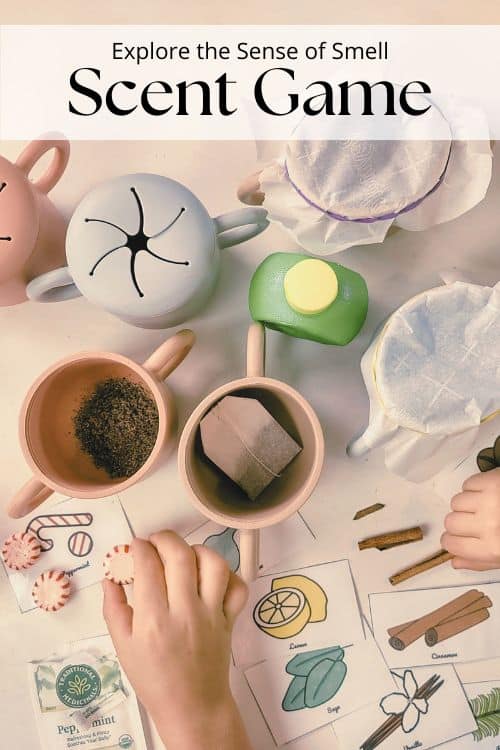
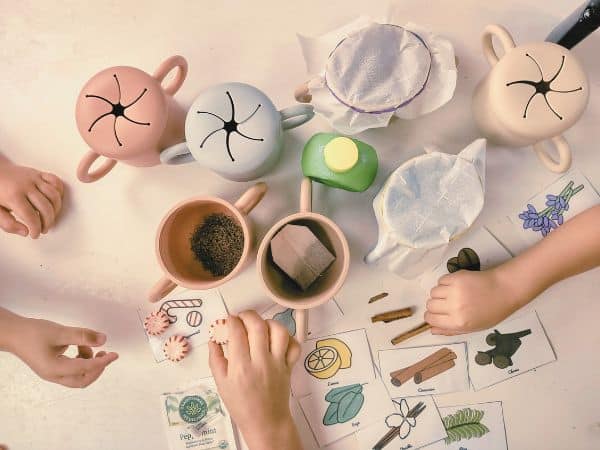
- Small, opaque containers: We love using snack cups with lids, which are perfect for everyday use and this activity. If you don’t have opaque containers, you can use small jars, cups, or even recycled yogurt containers covered with parchment paper secured by a rubber band. Cut small slits in the parchment to let the scent escape while keeping the contents hidden. If you’re missing lids, don’t worry—just get creative with what you have!
- Scent items: Choose safe, familiar household items with distinct smells. Some great options include:
- Lemon (a wedge or some lemon zest)
- Cinnamon (ground or a stick)
- Coffee (grounds or beans)
- Cloves (whole or ground)
- Peppermint (extract, fresh leaves, or a tea bag)
- Lavender (dried flowers, essential oil, or a tea bag)
- Onion (chopped to release the scent)
- Vanilla (extract or a bean)
- Garlic (a crushed clove)
- Pine (snapped needles or essential oil)
- Herbs like basil, rosemary, or sage (fresh or dried)
- Free printable scent cards: Download these at the bottom of the post. They feature pictures and names of the scents to help kids match what they smell to the correct item.
- Coffee beans or fresh air: These act as an “olfactory reset” between sniffs to prevent nose fatigue.
When choosing scents, consider what you have on hand. Tea bags, spices, essential oils, or even a dab of lotion or shampoo can work wonderfully. The number of scents you use depends on your child’s age and attention span—start with 4-6 for younger kids and increase to 8-10 for older ones or if you want to make the scent game more challenging.

Safety Tips for the Scent Game
Before diving into the scent game, it’s important to teach kids how to sniff safely, especially when dealing with powdered or strong-smelling items. Trust me, I learned this the hard way! My 3-year-old once inhaled too deeply and got a noseful of cinnamon—cue teary eyes and a lot of sneezing. My 2-year-old, eager to join in, thought “sniff” meant “blow,” and we ended up with sage all over the table. To avoid these mishaps, here are some tips:
- Demonstrate proper sniffing: Show your child how to gently inhale through their nose. Have them hold their hand under their nostrils and exhale to feel the air, then inhale to notice the absence of air on their hand. Point out the rising and falling of their chest to reinforce the difference.
- Explain sniff strength: Emphasize that they should take short, gentle sniffs, especially with powdered spices like cinnamon or cloves. A deep inhale can lead to irritation or a mess.
- Supervise closely: Especially with younger kids, stay nearby to guide them and ensure they’re sniffing safely.
- Check for allergies: Make sure your child isn’t sensitive to any of the scents you’re using, especially essential oils or strong spices.
- Keep it clean: Use fresh, clean items and avoid anything that might have gone bad (like old spices or produce).
By setting these ground rules, you’ll ensure the scent game is both safe and enjoyable for everyone involved.

Setting Up the Scent Game
The scent game requires a bit of prep, but it’s worth it for the fun and learning it brings. Here’s how to get everything ready:
- Gather your scents: Collect your chosen items (lemon, coffee, lavender, etc.) and place small amounts in individual opaque containers. For example, put a teaspoon of coffee grounds, a pinch of cinnamon, or a few drops of peppermint extract on a cotton ball in each container. If using fresh produce like onions, chop them just before the activity to maximize the scent.
- Secure the containers: Ensure the lids are on tightly or that your parchment paper covers are secure with small slits for sniffing. Label the containers discreetly if you need to (on the bottom or inside) so you know what’s what, but don’t let your child see the contents.
- Prepare the scent cards: Print the free scent cards and cut them out. Each card has a picture and name of a scent item (such as, a lemon slice with the word “lemon”). Keep the cards in a pile near the original containers for reference.
- Keep kids busy: While you’re setting up, give your child a coloring page from the Nn is for Nose curriculum or read a related book like The Nose Book by Al Perkins. This keeps them engaged and builds excitement for the scent game.
Once everything’s ready, clear a space on a table or the floor for the activity. You’re all set to start sniffing!

How to Play the Scent Game
Now comes the fun part—testing your child’s sense of smell! Here’s a step-by-step guide to playing What’s That Smell?:
- Introduce the scents:
- Start by showing your child the original containers (e.g., the coffee can, lemon wedge, or spice jar) and let them sniff each one. As they smell each item, show them the corresponding scent card and say the name aloud. Have them repeat it to build familiarity. For example, “This is cinnamon. Can you say ‘cinnamon’?”
- After sniffing all the items, take a break to “reset” their noses. Have them smell coffee beans or step outside for a breath of fresh air. This clears their olfactory system and prevents scents from blending together.
- Play the scent game:
- Place the scent cards in a row on the table.
- Hand your child one of the opaque containers and let them sniff the contents through the hole or lid. Encourage them to guess which scent it is and place the container next to the matching card.
- Take a sniff yourself to confirm, but let your child lead the guessing. If they’re unsure, offer gentle hints like, “Does this smell sweet like a flower, or spicy like something in the kitchen?”
- Continue until all containers are matched with a card.
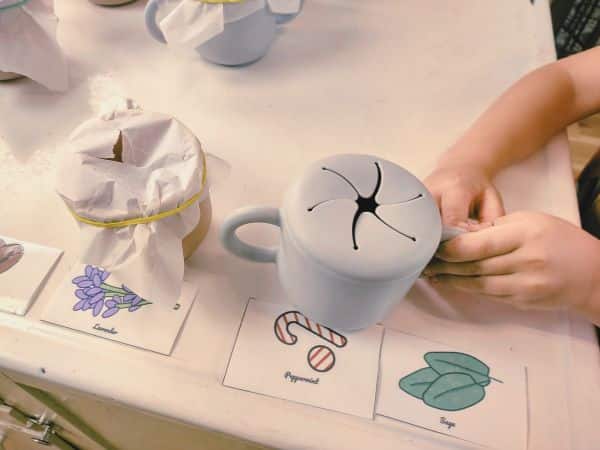
- Check the answers:
- Once all the containers are placed, go back and compare the scents in the opaque containers to the original items. Open each container and let your child sniff it again, then check the corresponding scent card.
- If they guessed incorrectly, set the container aside and leave the card unmatched. Let them try again with the remaining containers or reset the game for another round.
- If their nose gets tired (a common issue with strong scents), take another break with coffee beans or fresh air.
- Encourage discussion:
- As you play, talk about the scents. Ask questions like, “Does this remind you of anything?” or “Do you like this smell?” This helps kids connect the scents to their experiences and builds their descriptive vocabulary.
The scent game is flexible—play as many rounds as your child wants, and adjust the difficulty by adding more scents. For younger kids, use fewer scents and simpler and drastically different items (like onion and vanilla). For older kids, include more challenging scents with more nuance, like herbs or essential oils.
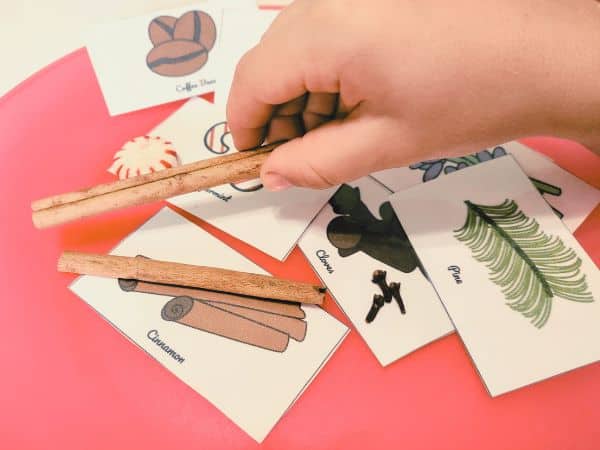
Download Free Scent Cards Below:
Books About the Five Senses and Your Nose
To deepen your child’s exploration of the sense of smell and the five senses, pair the scent game with some engaging books. Reading aloud is a wonderful way to introduce concepts, spark curiosity, and tie the scent game to literacy. Here are some books that focus on the sense of smell or the five senses as a whole:
- Look, Listen, Taste, Touch, and Smell: Learning About Your Five Senses by Pamela Hill Nettleton: With clear explanations and fun facts, this book is great for early learners curious about how their senses work.
- The Nose Book by Al Perkins: This classic Dr. Seuss-style book uses playful rhymes and colorful illustrations to explore the nose and its role in smelling. It’s perfect for young kids and makes the sense of smell fun and relatable. Read it before the scent game to get kids excited about using their noses.
- My Five Senses by Aliki: This beautifully illustrated book introduces all five senses in a simple, engaging way. It’s great for helping kids understand how their senses work together, with clear examples like smelling flowers or tasting food.
- The Magic School Bus Explores the Senses by Joanna Cole: For slightly older kids (5 and up), this book takes Ms. Frizzle’s class on a wild adventure through the human body, including the nose. It’s packed with fun facts about how smell works, making it a great follow-up to the scent game.
These books make the scent game even more meaningful by giving kids a broader understanding of their senses and encouraging them to notice smells in stories and real life.

Homeschooling with Multiple Children
If you’re playing the scent game with more than one child, it can be a wonderful opportunity for collaboration and sibling bonding. My boys, Marty (5) and Mick (3), loved working together on this activity, with me as the moderator to keep things fair. Here’s how to make it work with multiple kids:
- Encourage teamwork: Let older siblings guide younger ones without taking over. For example, Marty knew when Mick’s guess was off but learned to let him try first. Later, Mick would ask, “What you think, Marty?” when he sniffed something tricky like coffee. This built confidence and communication skills.
- Take turns: Have each child sniff a container and make a guess, or let them discuss together before placing it by a card. This keeps everyone involved and prevents one child from dominating.
- Adapt for ages: For younger kids focus on the sensory experience rather than matching. For older kids, add more scents or ask them to describe the smells in detail (such as, “Is it sweet, spicy, or fresh?”).
- Celebrate effort: Praise all guesses, even wrong ones, to keep the mood light and encouraging. If a child struggles, offer a hint or let a sibling help.
The scent game fosters cooperation and patience, and it’s heartwarming to see kids learn from each other. Plus, it’s a great way to make homeschooling feel like a team adventure.
Creative Ways to Extend the Scent Game
The scent game is just the beginning of exploring the sense of smell. Here are some creative ways to keep the learning going in the days and weeks after the activity:
- Kitchen Sniffing Adventures:
- When cooking or baking, invite your kids to smell the ingredients you’re using. For example, let them sniff the basil you’re chopping or the vanilla extract you’re adding to cookies. Name the scent together and discuss whether it’s familiar from the scent game. Just remind them to sniff gently!
- Try a blind sniff challenge where they smell an ingredient without seeing it and guess what it is. This reinforces the skills they practiced in the scent game.
- Nature Smell Walk:
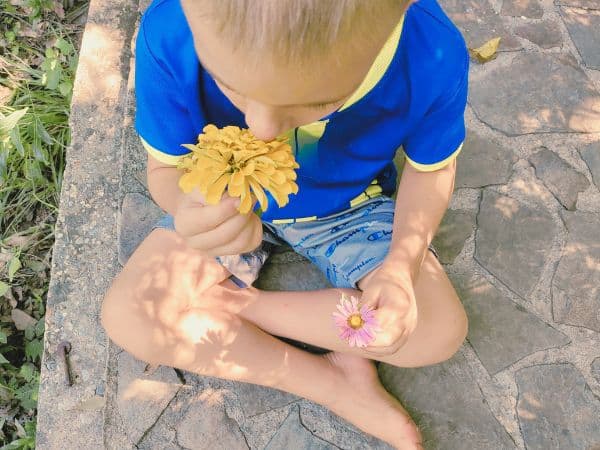
- Take the scent game outside! Go on a walk in your backyard, a park, or a nature trail and encourage your kids to sniff flowers, pine needles, damp soil, or even the air after rain. Ask, “What does this smell like? Does it remind you of anything?”
- Collect natural items (like leaves or pinecones) to bring home and use in a new round of the scent game.
- Scent Memory Journal:
- Create a simple journal where your child can draw or write about smells they encounter. For example, they might draw a picture of a lemon and write, “It smells sour and fresh! It’s like summer.” This ties the scent game to literacy and art.
- Over time, revisit the journal and see if they can recall the scents or memories associated with them.
- Scent Sorting Game:
- After playing the scent game, have kids sort the scents into categories like “sweet,” “spicy,” “fresh,” or “yucky.” This builds critical thinking and helps them analyze sensory input in a new way.
These extensions keep the scent game fresh and help kids see how their sense of smell connects to everyday life. They’ll start noticing smells everywhere—in the kitchen, at the park, or even in their favorite books.
Read Next: 5 Senses Activities for Kids

Why the Scent Game is Perfect for Home Learning
The scent game is more than just a fun activity—it’s a gateway to understanding the science of smell, building vocabulary, and fostering curiosity. Here’s why it’s a perfect fit for homeschooling or at-home learning:
- Play-based learning: Kids learn best when they’re engaged and having fun. The scent game turns sensory exploration into an exciting challenge.
- Sensory development: By focusing on smell, kids become more aware of their senses and how they interact with the world.
- Vocabulary building: Naming scents and describing them (such as, “spicy,” “sweet,” or “earthy”) expands children’s language skills.
- Memory and emotion connection: As kids associate scents with experiences, they learn how powerful their sense of smell can be.
- Adaptability: The scent game can be tailored to different ages, skill levels, and interests, making it ideal for families with multiple children.
Plus, it’s budget-friendly and uses items you likely already have at home. The free printable scent cards make it even easier to get started.
Sniff, Sniff!
The scent game is a simple yet powerful way to help kids explore their sense of smell while having a blast. It’s a reminder that even the most underrated senses can spark joy, curiosity, and learning. By playing this scent game and reading related books, you’re not only teaching your kids about their noses but also creating memories that might just resurface years later with a familiar whiff of cinnamon or lavender.
So, gather your containers, print those scent cards, and dive into the world of smells with your child. And don’t forget to share your stories—has your child discovered a favorite scent? Did a smell spark a funny or heartwarming memory? Let me know in the comments. Happy sniffing!
Scent Game
AT A GLANCE ACTIVITY INSTRUCTIONS
Materials
- Included printable
- Spices
- Herbs
- Little containers with lids (that are not clear)
- *Essential oils
Instructions
- If you want this activity to last you can print on cardstock or even on regular paper but then laminate it. This isn’t necessary though!
- Assemble the various items you will use for smelling and matching. Keep in mind a lot of these can be found in the spice cupboard, fridge, pantry, teas, etc. You may need to steep the tea bag or cut the onion to release the best scent.
- Place the items in their individual containers and place the lids on top. This will help keep the smells stronger for when you remove the lids.
- While the scents are releasing into the container I recommend printing the printable on cardstock.
- Cut out the pictures.
- I like to begin by setting up all the pictures with their corresponding item.
- Bring your child to the table and show them the different pictures. Have them review what the picture has on them and explain that the items they’re about to smell are on these pictures.
- They will begin by smelling what each item is, cinnamon, onion, etc.
- You should help your child sniff each container, barely lift the lid under their nose so that they do not see what is inside but so that they get a whiff of the item inside.
- Once you’ve reviewed every item now is the time to shuffle the cards and containers.
- Now it’s a matching game. How good is their memory?
Recent Posts on the Homeschool Blog