GRAPES AND TOOTHPICKS
Teach preschool shapes during snack time.
— By Julie Hodos on June 18, 2024; Updated on December 2, 2025.

This post may contain affiliate links. Please refer to our disclosure policy.
In the world of early childhood education, finding ways to make learning both fun and effective is key to fostering a lifelong love for discovery. One such engaging approach is through preschool shapes activities that blend play with educational concepts. From keeping it as simple as learning shapes to introducing engineering, your child will love this activity. Play-based learning and a STEAM activity combined create an engaging environment they will want to continue participating in. In case you did not know, STEAM (also commonly known as the original STEM) stands for Science, Technology, Engineering, Art, and Math.
Table of Contents

This particular activity, Civil Engineering with Grapes, transforms everyday snack time into a hands-on lesson on preschool shapes. Pairing a favorite snack like grapes with lesson time is always a hit with young children. By simply adding toothpicks to the mix, your two-year-old can be introduced to basic shapes, while a three-year-old explores 3D forms, and a five-year-old delves into structure stability. It’s a versatile, age-adaptable experience that caters to multiple developmental stages within the same family.
Why We Love this Activity
Imagine your preschooler giggling as they poke toothpicks into juicy grapes, unknowingly building triangles, squares, and even pyramids. This isn’t just about memorizing shapes; it’s about experiencing them tactilely, understanding their properties, and seeing how they form the backbone of real-world structures like buildings and bridges. As a parent or educator, you’ll appreciate how this preschool shapes activity sneaks in lessons on fine motor skills, spatial reasoning, and even introductory engineering principles—all while keeping things deliciously simple and mess-free (mostly!).
Preschool years are a critical time for cognitive development, and shapes form the foundation for more advanced math and science concepts. By turning learning into play, children absorb information more readily, retain it longer, and associate education with joy rather than as a chore. This activity exemplifies how everyday items can become powerful teaching tools, bridging the gap between abstract ideas and concrete experiences.
As we explore further, you’ll see how it not only teaches shapes but also introduces civil engineering in a way that’s accessible and exciting for tiny minds. Moreover, in an era where screen time often dominates, hands-on activities like this encourage physical interaction, problem-solving, and social skills if done in a group. For families with multiple children of varying ages, it’s a godsend—each child can engage at their level without feeling left out. My own boys—Mo (3), Mick (4), and Martin (6)—each took something unique from it, from basic shape recognition to understanding structural integrity. It’s these personalized learning moments that make preschool shapes education truly transformative.
As we proceed, keep in mind that the goal isn’t perfection but exploration. Mistakes, like building a wobbly structure, become teachable moments about stability and redesign. This fosters resilience and critical thinking, skills that extend far beyond shapes. So, grab those grapes, and let’s embark on this delicious journey into preschool shapes and beyond!

Why Teach Preschool Shapes This Way
Teaching preschool shapes through hands-on, play-based activities like building with grapes and toothpicks offers numerous developmental benefits that traditional methods, such as flashcards or worksheets, simply can’t match. At this age, children are natural explorers, learning best through sensory experiences that engage multiple senses simultaneously. Touching the squishy grapes, feeling the poke of toothpicks, and seeing shapes form in 3D space make abstract concepts concrete and memorable. This tactile approach aligns with child development theories, such as those from Jean Piaget, who emphasized that preschoolers are in the preoperational stage, where they learn through manipulation and play rather than rote memorization.
Aligning with Developmental Stages
One primary reason to adopt this method is its integration of STEAM elements, which prepares children for future academic success in an increasingly interdisciplinary world. Science comes in through observing how structures hold up (or collapse), technology via simple tools like toothpicks as connectors, engineering in designing stable builds, art in creative free play, and math through shape identification and counting sides/vertices. By combining these, the activity holistically develops cognitive skills, turning a simple snack into a mini-laboratory for inquiry-based learning. Research from early childhood education experts highlights that STEAM activities at preschool age boost problem-solving abilities and spatial awareness, foundational for subjects like geometry and physics later on.
Read Next: Is Your Child Ready for Kindergarten?
Enhancing Engagement and Retention
Furthermore, this play-based strategy respects preschoolers’ short attention spans and high energy levels. Instead of sitting still, children are actively involved, which reduces frustration and increases engagement. For instance, when my three-year-old Mo snacks on grapes while poking toothpicks, he’s learning shapes without realizing it’s “lesson time.” This sneaky education builds positive associations with learning, encouraging intrinsic motivation. Studies from organizations like the National Association for the Education of Young Children (NAEYC) support that play-based learning enhances social-emotional development, as kids negotiate materials, share ideas, and celebrate successes together.
Age Adaptability
Adaptability is another key advantage. This activity scales effortlessly for different ages and abilities. A younger child might focus on basic 2D shapes like triangles and squares, reinforcing recognition and fine motor control. An older preschooler, like my six-year-old Martin, can tackle 3D shapes and stability challenges, introducing concepts of balance and force. This differentiation ensures everyone gets to participate, making it ideal for mixed-age groups or children with varying developmental needs, including those with sensory processing differences who benefit from the edible, non-toxic materials.

Health and Practical Benefits
Health and practicality also play a role. Using grapes promotes healthy eating habits, as children associate learning with nutritious snacks rather than sugary treats. It’s budget-friendly, requiring only household items, and cleanup is minimal—leftover grapes can be eaten! As the parent, I appreciate the low-prep nature because setup takes minutes, yet the learning continues through guided and free play.
Connecting to Real-World Applications
Critically, this method introduces real-world applications early. Preschoolers often overlook the engineers behind everyday structures, but by building mini-bridges or towers, they gain appreciation for civil engineering. This contextual learning deepens understanding, showing shapes aren’t isolated but integral to the world around us.
Nurturing Well-Rounded Growth
In essence, teaching preschool shapes this way nurtures well-rounded development: cognitive, physical, social, and emotional. It transforms passive learners into active creators, setting the stage for future innovators. By embedding education in play, we equip children with skills to navigate an ever-changing world, all while having fun.
Read Next: Preschool at Home

Books About Shapes for Preschool Age Kids
To complement hands-on activities like our grape engineering project, incorporating books is a fantastic way to reinforce preschool shapes concepts. Reading aloud exposes children to visuals, stories, and vocabulary in a cozy, low-pressure setting. Below, I’ve curated a selection of top-recommended books. Each comes with a brief description to help you choose based on your child’s interests and age.
- Shapes by John J. Reiss – This colorful classic introduces basic shapes through vibrant illustrations and real-world examples, showing how they combine to form everyday objects and even 3D figures. Perfect for toddlers and preschoolers, it encourages interactive pointing and naming, making it an ideal prelude to building activities. The book’s rhythmic text keeps young listeners engaged while subtly teaching composition and decomposition of shapes.
- This Is a Book of Shapes by Kenneth Kraegel – A humorous twist on shape books, this story starts with basic forms but veers into silly territory with unexpected animals and adventures. It’s great for preschoolers who enjoy laughs alongside learning, helping them recognize circles, squares, and more in fun contexts. The playful narrative promotes creativity, inspiring kids to imagine shapes in their own play.
- Mouse Shapes by Ellen Stoll Walsh – In this charming tale, three mice use shapes to build a clever escape from a cat, demonstrating how triangles, rectangles, and ovals can form pictures and objects. With simple collage art, it’s excellent for hands-on extension activities like cutting and arranging shapes. Preschoolers learn problem-solving as they follow the mice’s inventive process, tying into STEAM themes.
- Perfect Square by Michael Hall – A square transforms into various objects—a fountain, a mountain—through tearing, folding, and rearranging, teaching adaptability and creativity with shapes. The bold, graphic illustrations captivate young eyes, while the story encourages thinking outside the box. Ideal for older preschoolers, it highlights how one shape can evolve, mirroring the progression from 2D to 3D in our grape activity.
- Walter’s Wonderful Web by Tim Hopgood – Walter the spider tries building stable webs using different shapes, learning about symmetry and strength along the way. This book beautifully illustrates why certain shapes (like triangles) are structurally sound, directly relating to engineering concepts. With repetitive text and bright colors, it’s engaging for repeat reads and sparks discussions on trial and error.
- My Heart Is Like a Zoo by Michael Hall – Using heart shapes to create zoo animals, this book combines emotions with geometry, showing how one basic shape can form complex figures. The rhyming verses and animal themes appeal to preschoolers’ love for creatures, while subtly teaching counting and shape recognition. It’s a heartwarming choice that blends art and math seamlessly.
- Circle, Square, Moose by Kelly Bingham – A mischievous moose interrupts a shape lesson, turning it into a chaotic adventure with circles, squares, and more. The interactive, fourth-wall-breaking style keeps kids giggling and attentive. Great for reviewing shapes in a narrative format, it also touches on friendship and order, adding social-emotional layers.
These books can be read before or after the activity to build anticipation or reinforce concepts. Many are available at libraries or bookstores, and pairing them with discussions—like “How is this like our grape pyramid?”—deepens learning.

Civil Engineering with Grapes
Now, let’s get to the heart of this preschool shapes adventure: Civil Engineering with Grapes. This STEAM activity uses simple household items—grapes and toothpicks—to teach shapes, from 2D basics to 3D structures, while introducing engineering principles. It’s edible, engaging, and educational, perfect for ages 3-5. If we have younger siblings participating, I will cut the grapes up and they simply get to eat their snack in their high chair. Another option is to do this activity during nap time. It’s important to keep a close eye on your younger preschoolers as well. Now with disclaimers aside, let’s continue.
Front Loading
Start by sparking curiosity about the real-world relevance of shapes. Your 3-5-year-old has probably never thought about who designs the buildings they see every day, the roads they travel on, or the bridges we drive across. We only break out the TV during lessons when I have a very specific video to show.
I recommend showing your child a video specifically for kids that explains what a civil engineer does. These short clips (under 5-10 minutes) use animations and simple language to explain how engineers use shapes for stability. Discuss afterward: “What shapes did they mention? How do they make things strong?”

Step 1: Supplies
While the kids watch the video, assemble the supplies on the kitchen table. The supplies are simple: a bunch of fresh grapes and toothpicks. I bought large toothpicks and colorful ones for more options and variety—colors can help differentiate shapes or add artistic flair. Aim for 50-100 toothpicks and a pound of grapes per child to allow ample building without frustration. Wash the grapes thoroughly and pat dry to make sticking easier. Also, set up in a well-lit area with a wipeable surface, as juice might drip.
Step 2: One Shape at a Time
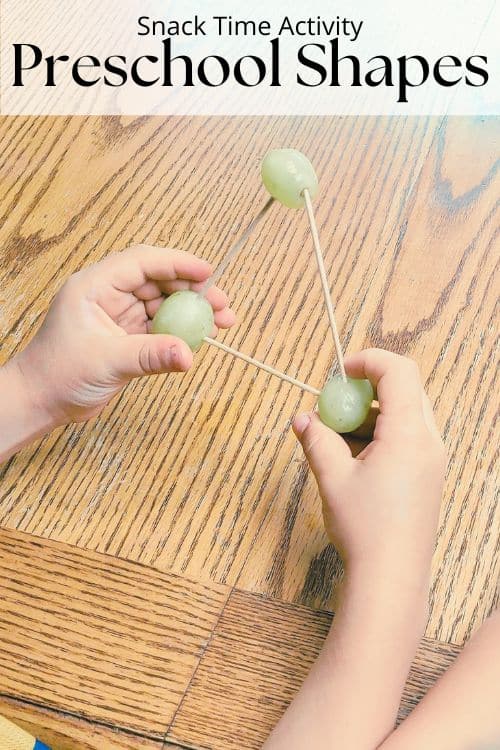
Begin by sitting down with some supplies yourself. It’s important to guide them piece by piece through the assembly of different shapes. As you put a toothpick in a grape, they should too. Place another grape at the other end of the toothpick, and they should mimic. Help if necessary—younger ones might need hand-over-hand assistance to avoid frustration.
Simple shapes include: triangle (3 sides), square (4 equal sides), rectangle (4 sides, opposite equal), pentagon (5 sides), trapezoid (4 sides, one pair parallel), and rhombus (4 equal sides, diamond-like). Tailor this time to your family’s goals and attention spans—start with 2-3 for shorter sessions.
As we completed 2D shapes, we placed them off to the side so that we could come back to them and make 3D. Encourage verbalization: “This toothpick is a side; how many do we need for a triangle?” This builds vocabulary and counting skills.

Step 3: Ask Questions
Engage their minds with open-ended questions to assess and reinforce learning. Marty already knew what shape we made before I had a chance to ask his younger brothers. But a gentle correction reminded him that this is Mick’s lesson and that Marty’s challenge will come at the end.
Marty guessed the triangle shape correctly, and Mick answered the square and rectangle readily. This is an excellent review before getting into 3D. Questions like “How many corners does this have?” or “Is this shape strong? Why?” prompt critical thinking.
Step 4: 3D Shapes
In this step, we simply continue the process of building out our shapes into a pyramid (triangular base), cube (square sides), and rectangular prism (box-like). Demonstrate for your child and have them mimic. Assist if necessary—connecting layers requires dexterity.
Marty created a shape that had a second triangle attached by parallel toothpicks coming off his current triangle. I allowed him to finish, even though I noticed he was doing this. Once complete, we compared the shapes, and he corrected his mistake. He still made a stable 3D structure, and I told him so. However, our goal was to make a pyramid, so he retried and succeeded. Celebrate these moments: “Look how it stands! That’s engineering!”

Step 5: Introduce Civil Engineering
Now explain to your children that these shapes are foundations to what civil engineers use to make buildings and bridges structurally sound. They can withstand heavy weight, wind, etc. Use examples: “Triangles are super strong, like in bridges—remember the video?”
Encourage your child to make structures that use these shapes of triangles, squares, and rectangles. If you’re feeling daring, challenge your child to make a bridge out of triangles or a three-story building out of squares. Test stability by gently blowing (wind) or adding weight (like a small toy). Discuss why some collapse: “Too few connections—let’s add more!”

Step 6: Free Play
For an activity like this, I always reserve time for my children to have independent, free play with the materials. Since grapes are involved, do not leave your child unattended—supervise to prevent choking.
Simply give them space to use their own creativity and imagination. Do not demonstrate unless they ask for something specifically. This is an important step for ownership and innovation.
Mick really enjoyed making suns, where he stuck a bunch of toothpicks in one grape. It looked more like the medieval ball with spikes called a “morning star.” He made a lot of morning stars/suns. Marty enjoyed seeing how long he could make his road, and Mo enjoyed snacking. Observe and comment positively: “That’s creative! What shape is that?”
There are two things I absolutely adore about this preschool shapes activity. First, grapes are used, a very healthy snack. Second, this can be tailored to various age levels very easily.

More Activities to Extend the Learning About Shapes
To build on the grape engineering fun, here are additional preschool shapes activities inspired by STEAM principles. Each includes a description and learning opportunities.
- Shape Sorting with Household Objects – Gather items like blocks, buttons, and toys; have children sort them by shape into labeled bins or drawn outlines. Start with basics like circles and squares, then add complexity with hexagons. This can be done indoors or out, using nature finds like leaves (ovals) or rocks (irregular). Learning opportunities: Enhances categorization skills, boosts vocabulary through naming, and develops visual discrimination; it also introduces comparison, like “Which shape has more sides?”
- Play Dough Shape Mats – Print or draw shape templates; children roll play dough into ropes for outlines or fill in with flattened dough. Include 3D by stacking for prisms. Add tools like cutters for precision. Learning opportunities: Builds sensory awareness and dexterity; reinforces shape recognition through repetition; integrates math by counting sides/vertices, and art via color mixing.
- Pattern Block Puzzles – Provide pattern blocks (wooden shapes) and puzzles or free-build mats where kids fill designs or create their own. Challenge them to build animals or vehicles using specific shapes. Learning opportunities: Promotes spatial reasoning and problem-solving; introduces fractions as shapes combine; enhances creativity and social skills if done collaboratively.
- Shape Hunt Scavenger Game – Go on a home or outdoor hunt for shapes, using a checklist or camera to document finds (such as, a clock is a circle). Tally and discuss. Learning opportunities: Connects shapes to real life, improving observation; encourages movement and language through description; builds classification and data skills via tallying.
Read Next: Numbers for Preschool

Tips for Success
To ensure your preschool shapes activity goes smoothly and maximizes learning, here are some practical tips drawn from my experiences with my boys. These can help you prepare, engage, and adapt for the best results.
- Prepare in Advance: Gather all supplies before starting to avoid interruptions. Wash and dry the grapes, and have extra toothpicks on hand.
- Set Realistic Expectations: Tailor the activity to your child’s attention span—start with 10-15 minutes for toddlers and extend as interest grows. Remember, the focus is on fun, not flawless shapes; celebrate efforts over outcomes to build confidence.
- Prioritize Safety: Always supervise closely, especially with toothpicks and grapes, to prevent choking or pokes. Use rounded toothpicks if available, and teach gentle handling. For allergies, substitute with mini marshmallows or cheese cubes.
- Encourage Dialogue: Ask open-ended questions throughout, like “What happens if we add another toothpick?” This promotes critical thinking and language development. Listen to their ideas—they might surprise you with creative twists!
- Incorporate Breaks and Snacks: If energy dips, pause for a grapes and crackers snack break. This keeps the mood light and reinforces the healthy aspect. For multiple sessions, revisit built structures the next day to discuss changes.
- Adapt for Group Play: If doing this with siblings or friends, assign roles based on age—Marty led challenges with Mick while Mo focused on basics. This fosters teamwork and prevents older kids from dominating.
- Document the Fun: Take notes or photos of creations to review later. This helps track progress in shape recognition and can become a family memory book, extending learning beyond the activity.
By following these tips, you’ll create a positive, enriching experience that your child will want to repeat.

Preschool Shapes and Engineering
In conclusion, this Civil Engineering with Grapes activity, along with its extensions, offers a delightful gateway into preschool shapes, blending fun, food, and foundational learning. From simple 2D recognition to engineering marvels, it shows how play can ignite curiosity and skill-building in STEAM areas. Are you eager to do this STEAM activity with your child? Let me know in the comments. Dive in, watch your child’s imagination soar, and remember—learning shapes today builds tomorrow’s innovators!
Preschool Shapes with Grapes
AT A GLANCE ACTIVITY INSTRUCTIONS
Materials
- Grapes
- Colorful toothpicks
Instructions
- Stick the toothpicks into the grapes to make a triangle, square, etc. The grapes are the connectors.
- As you make one encourage your child to mimic your example.
- 3D: Once your child has completed this task with all the basic shapes, choose one, like the square and show them how to make a cube from it, then using a triangle, make a prism.
- Now let them use their own imagination to make any and all kinds of shapes.
Recent Posts on the Homeschool Blog