
This post may contain affiliate links. Please refer to our disclosure policy.
Sorting animals who live in water is one of the best ways to introduce taxonomy to kids. In today’s activity we are specifically focusing on water dwelling animals and their water habitat preference.
Does your child know that there is a difference between certain bodies of water? There are oceans and seas and then there are ponds and lakes. Saltwater versus freshwater. And different water dwelling creatures may prefer one or the other.
Table of Contents

Free printable for animals who live in water activity.
The printable for this activity is free and can be found at the bottom of this post. Stick around for the activity instructions though because if your child hasn’t grown up around the ocean then you’ll want to do the first part of the activity before the sorting. Bonus! It can be turned into a game as well.
Read books about animals who live in water.
Firstly, I must mention Above and Below by Patricia Hegarty. This is an excellent read for the water dwelling animals that live in various habitats. The book features both fresh and salt water and is a hit in my home.
If you’re looking for a simpler version or just want to continue reading beautiful and well-written books then there are two available by Kate Messner. Over and Under the Pond and Over and Under the Waves. Overall, any of the book suggestions are excellent reads and additions to any homeschool library.

Part 1: The different habitats of animals who live in water.
Firstly, let’s get them with a hook! Whether your child knows that there are different types of bodies of water or not I wouldn’t skip this part. No pun intended…this step will hook them in! We live in Mississippi near the ocean and so visit the beach frequently. Also, my boys have swam at their grandparent’s pond and lake up north. They know that there is a remarkable difference between the different bodies of water.
Although this is not new knowledge to them, I still wanted to have a wow factor to begin this sorting activity. Because I began with this hook my boys engage quickly in the beginning discussion. On the other hand, if I was to monologue about salt and freshwater at the beginning I would lose them before we even began.
Glasses of water.
Firstly, fill two glasses with water. In one, stir in a teaspoon of salt. Stir until it dissolves. Once it dissolves, call your child over and place the glasses in front of them. Then ask them to drink one. And then the other. I don’t always tell them what they’re doing. They of course make a face at the saltwater and have asked me before if I got it from the beach.
This is the wow factor I was going for and now our discussion naturally flows into the different bodies of water. Then I lead it into the wild animals that live in these different habitats. Having read books about freshwater and saltwater animals the conversation flows easily.
Part 2: Facts about animals who live in water.
Next, dive into fun facts about animals and make them engaging and relatable. For example, grab dinner plates from your kitchen to show the massive size of a giant squid’s eyes, which are as big as a plate! Use everyday objects or actions to connect kids to the facts—ask your child if they could chew through a tree trunk like a beaver and then compare their teeth to a beavers. These hands-on moments spark curiosity and make learning memorable, turning abstract facts into vivid, real-world experiences that kids can touch, see, or imagine right at home.
Salt water animal facts.
- Great White Sharks Are Apex Predators: These massive sharks, found in coastal saltwater worldwide, can detect blood from miles away. Their 300 teeth and powerful jaws make them top ocean hunters.
- Giant Squid Are Deep-Sea Mysteries: Living in deep saltwater, giant squid can grow up to 43 feet. Their massive eyes, the size of dinner plates, help them see in the dark ocean depths.
- Sea Turtles Travel Thousands of Miles: Leatherback sea turtles roam saltwater oceans, migrating up to 10,000 miles annually to nest on beaches, guided by Earth’s magnetic field.
- Blue Whales Are Record Holders: The largest animals ever, blue whales live in saltwater, consuming up to 8,000 pounds of krill daily. Their heart alone weighs as much as a car!
- Jellyfish Are Ancient Drifters: Moon jellyfish, thriving in saltwater for over 500 million years, move with ocean currents. Their stinging tentacles catch prey, but they’re mostly water—95%!
Freshwater animal facts.
- Freshwater Crocodiles Are Shy Predators: Found in Australian freshwater rivers, these smaller crocs grow to 10 feet. Unlike their saltwater cousins, they’re timid, preferring fish over larger prey.
- Piranhas Have a Fierce Reputation: These South American freshwater fish, living in rivers like the Amazon, have razor-sharp teeth. Despite their scary image, they mostly eat plants and small fish.
- Beavers Are Ecosystem Engineers: North American beavers build dams in freshwater rivers, creating ponds that support diverse wildlife. Their strong teeth can fell trees in hours.
- Giant Freshwater Stingrays Are Elusive: Found in Southeast Asian rivers, these stingrays can weigh up to 1,300 pounds. Their whip-like tails deliver a painful sting.
- Crayfish Are Tiny Lobsters: These freshwater crustaceans, found in streams worldwide, look like mini lobsters. They’re scavengers, eating plants, insects, and even dead fish.
Freshwater and saltwater animal facts.
- Bull Sharks Are Salinity Superstars: Bull sharks can thrive in both saltwater oceans and freshwater rivers, like the Mississippi, thanks to specialized kidneys that regulate salt levels. They’ve been spotted in Australia
- Salmon’s Epic Journey: Salmon are born in freshwater, swim to the ocean to grow, then return to their birthplace to spawn, traveling thousands of miles. This migration, called anadromous, supports ecosystems by feeding bears and birds along the way.
- River Otters Are Playful Swimmers: Unlike sea otters, river otters live in brackish, fresh, or saltwater across North America. Their double-layered coats keep them cozy in cold waters while they dive and play.
- Eels’ Mysterious Migration: American eels are catadromous, born in saltwater but living in freshwater rivers before returning to the sea to spawn. They can travel over land to reach water
- Striped Bass Are Ecosystem Helpers: These fish live in estuaries, moving between fresh and saltwater. As predators, they balance prey populations and support fishing economies.
- Atlantic Stingrays Are Salty Fresh: These stingrays live in both ocean saltwater and freshwater rivers, producing dilute urine to handle salinity changes, unlike their fully freshwater cousins.
Part 3: Animals who live in water sorting activity.
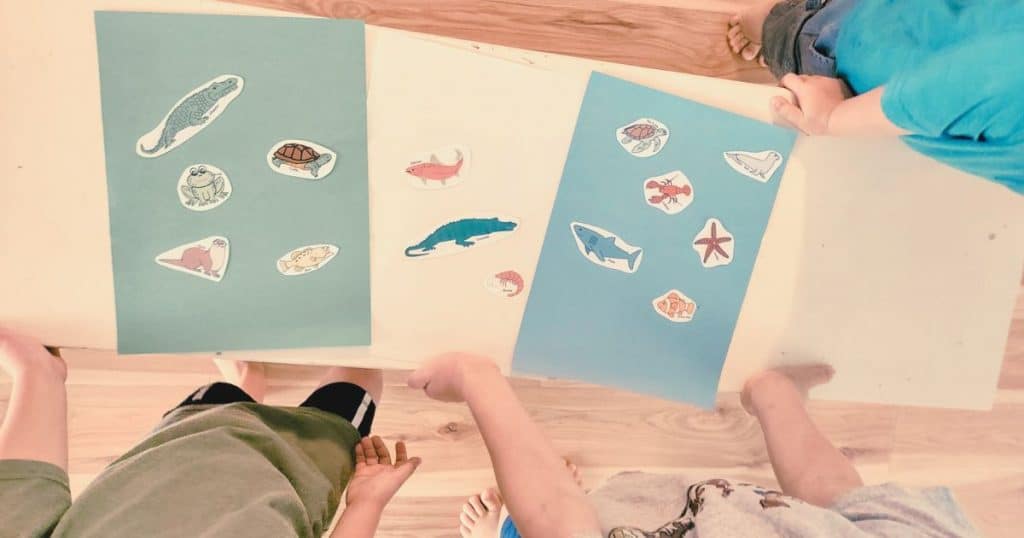
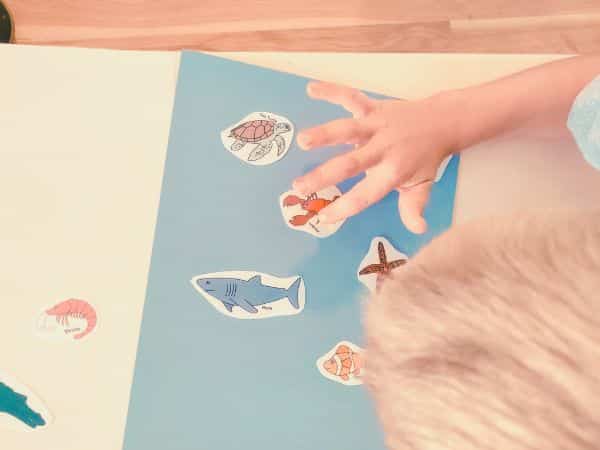
Once we’re ready it’s time for the sorting activity. Firstly, begin by placing three different colors of paper in front of your child. A blue paper denotes saltwater animals. The green paper is for freshwater animals. And a white paper is placed in the middle to be for animals that go between the two or have specific species that prefer different habitats.
Game time!
Secondly, you can turn this into a game of hide-and-seek. Your child will leave the room until you’ve placed all the cut out animals throughout a room. I prefer to laminate and place rolled tape on the back so that it can stick on surfaces at different heights.
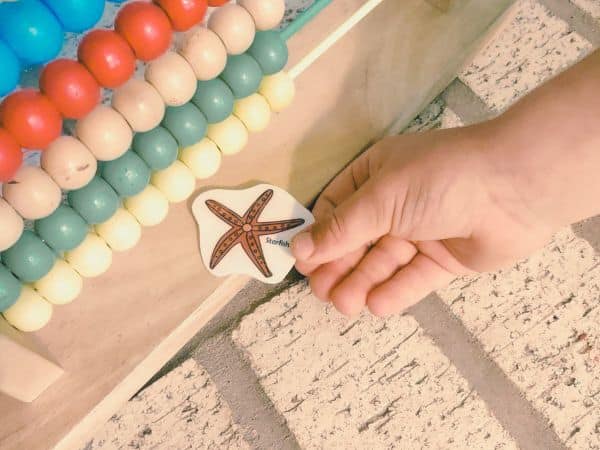
Once placed, your child can go around and find the various animals. When they find one they bring it over to the colored paper and decide which habitat the animal most likely dwells in. The first couple times we play I am helping them. But each time we clear the papers and I hide the animals again, my kiddo gets more right and needs less help.
A note on animals who live in water.
- Firstly, as you saw in the facts some animals, like the salmon, go back and forth between salt and freshwater depending on the cycle they are in, in their life.
- Secondly, certain species of shrimp prefer salt and some prefer freshwater.
- There is a very small percentage of seals that live in freshwater. The majority of seals cannot tolerate fresh water for long because their skin needs the salt in the water.
- Lastly, crocodiles are found in either type of water, while alligator’s prefer freshwater.

Get the printable for free below and start playing today!
Animals who live in water and more.
From shrimp to bass to sharks to otters, your preschooler will have a better understanding of the various animals that belong to different water habitats. If you’re interested in more wild animal sorting activities such as this check out Zz is for Zebra. There is an entire habitat sorting activity. From grasslands to mountains your child will explore more wild animal activities.
Additionally, Who Lays Eggs? Is another excellent printable for an introduction to the taxonomy of animals. Your 3-5 year old will get to sort animals based on if they lay eggs or not.
Creative activities for 3-5 year old’s.
This activity is a part of a week’s worth of lessons about water. From comparing the forms of water to experimenting with the water cycle your child will have a firm grasp of what makes up 71% of earth’s surface and 60% of our bodies. Check it out at the button below.
Animals Who Live In Water
AT A GLANCE ACTIVITY INSTRUCTIONS
Materials
- 3 colors of paper (green, blue, and white)
- Included printable
Instructions
- Begin by giving your kiddo an example of freshwater vs. saltwater by giving them two different glasses of water: saltwater and freshwater. Allow them to taste the two. They will probably pucker up with the salt water glass. Explain that some animals prefer salt water and can’t survive in fresh and vice versa.
- Discuss with them that lakes and ponds are fresh water. Oceans and seas are salt water. That’s how people distinguish between the two.
- Now, place the three papers in front of your child with the white paper between. The green will be the freshwater and blue is salt.
- Begin by prompting your child to sort them based on any previous knowledge, giving names if needed.
- After they’ve finished, individually tell your child which body of water an animal lives in and let them decide if their guess was accurate or not. ( i.e. If it lives in the ocean it goes under the salt water category. If it lives in a lake it’s a freshwater animal).
- A note about the printable animals and why they are being considered both or one or the other.
Recent posts on the homeschool blog.