
TRAIN UP YOUR CHILD IN THE WAY HE SHOULD GO
Homeschooling boys.
— By Julie Hodos on April 10, 2025; Updated on January 23, 2026.

This post may contain affiliate links. Please refer to our disclosure policy.
Theodore Roosevelt said, “Nothing worth having comes easy.” You probably already know that homeschooling is definitely not the easiest route your family could take to educating your child, especially boys. But, is it the best option for your child’s development and your family dynamics? Let’s dive into this a bit more thoughtfully. As parents, we’re often pulled in a million directions, trying to figure out what’s truly right for our kids.
Homeschooling isn’t just about academics—it’s about nurturing the whole child, building strong family bonds, and creating an environment where learning feels natural and exciting rather than forced. I’ve been there myself, juggling the chaos of three energetic boys, and I can tell you it’s rewarding in ways I never expected.
Table of Contents

Consider what the Bible says in Proverbs 22:6: “Train up a child in the way he should go; and when he is old he will not depart from it.” Notice it didn’t say, train up your child in the way others go or in the way you want them to go. It says in the way he should go. As parents, we must assess our sons on an individual level to determine how their training should look. This means really observing their strengths, quirks, and needs—not comparing them to the neighbor’s kid or some idealized version of education.
Here, you’ll find not just reasons to homeschool your boy(s), but also practical, real-world tips from a mom of three very active boys. I’ll share how we make it work in our home, with ideas you can tweak and apply to your own setup to turn potential challenges into successes. Whether you’re just starting out or looking to refresh your routine, let’s make homeschooling feel more doable and fun.
Why Homeschooling Boys is an Excellent Option
A quick disclaimer: I’m speaking to the families who are currently homeschooling, or considering it, and are seeking help, insight, or inspiration on the homeschooling journey. Here we go… Let’s start by acknowledging that choosing homeschooling is a big decision, often filled with doubts like “Am I qualified?” or “Will my kids miss out on socialization?” But from my experience, the pros far outweigh the cons, especially for boys who thrive on movement and hands-on exploration.

Boys are Energetic
If you’re the parent to a boy, then you know just how active they are. My three boys keep me running from sunup to sundown—and honestly, I wouldn’t have it any other way. This energy is natural and good! It means they’re healthy, curious, and full of life. But in a traditional school setting, that same energy can sometimes be seen as a problem rather than a strength. Homeschooling flips the script. It allows us to ask questions like, what if lessons could be completed in just a couple of hours every day, leaving more time for play? And what if those lessons could be tailored to your child’s needs on that specific day?
Homeschooling boys does allow the school day to be shorter. In our home, the time spent on formal lessons is only about 2-3 hours total—for all three boys combined (ages 7, 5, and 4). Most of my youngest’s “lessons” don’t even feel like work because they’re so play-based. We might turn a math concept into a game of building towers with blocks. This approach keeps things engaging and prevents burnout. Plus, it respects their natural rhythms. Boys often have bursts of focus interspersed with needs for movement, and homeschooling lets us honor that. I expect this time will increase as my boys grow but as they age they’ll naturally need less time burning energy.
Also, every day and lesson can adapt to your child. What I mean by this is that we’re not beholden to a set schedule. The bell doesn’t ring, dismissing us to the next period. Because of this freedom, I can assess how each of my boys is doing at any given time and change our day’s rhythm accordingly.
For instance, if I’m noticing a lot of wiggles at the end of a long writing lesson, I’ll move us out to the living room where I can read from our history textbook while letting the boys be active but quiet. They might stretch or bounce around, and sometimes we just take a 30-60 minute break to regroup later. It’s all about observing your boys and adjusting in real-time, which builds their resilience and teaches them that learning isn’t rigid.

The Current Education System is Failing Our Young Men
This point ties back to my previous one—that boys are active and energetic. Asking boys to sit at a desk or be contained in a room, with little recess time five days a week, is remiss of what they truly need to thrive. Their entire spirit and body needs to be tended if we want to nurture their brains. Research shows that boys’ brains develop differently; they often need more physical outlets to process information effectively. Without that, they can become disengaged or labeled as “problematic,” which is heartbreaking.
The War Against Boys by Christina Hoff Sommers was the first time my eyes were opened to just how poorly the current education system is set up to educate our boys. After reading this book, I was completely convinced that my husband and I would be homeschooling. Sommers highlights how schools have shifted toward more sedentary, verbal-focused learning, which doesn’t align with many boys’ natural inclinations. She discusses statistics on boys falling behind in reading and writing, higher rates of discipline issues, and even the over-diagnosis of ADHD. It’s eye-opening, and it reinforced for me that homeschooling isn’t just an alternative—it’s a proactive choice to give our sons what they need.
A holistic approach not only helps academically but also boosts their emotional well-being. Boys in traditional schools often face pressure to suppress their energy, leading to frustration or low self-esteem. Homeschooling lets them channel that energy productively, fostering confidence and a love for learning. Plus, it reduces the risk of negative peer influences or bullying, which can be particularly tough on active boys who don’t fit the “sit still” mold.

There is Freedom to Homeschooling Boys and Girls
Homeschooling in general has a lot of benefits, whether we’re talking about boys or girls. I know I could have used more nurturing of my entire well-being with fresh air and movement throughout the day when I was in school. But in general, the freedom that homeschooling allows with a family’s time, extracurriculars, socializing, and opportunities is unmatched. Imagine not being tied to a school calendar—vacations during off-peak times, field trips on a whim, or extending a lesson because your child is deeply interested in it.
For boys specifically, this freedom means pursuing passions that might not fit into a standard curriculum. My oldest loves stories, so we focus on reading, literature, and grammar, which has sparked his passions in ways a classroom couldn’t. Math still progresses but the rigid class time is flexible at home. Socialization happens organically through co-ops, sports teams, church groups, community events, or intentional opportunities, such as visiting a senior center. These often lead to deeper friendships than the superficial ones in large school settings that are very peer-focused.
Furthermore, let’s not forget family dynamics: Homeschooling strengthens sibling bonds and parent-child relationships. We eat meals together, tackle chores as a team, and have meaningful conversations that build character – everyday. It’s not always perfect—there are days when everyone’s cranky—but the overall flexibility creates a balanced life where education is just one piece of the puzzle.
Another huge perk is customization for learning styles. Boys often lean toward kinesthetic learning (learning by doing), so we can emphasize hands-on projects over rote memorization. This leads to better retention and enthusiasm. Studies from organizations like the National Home Education Research Institute show homeschooled students often outperform their peers academically and socially, with higher rates of college attendance and career satisfaction.
For our family, this freedom has meant more time for outdoor adventures, which not only burns energy but also teaches practical skills like navigation, teamwork, and problem-solving. It’s empowering to know we’re not just educating our boys but equipping them for real life.
Read Next: Top Reasons to Homeschool

Tips for Homeschooling Boys
Now that we’ve covered the “why,” let’s get into the “how.” These tips are drawn from my own trial-and-error experiences, and they’re designed to be practical and adaptable. Remember, what works for one family might need tweaking for yours, but starting with these can save you a lot of frustration and give you a solid place to begin.
Establish a Daily Rhythm that Works for Your Family
Trial and error are key here. Some families swear by sitting down to lessons right away so as not to allow their boys to get distracted by another activity. For our family, my philosophy on this has changed and adapted. When my eldest (most prone to distraction) was younger I couldn’t imagine starting lessons until after all the boys had about an hour of free play and chores. That morning burst of energy needed an outlet, or it spilled over into lesson time as restlessness.
Before this, I tried cranking out lessons right after breakfast. My thought was, how amazing it would be to have the school day done by 11 a.m.! I quickly learned that our school day took much longer because I wasn’t allowing my boys to release energy beforehand. They’d squirm, argue, or lose focus, turning a 30-minute session into an hour. I have gone back to this method with slight variation now.
Currently we begin lessons right after breakfast. Work for about 1.5 hours and then take a break. We sit down to a couple more subjects and sometimes finish, whether this is before or after lunch. Occasionally, lessons are completed over 3 sit down sessions versus 2. It depends on the day: each child’s mood, difficulty of each subject, and the rhythm of that particular day.

By beginning lessons immediately, the expectation is set that this is a lesson day. It helps them feel secure and reduces resistance when I call them to the homeschool room later to resume their studies. They also know that they’ll be offered a break before lunch to play together, enjoy time outside, or anything else that meets their overall needs.
Read Next: A Realistic Homeschool Room
No matter what you determine for your family, try to keep that rhythm consistent. By doing this, your child will know what to expect. And when a child knows what to expect in their daily routine, they are generally more cooperative. Consistency breeds security, which in turn fosters better behavior and learning. If life throws a curveball—like a doctor’s appointment—communicate it ahead of time so it doesn’t disrupt the flow too much. Over time, this rhythm becomes second nature, making homeschooling feel less like a chore and more like a natural part of your family life.
Disclaimer: Keep the rhythm consistent but after you’ve stuck to it a while, adjust if necessary. I have had to adjust our own rhythm from beginning immediately to beginning later, to back to beginning immediately with more breaks. Initiate, reflect, and adjust. This is an excellent philosophy in homeschooling because your family dynamics are always changing as kids mature.
Read Next: 12 Homeschool Methods

Homeschooling Boys with the Subject Priority Approach Removes Stress
Since developing this approach, I have let go of a lot of stress when it comes to running our homeschool. I truly think it came out of frustration from trying to mimic other homeschooling families, only to find my boys simply couldn’t keep up with that pace and our family’s lifestyle couldn’t maintain it. The Subject Priority Approach means identifying core subjects that are non-negotiable (like reading, math, and other subjects that require daily consistency) and tackling those first, while being flexible with the rest.
I have a whole post on how we structure our days based on priority, The Best Homeschool Schedule For Your Family, which you can check out by following the link. Every day, we do pretty much the same subjects, and most days look similar. But with this approach, it allows me to be flexible with our daily rhythm and know that we’re accomplishing what’s important in our home while letting my boys enjoy who God made them to be. For example, if a boy is having a rough morning, we might swap a high-priority subject for a lighter one, like art or nature study, and circle back later. This prevents meltdowns and keeps motivation high.
Practically, start by listing your family’s values and must-dos. For us, character-building through Scripture is top priority, so we begin with that. Then math and language arts, broken into short bursts. Everything else—like history or science—fits in as time allows, often through integrated play. This method has reduced my overwhelm immensely; I no longer feel like I’m failing if we don’t cover every subject daily. Instead, we focus on progress over perfection, which is especially freeing with active boys who might need extra breaks.
Read Next: Reverse Planning

Evaluate and Adapt the Length of Lessons for Homeschooling Boys
Some lessons take 5 minutes, others 30. The length of the lesson is based on how active the lesson allows my child to be. I can read about Ancient History for 20 minutes while my sons are tumbling around on the couch or balancing a block tower. And after 30 minutes, my 7-year-old can still summarize the Peloponnesian War with surprising accuracy—he’s absorbing it all while moving.
But ask that same 7-year-old to do a lesson in his math workbook, and it’s like pulling teeth. To combat this, I shorten his math lessons and break them up throughout the day. I will also split the textbook and workbook between days sometimes. It’s simply where he is developmentally. Boys’ attention spans vary, and forcing long sessions can lead to resentment toward learning. Instead, use timers for short, focused bursts—say, 10 minutes to quiz on spelling words, then a 5-minute movement break before picking up a new subject.
Observe your boys closely: What subjects light them up? Which ones drain them? Adjust accordingly. For instance, if writing is a struggle, start with verbal storytelling before putting pen to paper. This builds skills gradually without overwhelming them. Over time, as they mature, lessons can lengthen naturally. The key is patience and adaptation—homeschooling isn’t a race; it’s a journey tailored to their growth.

Rethink What Classroom Time Looks Like
This applies broadly to homeschooling boys. Mainly, remember that lessons are taking place in the comfort of your own home. You can switch up the setting if need be, break lessons apart throughout the day, and give your child options they wouldn’t have in school outside the home.
Practically, this looks like trying new things by observing and experimenting based on your kiddo. For example, my son kept chewing the end of his pencil during math. He now chews gum while working on math problems. Can you imagine a teacher willingly handing a 7-year-old gum in first grade? Little tweaks like this make a big difference.
Also, in this tip, I need to mention play-based learning. Science and art are easy subjects to implement play-based learning, like mixing colors to learn about art theory or dissecting flowers for biology. But don’t discount math or reading yet! All my boys have gone through or are currently in a free preschool curriculum that is entirely play-based. Follow the link to learn more. We use games like playing Umbrella Ball Toss for math. Ultimately, you’re not restricted by trying to control a large number of kiddos, so movement can be encouraged without chaos.
I also seek out other opportunities for practicing reading and math in a nonconventional way. For example, once a week, all my boys get to read to their grandparents on video chat. This instills an importance and desire to want to develop reading skills in my younger sons because they want to do more than point and describe pictures. While my 7-year-old reads a new chapter in a book series that is below or at his current reading level, this instills confidence and helps him develop his reading speed. Other ideas include grocery shopping for math (calculating totals) or cooking for fractions. These real-life applications make learning stick and show boys that education is relevant to their world.

Invest in Quiet, Hands-on Manipulatives When Homeschooling Boys
These are necessary in our homeschool for a couple of reasons. First, we do a lot of reading, reciting, and discussing. Also, I bounce between my boys and their lessons—they’re not independent in their own studies yet. So when they’re not receiving one-on-one time with me, they can play quietly in the room with a toy or manipulative.
Some examples and favorites we have are a balancing block tower, busy books, and a wooden train set. You can also pick and choose from your child’s current toy selection and place them in a tub in the homeschool room. They’re only allowed to play with that specific toy during lessons. Standard coloring and activity books, similar to this, are also a great go-to, but I do find my boys need more variety.
The beauty of manipulatives is they keep hands busy while minds process. For active boys, this prevents distractions like poking siblings or wandering off. Start small—maybe invest in a few affordable sets from thrift stores or online—and rotate them to keep interest high. Over time, you’ll see how they enhance focus; my boys can now sit through longer read-alouds because they have something tactile to engage with. It’s a simple hack that promotes independence and reduces mom’s workload.
Read Next: Must-Have Preschool Homeschool Supplies

Spend Individual Time with Each Son
First, this does not look like only focusing on one kiddo while you help them complete their math lesson. Instead, I have found that this individual time can be a reward for finishing their math lesson, but it should be something that they enjoy that is not directly related to their studies.
Here are some examples. For my eldest, he loves stories. So after completing a math lesson, or even on days when we don’t do math, I will offer to read him a chapter from a book we’re currently reading aloud. He loves snuggling up next to me on the couch, or bouncing around, listening to the magical world of Harry Potter or the adventures of Bilbo Baggins. It’s our special bonding time that recharges him emotionally.
I can definitely read with my middle son, but it’s not exactly what fills his cup. If I want to fill his cup, all I have to do is invite him into the kitchen to help me cook or bake. We measure ingredients, stir pots, and chat about his day—it’s hands-on and relational. Then my youngest, who is still 4, doesn’t need much. Usually, I will simply sit nearby as he plays and interacts with me as he wants. As these three boys continue to grow, I’ll have to reflect on what fills their cup. But ultimately, you’re slowing down and reminding yourself, and your child, that the relationships are the most important.
Make this a priority by scheduling short one-on-one slots—maybe 15-20 minutes per child a few times a week. It could be a walk, a puzzle, or just listening to their ideas. This investment pays off in better cooperation during lessons and stronger family ties. With boys, who might not always verbalize emotions, these moments help them feel seen and valued, reducing behavioral issues.
Read Next: Pursuing Joyful Motherhood
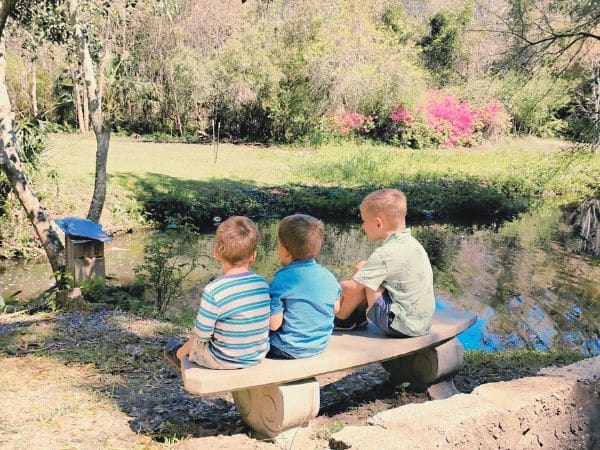
Homeschooling Boys Will Look Different in Every Home
Training your sons in the way they should go will look different in every home because every child and family is different. But that’s the beauty of homeschooling. I have more freedom to guide them based on their individual interests. Is it easy? No way! There are days when nothing goes as planned, and you question everything. But by implementing some of these tips, I hope you find more peace, joy, and success in your journey of homeschooling boys.
Remember, you’re not alone—connect with local homeschool groups, online forums, or resources for ongoing support. Celebrate small wins, like a boy mastering a new skill through play, and give yourself grace on tough days. Over time, you’ll see your sons thriving not just academically, but as confident, kind young men ready for the world. It’s a marathon, not a sprint, and the rewards are priceless. Drop a comment below sharing your experience and if you have any additional tips to encourage and inspire another mom.
Recent Posts on the Blog