
HONOR GOD
Time, Talent, Treasures: Guiding your child to live with purpose.
— By Julie Hodos on January 6, 2026
This post may contain affiliate links. Please refer to our disclosure policy.
Today, we’re talking about something that’s close to my heart: guiding our kids to live purposefully by using their time, talent, and treasures in ways that honor and please God. In a world that’s always rushing and pulling us in a million directions, it’s so refreshing to pause and think about how we can teach our children to invest what they have in something eternal. This isn’t about adding more rules or checklists to our already busy lives; it’s about weaving faith into the everyday moments, making it practical and joyful.
Table of Contents

We’ll explore what time, talent, and treasures really mean in this context, break down how kids can dedicate each one, and share tons of ideas on how we as parents can support them. Plus, we’ll look at age-specific tips so let’s jump in and see how this can transform our families!
Understanding Time, Talent, and Treasures
First things first, let’s unpack what we mean by time, talent, and treasures. These aren’t just random words; they’re inspired by biblical principles that remind us everything we have comes from God and should be used for His glory. Time refers to the hours and moments we have each day – that finite resource we all share. It’s about choosing to spend it wisely, not wasting it on things that don’t matter, but investing it in relationships, service, and growth that point back to our Creator.

When we speak of talent in the context of honoring and pleasing God, we’re talking about far more than just natural abilities or things a child happens to be good at—talent includes every unique gift, skill, interest, and personality trait that God has woven into your child’s being. Some talents are obvious and flashy, like a beautiful singing voice, athletic speed, or a sharp mind for math and science, while others are quieter but no less valuable: a gentle spirit that calms others, an intuitive knack for listening and encouraging, a creative imagination that turns ordinary moments into stories, or even a persistent determination that helps them finish what they start.
Every child has a combination of these gifts, placed there on purpose by a Creator who designed them to reflect His image and to play a specific role in His kingdom work. Helping children discover their talents means guiding them to notice what energizes them, what comes more naturally than to others, and what activities make them feel most alive and useful. Then, using those talents to honor God looks like intentionally directing those abilities toward serving others, building up the church, sharing the Gospel, or simply bringing beauty and order into the world around them.
As parents, our job isn’t to manufacture talent or push our kids toward what we wish they were good at, but to create space for exploration, affirm what we see God doing in them, and prayerfully connect their gifts to opportunities where those talents can bless others and glorify Him. When children learn to view their talents this way—as stewardship rather than self-promotion—they experience the profound joy of knowing their lives have eternal purpose, and they grow into adults who naturally use what they’ve been given to point people to Jesus.

When we talk about treasures in the context of honoring God, we’re not just referring to money or expensive possessions—though those can certainly be part of it. Treasures encompass everything God has entrusted to us: our financial resources like allowance or birthday gifts, our material belongings such as toys, clothes, gadgets, and books, and even less tangible things like our comforts, favorite snacks, or free time spent on personal enjoyment. For children, this often means learning to hold their “stuff” with open hands, recognizing that nothing truly belongs to us forever—it’s all on loan from a generous Father who wants us to experience the joy of giving.
Teaching kids about treasures is an opportunity to cultivate a generous heart early on, showing them that true richness comes from storing up treasures in heaven rather than accumulating more here on earth. By giving reasonably and cheerfully, children participate in God’s bigger story, supporting the Great Commission through missions, helping the needy, or blessing their local church community, all while discovering the deep satisfaction that comes from living open-handedly before God.
Together: time, talent, treasures – these all form a powerful trio for living out faith. When kids learn to dedicate these to God, they’re not just going through the motions; they’re building a life of purpose that pleases Him and blesses others. It’s like stewarding a garden – planting seeds now for a bountiful harvest later.

Dedicating Time to Honor God
Let’s start with time, because it’s something every child has in equal measure, no matter their age or background. Dedicating time to honor God means intentionally setting aside moments for prayer, worship, serving others, and learning about Him. It looks like a child choosing to read their Bible instead of scrolling endlessly on a device, or helping a neighbor rather than playing video games all afternoon. It’s about making God a priority in the daily rhythm, showing that our schedules revolve around Him, not the other way around.
As parents, we play a huge role in supporting this. We can model it by sharing our own time-management struggles and victories, creating family routines that include faith activities, and gently guiding. It’s practical – think setting aside time for quiet time or planning weekly service projects. Our encouragement helps kids see time as a gift to give back.
Here are some ways and ideas for children to dedicate their time:
- A child can dedicate their time by starting each day with a short prayer or devotional, setting a positive tone that reminds them of God’s presence throughout the morning. This time perfectly fits into a morning basket time that is shared by the family.
- Your child might volunteer to help with household chores not just as a duty, but as a way to serve their family in love, honoring God through acts of kindness at home.
- Your child could join a church youth group or Bible study, committing a few hours each week to learning and fellowship with peers who share their faith.
- A child can choose to visit an elderly neighbor or a parent can take a young child to a senior living center, spending an hour listening to stories, reading aloud, and offering companionship is a reflection of God’s care for the lonely. My husband has made it a habit to take our boys (ages 4, 5, and 7) to a senior center twice a month. The joy it brings to both the residents and our boys makes it worth the time.
- Families can plan nature walks where children dedicate time to appreciating God’s creation, perhaps journaling about what they see and how it points to His artistry.
- Children might set aside time to memorize Bible verses, turning car rides or bedtime into opportunities for spiritual growth that pleases God.
- Participating in community clean-up events allows kids to use their time to care for the environment, seeing it as stewardship of the world God made.
- They can dedicate time to mentoring younger siblings or friends, sharing what they’ve learned about faith in simple, everyday conversations.
- During holidays, instead of focusing solely on fun, children can spend time baking treats for a local shelter, combining enjoyment with service.
- Finally, kids can practice Sabbath rest, dedicating a day to unplug from distractions and focus on church, worship, family, and reflection to honor God’s command for renewal.
By incorporating these, we help our children see time not as something to kill or waste, but as a treasure to invest wisely.
Read Next: Morning Basket 101

Discovering and Using Talent to Please God
Moving on to talent – oh, this is such an exciting one! Talent is all about those God-given abilities that make each child unique. Discovering it looks like a child trying new activities, reflecting on what brings them joy and where they excel, and seeking feedback from trusted adults. Using it to please God means applying those skills in service, like singing in church choir or using artistic talents to create a mural for the church’s nursery.
As parents, supporting discovery involves exposing kids to various experiences without pressure, like enrolling them in classes or clubs. To help them use it, we can connect their talents to ministry opportunities, praise their efforts, and pray with them about how God might use their gifts. It’s practical parenting at its best – being their cheerleader while pointing them heavenward.
Here are ways and ideas for supporting and using talent:
- Parents can support discovery by observing what activities light up their child’s eyes, such as noticing a love for drawing and providing art supplies to explore that talent further.
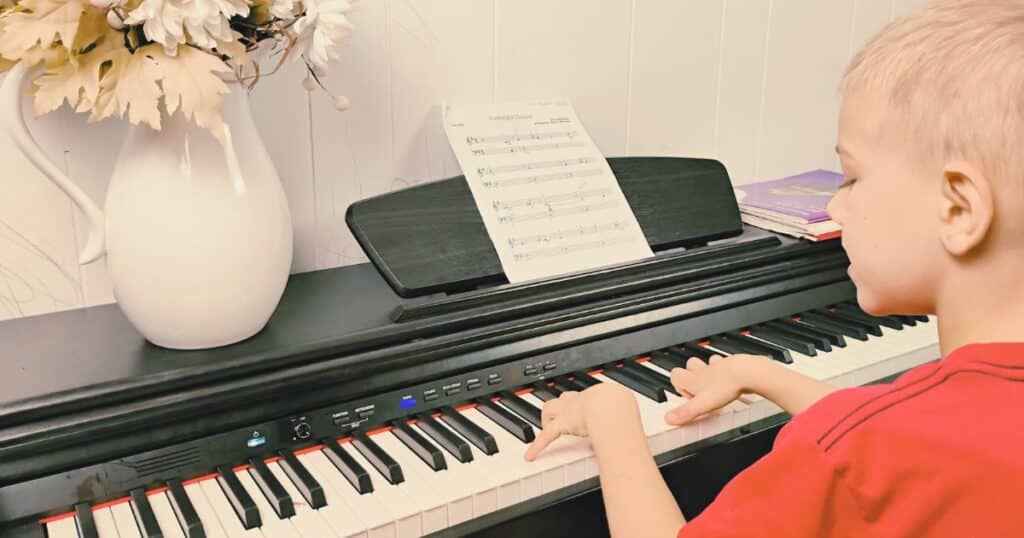
- Children can use their musical talent by learning songs of worship and performing them to honor God during church service or simply with family, bringing joy and praise into the home. Lessons are an excellent way to encourage this talent – my own boys begin piano lessons early.
- If a child has a talent for sports, they might join a team and dedicate their play to God, perhaps by praying before games, encouraging teammates with positive words, and overall displaying the joy that comes with knowing Jesus.
- Discovering a knack for foreign language could lead a child into missions and spreading the good word either close to home or on mission trips with the church. Providing your child with resources (books, online classes, language immersion) to learn a language would support this pursuit.
- Parents can arrange for mentorship, like pairing a child who has a baking talent with a church member who teaches them to make meals for those in need.
- For those with empathy as a talent, they might volunteer at animal shelters, caring for God’s creatures as a way to practice compassion.
- A child talented in technology could create simple apps, games, or videos that share Bible stories, using their skills to spread the Gospel digitally. Also, finding out if the church needs help with their website can be an excellent way to give back.
- Parents support by celebrating small wins, like praising a child’s public speaking talent after they share a testimony at youth group.
This approach turns potential into purpose, helping kids shine for God.

Giving Treasures to Support the Great Commission
Now, treasures – this might seem trickier for kids, but it’s about teaching generosity with what they have, whether it’s toys, allowance, or even their favorite snacks. Giving up treasures reasonably means letting go of excess with a joyful heart and without hardship, focusing on supporting the Great Commission, which is Jesus’ call to make disciples of all nations. It looks like a child donating part of their piggy bank to missions or sharing belongings with those in need, all to advance God’s kingdom.
As parents, we support by modeling tithing, discussing needs versus wants, and involving kids in giving decisions. Here are ways and ideas for giving treasures:
- Children can give a portion of their allowance to church missions, learning that even small amounts help spread the Gospel worldwide.
- They might sort through their toys and donate gently used ones to a children’s home, freeing up space while blessing others with playthings.
- Using birthday money, kids could buy school supplies for underprivileged students, supporting education as part of caring for neighbors.
- Treasures like homemade baked goods or handmade crafts can be sold at a lemonade stand, with proceeds going to a charity that provides assistance in developing countries.
- Children can share their snacks or lunches with classmates who forget theirs, practicing immediate generosity in daily life.
- Donating clothes they’ve outgrown to a family in need teaches kids to view possessions as temporary and meant for sharing.
- They might use art supplies to create cards sold for fundraising, directing funds to Bible translation efforts.
- Giving time-bound treasures, like skipping a treat to save for sponsoring a child through a compassion program.
- Finally, they could dedicate a “treasure box” for items to give away regularly, reminding them that true wealth is in heavenly treasures.
Any or all of these fosters a heart of generosity that aligns with God’s call.
Read Next: Homemade Honey Lemonade

Tips for Implementing at Different Ages
Every child is different, but age groups give us a helpful framework. Let’s break it down practically.
For children up to 6 years old, focus on simple, fun introductions and setting a firm foundation in God’s word and Biblical stories. Time is spent in the Bible, prayer, and songs. Talents are explored by exposing a child to various activities. By doing this we allow a child to develop an interest for further and a more refined pursuit when they are older. Treasures are shared by taking turns with toys and overall learning the value of sharing. How can you support this age? Activity exposure, Bible stories, church attendance and participation, etc.
For ages 7-11, kids are more independent, so implementation involves guided choices. Time dedication might mean scheduling in Bible study. In these ages we’re still discovering talents by trying new hobbies and various activities (such as music lessons, and using it in the church). But this is also the age group that talents become more pronounced and a child develops a love for something. Treasures? Require your child to tithe a portion from their chore money or any income they make. As parents we begin to have open discussions to help our child understand the overall concept of time, talent, and treasures. Kids begin to voice opinions and take ownership.
Ages 12-15 bring deeper understanding, so tips include encouraging personal devotions for time (always becoming more familiar with God’s word), talent refinement through dedicated practice and participation in group settings, and treasures can be creating more opportunities for volunteering. Overall, it looks like teens choosing where they spend their time, how they dedicate their talents, and what they do with their treasures while parents offer accountability, transportation, and resources to fully support their teen’s endeavors.
For 16-18, it’s about preparation for adulthood, which means complete independence is around the corner. Time might involve mission trips, talents used in leadership roles like youth group leading or children’s church ministry, and treasures managed through budgeting for charitable giving. As the parent, our job is to support their ideas and encourage with mature conversations.

Biblical Foundations for Time, Talent, and Treasures
To truly encourage our children to dedicate their time, talent, and treasures to God, it helps immensely to root everything in Scripture—God’s own words give us the why behind what we’re teaching, and they carry a power that our explanations alone never could. The Bible doesn’t use the exact phrase “time, talent, and treasures,” but it speaks clearly and repeatedly about stewardship of every resource God entrusts to us, showing that a life that pleases Him is one lived with open hands and an eternal perspective.
Time
Let’s start with time. Ephesians 5:15-16 urges us, “Look carefully then how you walk, not as unwise but as wise, making the best use of the time, because the days are evil.” This isn’t about squeezing productivity out of every second (we can look to Ecclesiastes to back that up); it’s about intentionality—choosing to invest our fleeting days in what aligns with God’s priorities rather than drifting along with the world’s distractions.
Psalm 90:12 prays, “Teach us to number our days that we may get a heart of wisdom,” a beautiful reminder we can pray over our children, asking God to help them see time as precious and limited. Jesus Himself modeled this perfectly: even with crowds pressing in, He withdrew to pray, taught with purpose, and never wasted a moment on what didn’t matter eternally.

Talent
When it comes to talent, the Parable of the Talents in Matthew 25:14-30 stands out as one of the clearest pictures to me. A master entrusts his servants with different amounts of money according to their ability, then rewards the ones who faithfully multiply what they’ve been given and rebukes the one who buries his out of fear. The message is unmistakable: God gives each of us unique abilities and expects us to use them actively for His kingdom, not hide them away. This isn’t about earning salvation—grace covers that—but about faithful stewardship that flows from grateful hearts.
Furthermore, Colossians 3:23-24 adds another layer: “Whatever you do, work heartily, as for the Lord and not for men, knowing that from the Lord you will receive the inheritance as your reward.” Whether a child is drawing, building, speaking, or helping, doing it “as for the Lord” transforms ordinary talents into acts of worship.
Treasures
Treasures find their foundation in passages about generosity and eternal perspective. In Matthew 6:19-21, Jesus teaches, “Do not lay up for yourselves treasures on earth, where moth and rust destroy and where thieves break in and steal, but lay up for yourselves treasures in heaven… For where your treasure is, there your heart will be also.” This is a gentle but firm invitation to hold earthly possessions loosely and invest in what lasts. The early church lived this out vividly in Acts 4:32-35, sharing everything so that “there was not a needy person among them.”
For our kids, 2 Corinthians 9:6-7 brings it home beautifully: “Whoever sows sparingly will also reap sparingly, and whoever sows bountifully will also reap bountifully. Each one must give as he has decided in his heart, not reluctantly or under compulsion, for God loves a cheerful giver.” Teaching children to give cheerfully—even small amounts—helps them experience the joy Paul describes and plants seeds for a lifetime of open-handed living.
Finally, the Great Commission in Matthew 28:18-20 ties it all together: we use our time, talent, and treasures to make disciples of all nations because Jesus has all authority and promises to be with us always. Every prayer offered, song sung, dollar given, or skill shared becomes part of this grand mission when done in His name. As we share these Scriptures with our children—reading them together, memorizing key verses, talking about them over dinner—we’re not just teaching principles; we’re inviting them into the same story God has been writing since the beginning, a story where their ordinary lives become extraordinary offerings to a worthy King.

Overcoming Common Challenges
Teaching our children to dedicate their time, talent, and treasures to God is incredibly rewarding, but let’s be real—it’s not always easy, but it is worth it. Every family faces hurdles along the way, and recognizing them upfront helps us navigate with grace instead of frustration. One of the biggest challenges is resistance from kids themselves, especially when they’re tired, overscheduled, or just not in the mood.
A child might push back on setting aside time for prayer because “it’s boring,” or hesitate to share treasures because they fear missing out on something they really want. In these moments, it’s tempting as parents to force compliance, but that often backfires and turns faith into a chore. Instead, start by listening—ask open questions like, “What’s making this feel hard for you right now?” to uncover the root, whether it’s peer influence, comparison, or simply needing more fun woven in.
Another common obstacle is our own parental inconsistency. We might enthusiastically start a new routine, only to let it fizzle when life gets busy. I know this one really well but it ultimately sends mixed messages to our kids and so I have become very good at saying, “no.” For talents, fear of failure or lack of confidence can paralyze a child; they might bury their gifts like the servant in the parable because trying and falling short feels too risky. With treasures, the cultural pull toward consumerism is strong—advertisements and friends flaunt the latest gadgets, making generosity feel countercultural and even “weird.”
Then there’s the practical side: younger kids might not grasp abstract concepts, teens might question everything (which is actually a healthy part of faith development), and family dynamics like blended households or single parenting can complicate unified efforts. Sibling rivalry can creep in too—if one child seems more “gifted” or generous, others might feel discouraged.
The good news? These challenges are opportunities for growth and deeper reliance on God. Practically, combat resistance with patience and prayer—pray together as a family for softened hearts, including your own. Make activities enjoyable: turn Bible reading into storytelling with Biblical storybooks that are designed for kids, or service projects into adventures with treats afterward.
If your family is overscheduled, intentionally prune commitments—say no to good things to make room for great ones. Build confidence in talents by starting small and early. Then, celebrate effort over outcome. Additionally, share stories of biblical heroes who overcame fear, like Moses stuttering yet leading a nation, or David as a young shepherd facing Goliath.
Address materialism by practicing gratitude daily—our family shares what we’re thankful for that day before we pray and eat our dinner, this shifts our focus from what we lack to what we’ve been given. When doubts arise in older kids, welcome questions and explore answers together through books, podcasts, or conversations. If a child struggles deeply, involve trusted church leaders for extra support.
Ultimately, model vulnerability: share your own challenges in these areas, showing that stewarding time, talent, and treasures is a lifelong journey we’re all on together. By approaching obstacles with empathy, creativity, and dependence on the Holy Spirit, we not only overcome them but also teach our children resilience and authentic faith.

Build Family Traditions Around This Principle
Traditions create repeatable, meaningful rituals that create shared memories, reinforce values, make faith feel like home, provide rhythm in chaos, and build anticipation and ownership for your child.
Starting Simple: Hold a Monthly Time, Talent, Treasures Family Meeting or TTT Meeting
This doesn’t have to be extravagant or another to do. It’s meant to keep accountability poignant and forward-looking. Simply discuss over dinner three things:
- Review and reflect on the past month.
- Celebrate successes and efforts, maybe include a special dessert after dinner.
- Brainstorm and pray about opportunities for the coming month.
Weekly Rhythms
- Sunday Evenings “Reflection and Planning Time”: Review the week’s highlights and praise efforts, thank God for talents used (such as a child practicing their piano), set intentions for treasures (discuss your church’s building fund and how even the smallest allowance portion can help).
- Bedtime Blessings as “TTT Prayer”: Each child thanks God for their time that day, names a talent that they’re grateful for, and asks for joy in being generous with their treasures.
Seasonal Traditions Tied to the Church Calendar
Simple ideas for different seasons can look like:
- Christmas Advent “Giving Calendar”: Each day, a family member chooses something to give (for example, a treasure like donating a toy, their time by volunteering at an animal shelter, or use a talent by making handmade ornaments with notes for neighbors).
- Summer Family Service Day: Decide on an annual event that focuses on a local project (such as cleaning up litter or packing meals for needy families). Overall the goal is to dedicate everyone’s time purposefully to a collaborative effort.
Holiday Traditions
- Easter Baskets: Instead of one more holiday where kids receive, let’s face it “junk,” assemble Easter baskets that your family gives away. Drop off the baskets on Good Friday or the Monday following Easter. Think: Animal Rescue, Homeless Shelter, or even to your own church (there may be a needy family sitting in the pew next to you). Fill the baskets with appropriate items for their destination and entrust the leaders of the shelter or church to get them to where they need to go.
- Thanksgiving “Treasure Jars”: On Thanksgiving decide as a family who will receive the money in the treasure next Thanksgiving. Throughout the year following year spare change can be placed in the jar, money that was intended for a treat can be given a better purpose, etc. Come the following Thanksgiving the money is now gifted preferably in person or online to the intended charity. This embeds generosity deeply.

The Long-Term Benefits for Children, Families, and the World
Investing in teaching our children to faithfully steward their time, talent, and treasures for God’s glory isn’t just a short-term parenting strategy—it’s one of the most profound gifts we can give them, with ripple effects that extend far beyond our homes. The long-term benefits touch every area of a child’s development, strengthen family bonds in lasting ways, and ultimately contribute to a healthier, more hopeful world. When we guide kids toward this kind of purposeful living early on, we’re helping shape character, faith, and habits that will serve them—and everyone around them—for a lifetime.
The Individual Child
For children individually, the benefits are deep and transformative. As they learn to dedicate their time wisely, they develop self-discipline, better priorities, and a sense of peace that comes from aligning their days with something bigger than fleeting fun. Over years, this often translates into stronger academic focus, healthier relationships, and resilience against the pressures of comparison or burnout.
When they discover and use their talents to serve others and honor God, they build genuine confidence—not the fragile kind rooted in performance or praise, but a quiet assurance that their lives matter because they’re contributing to God’s kingdom. This protects them from the emptiness many feel in adulthood when chasing success without purpose. Generosity with treasures fosters contentment and freedom from materialism; studies even show that generous people tend to experience greater life satisfaction and lower stress.
Most importantly, these habits nurture a vibrant, personal faith that withstands doubts and trials, leading to adults who know and love Jesus deeply rather than walking away when life gets hard.

Families
For families, the payoffs are equally rich. Shared experiences of service, prayer, and giving create unbreakable bonds—memories of packing shoeboxes for needy children, using talents together on a mission project, or deciding as a unit how to allocate treasures become the stories retold at holidays for decades. These practices build unity and open communication; when parents model vulnerability in their own stewardship, kids feel safe to share struggles and dreams.
Over time, families become a team with a shared mission, reducing conflict rooted in selfishness and increasing mutual respect. Marriages strengthen too, as couples align on eternal priorities rather than temporary ones. Many parents find that focusing on time, talent, and treasures together reignites their own faith, turning their home into a place of genuine spiritual growth instead of just routine.
The World
But the beauty doesn’t stop at the front door—these choices benefit the world as a whole in profound ways. Every child raised to use their time intentionally becomes an adult who brings stability and kindness into workplaces, their own family, neighborhoods, and communities. Imagine a generation of leaders who prioritize integrity over ambition because they learned early to redeem their time for God’s purposes.
When talents are stewarded faithfully, we get innovators, artists, teachers, and helpers who create beauty, solve problems, and serve selflessly—doctors who treat the underserved because medicine is their talent offered back to God, engineers designing clean water systems, musicians writing songs that heal hearts, or everyday workers approaching their jobs with excellence and care to be a light in a dark world. Generosity multiplies exponentially: children who learn cheerful giving grow into adults who support ministries, adopt orphans, fund disaster relief, and champion justice, pouring resources into breaking cycles of poverty and despair.
On a larger scale, families living this way become quiet but powerful witnesses in a fragmented world. Their lives demonstrate an alternative to consumerism, hurry, and self-centeredness, drawing others toward the hope found in Christ. As more children grow into generous, purposeful adults, communities become safer, schools more supportive, churches more vibrant, and global missions better resourced. The Great Commission advances not through grand programs alone, but through ordinary people faithfully using what they’ve been given.
In a time when many feel purposeless or overwhelmed, these families offer living proof that life can be rich, meaningful, and eternally significant. Ultimately, as we raise children who love God with their whole lives, we’re participating in God’s redemptive plan—raising up image-bearers who help restore the message of a Savior to a broken world, one act of faithful stewardship at a time. The long-term fruit is nothing less than a brighter, more compassionate tomorrow for everyone.

A Beacon of Light
As we wrap up, remember that encouraging your child to use their time, talent, and treasures to honor and please God isn’t about perfection – it’s about progress and grace. Start small, lean on prayer, and watch how God multiplies your efforts. Your family might just become a beacon of light in your community, living out faith in tangible ways.
If this resonated with you, share in the comments what you’re excited to do with your family to encourage the use of their time, talent, and treasures. Also, share this post with another family who will benefit. Let’s keep playing for hours while pointing our kids to eternity! God bless your parenting journey.
Recent Posts on the Blog