Skip to content

This post may contain affiliate links. Please refer to our disclosure policy.
When the weather traps you inside or you’re seeking ways to entertain the little humans in your home, these indoor activities for kids are the perfect way to ignite creativity, spark learning, and strengthen bonds. These 25 hands-on activities include science, math, and arts and crafts. They transform any day into an opportunity for fun and discovery. From dissecting owl pellets to crafting pasta necklaces and reading a classic book together, these activities cater to all ages and interests, blending education with entertainment. Let’s dive into these popular indoor activities for kids and make every moment at home unforgettable!
Table of Contents

Science and Math Indoor Activities for Kids
These indoor activities for kids focus on scientific exploration and mathematical skills, turning your home into a laboratory and classroom. They’re designed to ignite curiosity, encourage critical thinking, and make abstract concepts tangible.
1. Dissect an Egg
Explore basic biology by dissecting an egg, a simple yet fascinating way to learn about anatomy and observation skills. This is a simple yet effective indoor activity for kids that includes a free printable on the post to help reinforce terminology and concepts.
What You’ll Need: Fresh eggs, a plate, magnifying glass (optional), paper towels.
How to Do It: Gently crack an egg onto a plate, keeping the yolk intact. Identify parts like the shell, membrane, yolk, white, and chalaza. Use a magnifying glass to examine textures and discuss each part’s role, such as the shell’s protection or the yolk’s nourishment for an embryo. Ask, “Why is the shell hard?” or “What does the membrane do?”
Why It’s Great: This introduces biology through an everyday object, sparking curiosity.
Tip: For younger kids, focus on observation, letting them point out parts as you guide.

2. Dissect a Frog (with a fake frog kit)
Dive into vertebrate anatomy with a frog dissection using a model kit, perfect for a mess-free experience.
What You’ll Need: Frog dissection model kit.
How to Do It: Follow the kit to locate organs like the heart, lungs, liver, and stomach. Discuss their functions and compare the frog anatomy to the human’s anatomy. Draw the organs or create a labeled chart for reinforcement. The kit also comes with additional mold materials so you can repeat the dissection a few times.
Why It’s Great: Kids learn life sciences in an accessible, engaging way.
Tip: Pair with a book on frog life cycles to connect anatomy to their environment (such as, DK Life Cycles book). Also, create a hands-on frog life cycle opportunity with the free printable here and the life cycle toys.

3. Civil Engineering with Grapes
Build structures with grapes and toothpicks to explore engineering principles like stability, balance, and load-bearing. This is the perfect indoor activity for kids during snack time. My boys certainly love it!
What You’ll Need: Grapes and toothpicks.
How to Do It: Challenge family members to build towers, bridges, or domes using grapes as connectors and toothpicks as beams. Test structures by adding weight and discuss why some designs are stronger, using terms like triangle bracing.
Why It’s Great: This teaches engineering through hands-on experimentation.
Tip: Set a challenge, like building the tallest tower in 10 minutes, for excitement. For younger kids, focus on creating shapes like squares and triangles. Also, you can guide older kids to creating a cube and pyramid.

4. Discover How Insects Eat
Learn about insect diversity by simulating their feeding methods, exploring adaptations and entomology. This indoor activity for kids is a blast!
What You’ll Need: Straws, tweezers, sponges, juice, small snacks (for example, cereal, fruit pieces), paper plates.
How to Do It: Assign insect roles (such as, butterfly, beetle). Use straws to mimic a butterfly’s proboscis for sipping juice, tongs for a beetle’s mandibles, or sponges for a fly’s sponging mouth. Discuss how mouthparts suit diets, like nectar for butterflies.
Why It’s Great: This blends science with role-play, making learning interactive.
Tip: As you guide your child through the different ways that insects eat, bring out insect toys who model that type of mouthpart.
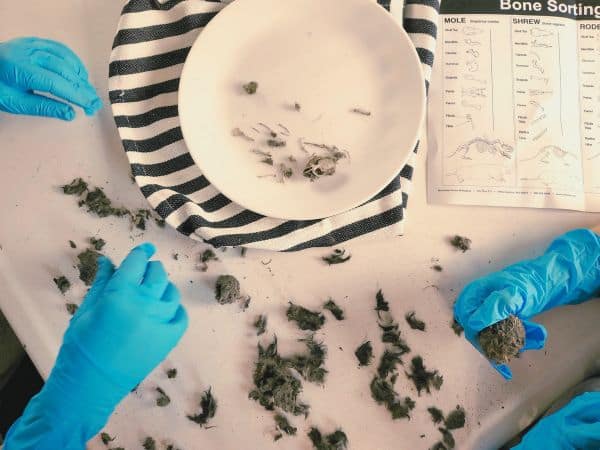
5. Dissect Owl Pellets
Uncover owl diets by dissecting their pellets, revealing bones and fur from prey, and teaching about food chains. This indoor activity for kids has captivated my boys for up to an hour as they discover the bone treasures hidden inside.
What You’ll Need: Owl pellets, tweezers, gloves, magnifying glass, bone identification chart.
How to Do It: Wear gloves and use tweezers to break apart the pellet, separating bones from fur. Identify bones (for example, skulls and ribs) using a chart and discuss the owl’s diet. Reconstruct skeletons for a challenge.
Why It’s Great: This detective-like process teaches ecology and biology.
Tip: Play a game that focuses solely on the diet of an owl, you can find one here at Oo is for Owl.

6. Study the Seasons with Art and a Free Printable
Explore the science of seasons through discussion and art. Use poetry and a free printable to learn about each season’s beauty for this indoor activity for kids.
What You’ll Need: Free printable from Seasons of a Tree post, paint or markers.
How to Do It: Discuss why seasons occur (Earth’s tilt and orbit) using books. Talk about changes like shorter winter days or spring blooms. Then, paint the different ways a tree looks throughout the year using the printable.
Why It’s Great: This blends science with art, reinforcing interdisciplinary subjects.
Tip: Read books and poems about all four seasons, as well as books specifically written for each season.

7. Play a Ball Toss Math Game
Turn math into a lively game with a ball toss, reinforcing addition, subtraction, or multiplication skills. This is a great indoor activity for kids that will get them moving.
What You’ll Need: Plastic balls, umbrella, permanent marker, and tape.
How to Do It: Write numbers or equations on a plastic ball. Place a line of tape a distance away from an umbrella. Your child pulls out a ball and if your child gets the answer correct then he or she can toss it into the umbrella. Adjust difficulty with distance or complexity. Keep score for fun.
Why It’s Great: This combines physical activity with math practice.
Tip: Either write varying levels of math on the balls or give an equation such as, 2 + 3. Then your child must find the number 5 ball and pull it out to toss it in the umbrella.

8. Act Out the Life Cycle of a Butterfly
Bring metamorphosis to life by acting out the butterfly’s stages—egg, caterpillar, chrysalis, and butterfly. This is a favorite indoor activity in our home.
What You’ll Need: Lettuce (for hungry caterpillars), blankets (for wrapping up in a chrysalis), paper wings or costumes (optional), straws (for pollinating and drinking butterflies), and lastly you’ll need small plastic balls (for the eggs that the butterfly lays).
How to Do It: Act out each stage: curl into a ball for the egg, crawl and munch on lettuce as a caterpillar, wrap in a blanket for the chrysalis, and emerge as a butterfly with flapping arms. More details are available at the post to make this indoor activity for kids really shine.
Why It’s Great: This engages imagination and teaches life cycles.
Tip: Explore the life cycle of a butterfly with a quiet activity too. Check out the free life cycle printable and pair with life cycle toys.

Arts and Crafts Indoor Activities for Kids
These indoor activities for kids emphasize creativity, fine motor skills, and artistic expression, producing keepsakes and fostering collaboration.
9. Create a Pasta Pattern Necklace
An interesting and quiet indoor activity for kids. Craft colorful, wearable necklaces using dyed pasta, practicing math patterns and fine motor skills.
What You’ll Need: Dry pasta (rigatoni, penne, or another type that can be threaded. These two however do not break as easily once the necklace is being worn), food coloring, rubbing alcohol, ziplock bags, string, scissors.
How to Do It: Dye pasta by mixing with food coloring and a tablespoon of rubbing alcohol in bags. Dry overnight on a cookie sheet. Thread pasta onto string in patterns (for example, red, blue, red, blue). Tie the ends to wear.
Why It’s Great: This combines art with math and creates a fun accessory.
Tip: Try different patterns with various colors and types of pasta (such as green penne, green rotelle, red penne, red rotelle. Then repeat the set).

10. Make Homemade Honey Lemonade
This indoor activity takes you into the kitchen. Whip up refreshing lemonade, teaching measuring and mixing while enjoying a tasty result.
What You’ll Need: Lemons (6–8), honey, water, pitcher, measuring cups, juicer, ice.
How to Do It: Squeeze lemons, dissolve honey in warm water, add these ingredients to a pitcher plus water. Additional instructions can be found at the post.
Why It’s Great: Kids learn kitchen skills and enjoy a reward.
Tip: Add mint or berry juice for variety. Also, plan to read summer books under a shade tree and on a blanket while sipping your refreshing, old-fashioned beverage.

11. Press Flowers
Create keepsakes by pressing flowers, blending nature and art for bookmarks, cards or framed displays. This indoor activity takes a couple sessions to complete but it is completely worth it.
What You’ll Need: Fresh flowers (small, flat ones like pansies), flower press kit, and additional materials for the craft using the pressed flowers.
How to Do It: Place flowers between sheets of paper and cardboard. Place between the wooden outer layers. Then wait 2–4 weeks. Use pressed flowers for bookmarks or another craft.
Why It’s Great: This preserves nature’s beauty, and when paired with a lesson about a Flower’s Anatomy teaches biology.
Tip: Teach all about flowers by following the two posts provided. What’s great is that they’re both perfect indoor activities for kids.

12. Learn to Braid or Tie Shoes
Teach practical skills like braiding or tying shoelaces, building dexterity and confidence with this indoor activity for kids.
What You’ll Need: Different colors of yarn, old shoes with laces (for tying), scissors.
How to Do It: Demonstrate a three-strand braid with different colors, or bunny-ears shoe-tying method. Practice again and again.
Why It’s Great: These lifelong skills boost independence.
Tip: Make braided bookmarks or bracelets as a craft extension.

13. Create a Pan Flute
Craft a musical instrument from straws to explore sound and creativity. This indoor activity for kids is super durable, making it perfect for hours of entertainment.
What You’ll Need: Smoothie straws, tape, scissors.
How to Do It: Cut straws to different lengths (3–8 inches) and tape together, shortest to longest. Blow horizontally across the top to play notes, experimenting with sounds.
Why It’s Great: This introduces music theory and experimentation.
Tip: Pair this with other exciting xylophone activities, such as creating a water xylophone or experimenting with an actual wooden xylophone.

14. Make Craft Binoculars
Craft pretend binoculars for imaginative play and birdwatching. We use ours for watching birds at our DIY Birdfeeders and going on a Backyard Safari. The birdfeeders can be an indoor activity as well if you’re willing to brave the mess.
What You’ll Need: Two toilet paper rolls, tape, construction paper, string, markers or paint, scissors.
How to Do It: Tape rolls together, cover with colorful construction paper, decorate with markers or paint, and add a string to wear. Make indoors and save for a day outside.
Why It’s Great: This sparks imaginative play and creativity.
Tip: Create a scavenger hunt list for spotting items.

15. Create Coffee Filter Butterflies
Create vibrant butterflies using coffee filters, perfect for decorating with or continuing the learning.
What You’ll Need: Coffee filters, washable markers, spray bottle with water or pipettes, pipe cleaners.
How to Do It: Color filters with markers, spritz or drop with water to blend colors, and dry. Pinch the center with a pipe cleaner to form wings and a body. Use for play or decor.
Why It’s Great: This teaches color blending and produces colorful decor.
Tip: Once complete, use the butterflies to learn about migration, this can be done indoors or out. Check out more details at the post.

16. Make a Craft Drum
Build a drum to explore rhythm and music, ideal for energetic kids. Our favorite is to use it with the poem, Marching Song by Robert Louis Stevenson from A Child’s Garden of Verses.
What You’ll Need: Empty can or container, string, sticks or spoons, paint.
How to Do It: Thread string before hot gluing the lid securely onto the container, and decorate. Tap out rhythms with sticks or hands. Read full instructions at the post.
Why It’s Great: This introduces music and creativity.
Tip: Form a family band with other homemade instruments.

17. Learn to Sew with an Easy Beginner’s Project
Introduce the concept of sewing with a hoop frame and needle, building fine motor skills. I love this project because when a child is older, sewing is truly a perfect indoor activity for a rainy day.
What You’ll Need: needlework frame, canvas, yarn, and plastic needle.
How to Do It: Secure the canvas fabric between the frame pieces. Your child will thread the needle and push it through the fabric, going up and down.
Why It’s Great: Sewing teaches focus and a life skill.
Tip: Use plastic needles and monitor at the beginning to make sure kids aren’t going around the outside of the hoop and always pushing the needle down through the fabric.

18. Bake Apple Muffins
Bake apple muffins, combining cooking with sensory fun and measuring skills.
What You’ll Need: Muffin recipe or whatever recipe you want to bake with your child.
How to Do It: Follow the recipe!
Why It’s Great: Kids learn to follow recipes and participate in the kitchen.
Tip: Plan to make it magical with candles and a book blanket after the baking is finished. If it’s a rainy day that is keeping you indoors, this extra step is truly special.

19. Cook Homemade Ravioli
Let’s stay in the kitchen for this next indoor activity for kids, and make a delicious pasta meal.
What You’ll Need: Check out the post to discover the recipe for the dough and a filling.
How to Do It: Your kids can participate in almost every step. Use caution and common-sense when it comes to cooking the ravioli.
Why It’s Great: This teaches cooking and teamwork.
Tip: Freeze extras for a future meal…if your kids don’t eat them all even before dinnertime.

20. Make a Tie Blanket
Create a cozy no-sew fleece blanket for bonding and gift-giving. This blanket will be used for years to come on days that keep you and your kiddos indoors.
What You’ll Need: Fleece fabric, scissors.
How to Do It: Lay fabrics together, cut 4-inch fringes (1 inch wide) around edges, and tie in double knots.
Why It’s Great: This produces a cozy keepsake without sewing.
Tip: Choose complementary patterns for style and I usually eye-ball the length of everything because it doesn’t need to be perfect.

21. Learn About Primary and Secondary Colors
Explore color theory by mixing primary colors to form secondary ones.
What You’ll Need: Red, blue, yellow food coloring, glasses.
How to Do It: Add food coloring to glasses of water, Then mix the colors to create the secondary colors. Discuss what color your child thinks will be created by combining two different colors.
Why It’s Great: This teaches art concepts and experimentation.
Tip: Use clear cups to show mixing visually.

22. Study All About a Rainbow
Create a rainbow using a prism and learn all about light and color.
What You’ll Need: Prism, flashlight, and rainbow printable.
How to Do It: Create a rainbow using a prism and flashlight. Then, after discussing the colors formed on the wall, have your child color in the rainbow.
Why It’s Great: This blends art and science.
Tip: Discuss refraction for older kids as well as use the printable with all seven colors. For younger kids, reinforce primary and secondary colors by using the rainbow that only uses 6 colors.
Next Craft: Grow a Rainbow

23. Paint a Train Craft
Paint a train craft, sparking imaginative play and creativity.
What You’ll Need: Train craft kit.
How to Do It: Read train themed-books and watch real trains in action on the YouTube channel, CoasterFan2105. Then let your child have a blast coloring the train engine and cars.
Why It’s Great: This encourages creativity and ownership of their toy.
Tip: Set up a drop cloth and dress your child in play clothes you don’t mind being stained.

24. Play Pin the Heart
A fun twist on Pin the Tail, encouraging coordination and learning about anatomy
What You’ll Need: butcher paper, free printable hearts, tape, blindfold, and markers..
How to Do It: Trace your child’s body on the butcher paper then encourage them to color it. Next draw where the heart would be. Now, blindfold players, spin them, and have them tape a heart on the target. Wherever it lands creates opportunity to discuss the anatomy of a human.
Why It’s Great: This fosters teamwork and motor skills.
Tip: laminate the hearts to make the activity durable. Also, using masking tape can keep it from sticking too much and not being able to be reused.

25. Begin Reading a Classic Book Together as a Read Aloud
Gather as a family to read a classic book aloud, fostering literacy, imagination, and bonding through shared storytelling.
What You’ll Need: A classic book (such as, Charlotte’s Web, The Lion, the Witch and the Wardrobe, or Little House on the Prairie), cozy seating, bookmarks. For additional suggestions, check out 36+ Classic Books to Read Aloud (linked above).
How to Do It: Choose a book suitable for your family’s ages and interests. Take turns reading chapters or pages aloud, using expressive voices for characters. Pause to discuss plot points, characters, or predictions to keep everyone engaged. Aim for 15–30 minutes per session, marking your place for next time.
Why It’s Great: Reading aloud builds vocabulary, comprehension, and family connection while introducing timeless stories.
Tip: Create a cozy reading nook with blankets and snacks, or act out favorite scenes to extend the fun.

Why Indoor Activities for Kids Matter
Indoor activities for kids are more than time-fillers—they create opportunities for learning, creativity, and bonding. Science and math activities, like dissecting eggs or playing ball toss math games, make complex concepts accessible and fun, fostering a love for discovery. Arts and crafts, from flower pressing to reading classics aloud, nurture artistic expression, patience, and literacy, producing keepsakes and memories. Together, these activities encourage collaboration, spark curiosity, and strengthen family ties.
Tips for Success:
- Prepare the Space: Set up a dedicated area with supplies to keep things organized.
- Adapt for Ages: Simplify for younger kids or add complexity for older ones.
- Join In: Adults should participate to model enthusiasm and teamwork.
- Reflect and Share: Discuss what everyone learned or enjoyed after each activity.
- Mix It Up: Combine science, crafts, and reading for a full day of fun.
With these 25 indoor activities for kids, your home becomes a hub of exploration, creativity, and connection. Whether you’re baking muffins, acting out butterfly life cycles, or diving into a classic book, there’s something for everyone. Try a few this week and watch your family grow closer through shared adventures. Which indoor activity for kids will you start with?
Recent Posts on the Homeschool Blog